The Latest

Battleground Michigan

Battleground Michigan

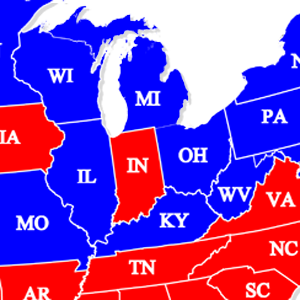
Shikha Dalmia of Reason looks at big labor's effort keep Michigan a second rate economic state through a series of referendums on the statewide ballot next month: We've seen Gov. Scott Walker's battle in Wisconsin and the Chicago Teachers Union strike next door. Now in Michigan comes another Midwestern political showdown that will carry enormous implications for the role of unions in American life. [media-credit name=" " align="alignright" width="300"][/media-credit]The Michigan Supreme Court recently approved the placement of a proposed constitutional amendment on the November ballot. If passed by voters, the so-called Protect Our Jobs amendment would give public-employee unions a potent new tool to challenge any laws—past, present or future—that limit their benefits or collective-bargaining powers. It would also bar Michigan from becoming a right-to-work state in which mandatory union dues are not a condition of employment. The budget implications are dire. Michigan public unions began pushing the initiative last year, shortly after Michigan Gov. Rick Snyder—facing a $2 billion fiscal hole—capped public spending on public-employee health benefits at 80% of total costs. This spring, national labor unions joined the amendment effort after failing to prevent Indiana from becoming a right-to-work state. Bob King of the United Auto Workers said that Michigan's initiative would "send a message" to other states tempted to follow Indiana's example. The UAW, along with allies in the AFL-CIO and the Teamsters, poured $8 million into gathering 554,000 signatures—some 200,000 more than needed—to put Protect Our Jobs on the Michigan ballot.

Won't Back Down

Won't Back Down

Despite decades of failure in our public school, the union bosses who run the teachers union don't take criticism real well.  A union funded front group are villifying a new movie "about the brutal retaliation of a teachers union against a teacher and a single mother has inspired real-life union vilification of the movie and a campaign against entertainers who have anything to do with it," Margert Eagan reports: [media-credit name=" " align="alignleft" width="250"][/media-credit]“Won’t Back Down” tells the story of a teacher (Viola Davis) and a single mother (Maggie Gyllenhaal) who battle to oust the union in a poor, failing Pittsburgh school. Produced by Walden Media, it’s an emotional roller coaster aimed at mainstream audiences unlike “Waiting for Superman,” Walden’s previous anti-union and much-heralded documentary. “The basic question the film asks is what you would do if your daughter was trapped in a failing school,” said Walden co-founder Michael Flaherty yesterday in his Burlington office. But instead of actually responding, he said, critics anxious to maintain the status quo “are a lot more interested in intimidation and the politics of personal destruction.” In real life, Parents Across America, an advocacy group which has received union funding, has launched a “fight Hollywood” campaign asking members to contact entertainers at all involved with the film or even a summer concert to kick it off. The intent, according to its website, which lists phone numbers and emails of agents and publicists, is to brand the film as a “feel bad, not feel good” movie. On their list: Davis and Gyllenhaal, plus Meryl Streep, Morgan Freeman, Jack Black, the Foo Fighters’ Dave Grohl, Maroon 5’s Adam Levine and Josh Groban.

Won't Back Down

Won't Back Down

Despite decades of failure in our public school, the union bosses who run the teachers union don't take criticism real well.  A union funded front group are villifying a new movie "about the brutal retaliation of a teachers union against a teacher and a single mother has inspired real-life union vilification of the movie and a campaign against entertainers who have anything to do with it," Margert Eagan reports: [media-credit name=" " align="alignleft" width="250"][/media-credit]“Won’t Back Down” tells the story of a teacher (Viola Davis) and a single mother (Maggie Gyllenhaal) who battle to oust the union in a poor, failing Pittsburgh school. Produced by Walden Media, it’s an emotional roller coaster aimed at mainstream audiences unlike “Waiting for Superman,” Walden’s previous anti-union and much-heralded documentary. “The basic question the film asks is what you would do if your daughter was trapped in a failing school,” said Walden co-founder Michael Flaherty yesterday in his Burlington office. But instead of actually responding, he said, critics anxious to maintain the status quo “are a lot more interested in intimidation and the politics of personal destruction.” In real life, Parents Across America, an advocacy group which has received union funding, has launched a “fight Hollywood” campaign asking members to contact entertainers at all involved with the film or even a summer concert to kick it off. The intent, according to its website, which lists phone numbers and emails of agents and publicists, is to brand the film as a “feel bad, not feel good” movie. On their list: Davis and Gyllenhaal, plus Meryl Streep, Morgan Freeman, Jack Black, the Foo Fighters’ Dave Grohl, Maroon 5’s Adam Levine and Josh Groban.

It Can get Worse for Workers

It Can get Worse for Workers

Union officials have a key ally in the drive to force more workers to pay union dues for the privilege of working – the National Labor Relations Board,   Fred Wszolek argues: Under the Obama Administration, Big Labor has seized control of the National Labor Relations Board (NLRB or Board) to drive its self-interested agenda – a truly unprecedented development in the history of the NLRB. In the past, Board law has changed when control moved from one political party to another. But never before has a Board majority conducted itself in such unprincipled partisan manner, ramming through an extremist agenda and dissembling about it. Three examples demonstrate the point: The NLRB stripped workers of their right to a secret ballot election to challenge their employer’s recognition of a union by card check despite the fact that 25 percent of the elections held resulted in ousting the union. The Board simply declared that the numbers were insufficient to warrant a delay in the commencement of collective bargaining. The Board hurriedly enacted a “quickie” or “ambush” election rule significantly reducing the time between a petition and an election. The rule will limit the ability of employers to express their views on unionization and deprive employees of their right to hear those views and make an informed choice. The NLRB cited a “delay” in holding elections as a reason for the rule even though its own Acting General Counsel reported that Board elections were being held in a “remarkably” timely fashion. The NLRB ignored the National Labor Relations Act (Act) it administers and overturned seventy years of Board precedent to allow a union to organize a minority of the employer’s workforce through tiny bargaining units made up of two or more employees (“micro-unions”). The NLRB sought to downplay the significance of this controversial decision by describing it as “a relatively modest” change” that reflects “decades of Board and judicial precedent.” But, as Board member Brian Hayes said in dissent, it was a “fundamental change” inconsistent with the Act and long-standing NLRB law that would impact “any industry over which the Board has jurisdiction.” But The Worst May Be Yet To Come The Obama Labor Board is now poised to make additional, major changes in the nation’s labor laws, but without a single Republican Board member, like Brian Hayes, having the opportunity to object and express an opposing view. This was made possible by the Obama Labor Board’s elimination of a 63-year-old institutional practice not to issue major decisions without the participation of members from both political parties.

California Workers Union Has Labor Issues UAW vs. SEIU

The Sacramento Bee reports on a messy labor dispute -- not between union activists and management but between union activists and more union activists: A messy fight between California's largest state employee union, SEIU Local 1000, and another union that has represented 160 of its staff has spilled into public view. As they battle for those workers, the United Auto Workers is calling Local 1000 a hypocritical union-buster. An official with the National Labor Relations Board says SEIU, as an employer, has engaged in "unfair labor practices." The local rejects the accusations. The fight dates back years to a split between Local 1000 and an umbrella organization, the California State Employees Association. SEIU represents about 95,000 employees, the largest of four affiliates in the CSEA. Other affiliates speak for state retirees, state university support staff and midlevel state supervisors. The four groups' interests often clashed. Still, for years they pooled their dues money and bargained with the UAW for staff contracts covering secretaries to senior attorneys. When Local 1000 left and gained financial independence, it raised a question: What did its new status mean to its relationship with the UAW? The union local concluded that it needed employees to say who they wanted to represent them.

The Teachers Strike May Have Been In Chicago, But It's All Our Problem

The Teachers Strike May Have Been In Chicago, But It's All Our Problem

Matt Kibbe looks at why the "resolution" of the teacher's strike in Chicago is not in the best interests of the children and taxpayers of the state: The Chicago Teachers Union Strike may be resolved for now, but the events illustrate a serious problem facing the United States: union bosses are manipulating government leaders, using teachers and students as human shields in their fight to maintain power over the educational system. Their stranglehold on education has to end if our children are to have any hope of getting the education they need to compete in the world. [media-credit name=" " align="aligncenter" width="300"][/media-credit]Teacher pay got a lot of attention in coverage of the debate, but it was far from the only issue at play in the strike, which ended Wednesday under the promise of a resolution that appeased the union bullies. The primary disagreements were over who has the power to hire and fire teachers, and accountability for student performance. The union insisted that it should have the right to dictate who gets hired to fill jobs in the district. Primarily, it wanted to take hiring authority away from school principals by requiring that laid-off teachers be hired back. Union leaders also rejected the perfectly reasonable demand from the city of Chicago that standardized test scores play a role in evaluating teacher performance. A roofer is judged by how well his shingles keep out the rain. A CFO is judged by her company’s balance sheet. A journalist is judged by the accuracy and fairness of his story. Yet somehow union leaders think teachers shouldn’t be judged by the outcome of their work. Teachers’ unions exist to promote what’s best for teachers, not students. As Albert Shanker, the late president of the American Federation of Teachers, once reportedly put it, “When schoolchildren start paying union dues, that’s when I’ll start representing the interests of schoolchildren.” (Shanker’s supporters dispute that he said this, but the quotation’s staying power illustrates the accuracy with which it represents union motives.) Because they exist to protect the status quo, unions oppose the kind of meaningful education reform America needs. They oppose education tax credits, school vouchers, charter schools, merit pay, and virtually all attempts to impose real accountability. They instead support a system that sees the United States spending nearly two and a half times more per pupil today than in 1970. What have we received in return? Stagnant math and reading scores for 17-year-olds, and a decline in science scores.