Union Special Privileges vs. Affordability
In addition to helping make the necessities and amenities of life more affordable, Right to Work laws help keep individual and family aggregate state-local tax burdens from spiraling out of control.

In addition to helping make the necessities and amenities of life more affordable, Right to Work laws help keep individual and family aggregate state-local tax burdens from spiraling out of control.
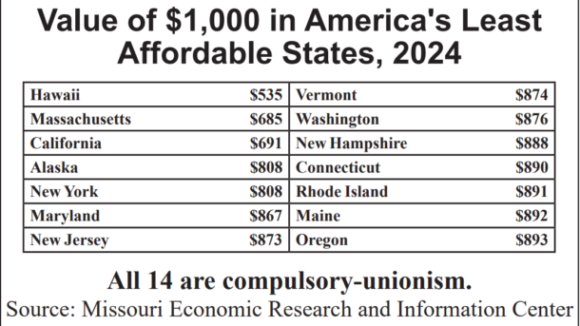
A lower cost of living lets workers stretch their paychecks further—especially in Right to Work states, new data shows.
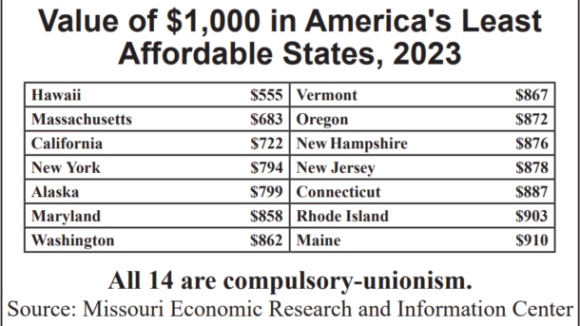
On average, forced-unionism states are 23.2% more expensive to live in than Right to Work states. And decades of academic research show that compulsory unionism actually fosters a higher cost of living.
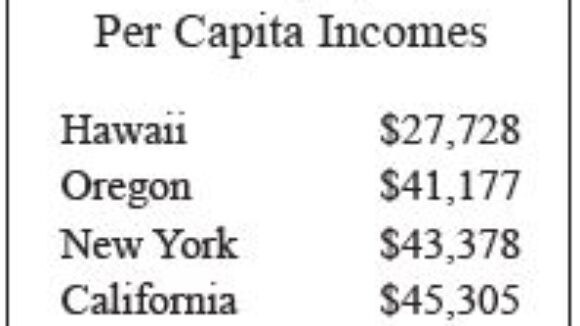
Where forced union dues are permitted, workers and other people end up with lower spendable incomes.
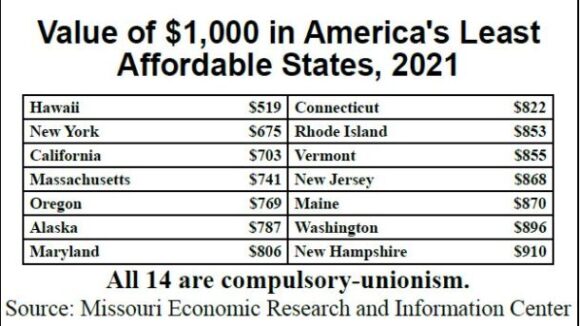
Consequently, as a group, forced-unionism states have a 28.8% cost of living than Right to Work states.

A National Institute for Labor Relations Research analysis of U.S. Census Bureau (BOC) data shows that the mean cost of living-adjusted, after-tax household income in Right to Work states in 2019 was $64,572, roughly $4,300 higher than the forced-dues state average.

The peak-earning-year population fell by 4.6% from 2008 to 2018, but in the 22 states that had Right to Work laws there was no overall net decline at all.

Thirteen of the 14 most affordable states have Right to Work laws on the books. But not one of the 14 least affordable states has one. (Shown above are the 10 most/least affordable states.) Right to Work States Are Far…
According to Census data that have been available for years, poverty adjusted for geographic differences in housing costs is higher in forced-unionism states than in Right to Work states. Big Labor apologists simply ignore such data. Forced-Dues State Households Have…