Radical Teacher Unions Get Even More Radical
Incoming NEA President Princess Moss: Teachers Must Be Full-Time Political Activists
Politico.com has a critical story about big labor’s attempt to buy the Virginia gubernatorial election for Democrat Creigh Deeds:
Organized labor is betting big in Virginia and New Jersey, where two critical off-year gubernatorial races are taking place in November…In Virginia, Creigh Deeds has been flooded with more than $600,000 in campaign contributions from unions since winning theVirginia Democratic gubernatorial nomination in early June. Last week, the AFL-CIO launched its first major salvo in Virginia, organizing an all-day canvass in support of Deeds in Northern Virginia, Norfolk, Richmond and Roanoke, featuring workers armed with talking points slamming Republican Bob McDonnell for supporting “the rejection of $125 million in federal assistance for Virginia’s unemployed workers.”
For labor, it’s an all-out, no-holds-barred effort in both states aimed at pushing Corzine and Deeds over the finish line. “There is a lot of attention being placed on these races,” said Larry Scanlon, political director for the American Federation of State, County and Municipal Employees. “I’ll tell you how big a deal they are: We’re already committing at least $2 million to New Jersey and have already spent $1 million in Virginia.”
The old adage about you can tell a politician by the friends they keep is certainly true this year.
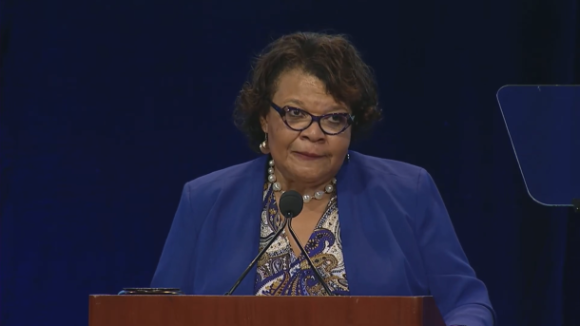
Incoming NEA President Princess Moss: Teachers Must Be Full-Time Political Activists
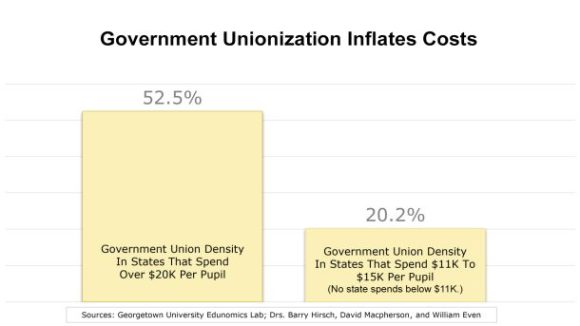
“[L]ast month, state legislation championed by AFSCME and coalition partners [...] was reintroduced to expand collective [monopoly] bargaining . . . to all Virginia public [workplaces]. It is supported by Gov. Abigail Spanberger.”
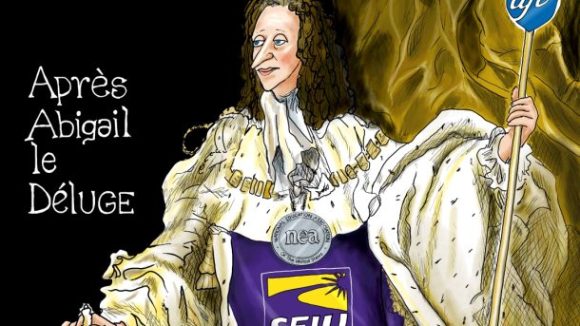
Union-label state Democrat politicians like Mr. Surovell and Gov. Abigail Spanberger evidently calculated that a mandatory monopoly-bargaining law would be a less politically costly way than Right to Work destruction for them to pay back the Big Labor bosses who had been critical to their 2025 electoral successes.