Union-Only Port Terminal Suspends Operations
Committee President Mark Mix: “If I were a Leatherman dockworker, I certainly wouldn’t count on Longshore Union bosses to show any flexibility” to get the terminal reopened and “save my job.”
‘War on 14(b)’ Joined by 44 D.C. Solons From Right to Work States
Today 27 states have Right to Work laws on the books that prohibit the termination of employees for refusal to join or pay dues or fees to a union they don’t want, and never asked for.
These laws enjoy overwhelming public support in jurisdictions where they have been adopted and are in effect.
Big Labor has spent vast sums of money over the years on state-level efforts to wipe out Right to Work laws.
But it has had no success over the past six-a-half decades in any state whose citizens have had the opportunity to experience, even for a short time, what prohibiting forced union dues and fees means in practice.
Unfortunately, this spring 44 Big Labor U.S. senators and representatives from Right to Work states went on record in support of a pending legislative power grab that would override the wishes of their own constituents, including state elected officials.
It would foist a forced-unionism regime on the whole nation.
Scheme Would Override Every State Right to Work Law Currently on the Books
On May 2, S.1306/H.R.2474, the cynically mislabeled “Protecting the Right to Organize” Act, or PRO Act, was introduced in both chambers of Congress. Its lead Senate sponsor is Democrat Patty Murray, who hails from forced-unionism Washington.
But the so-called PRO Act’s lead House sponsor, Education and Labor Committee Chairman Bobby Scott (D-Va.), purportedly “represents” the interests of the people who reside in a congressional district located in Norfolk, Newport News, Suffolk, and surrounding regions in Right to Work Virginia.
National Right to Work Committee President Mark Mix commented:
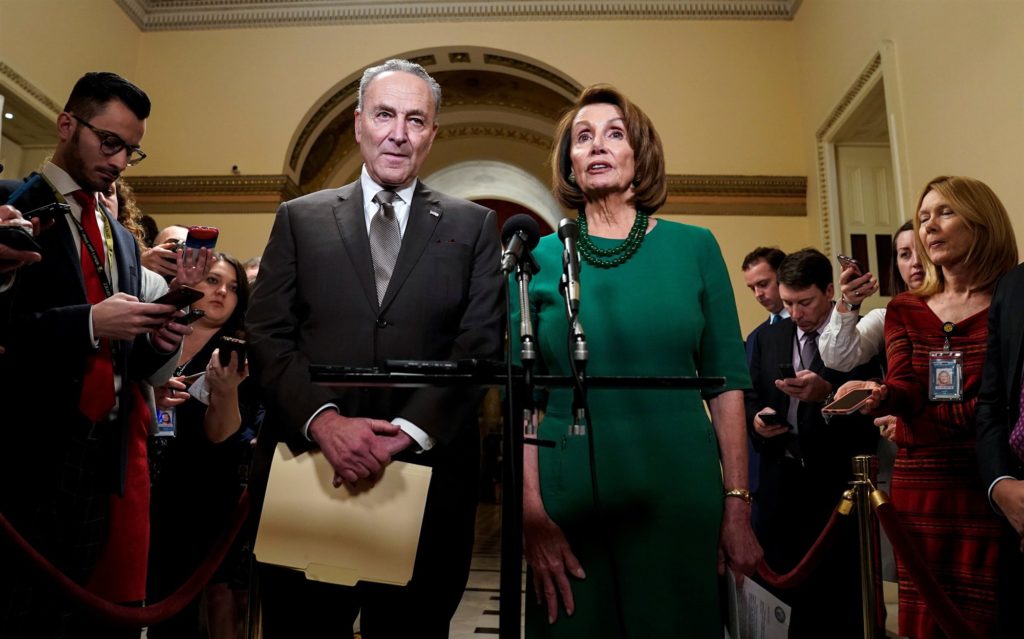
“The PRO Act is a blueprint for what House Speaker Nancy Pelosi [D-Calif.], Senate Minority Leader Charles Schumer [D-N.Y.], and other Big Labor politicians in Washington, D.C., have in store for America as soon as they again get control of the White House and both chambers of Congress.
“It’s a smorgasboard of special-interest delights for the union hierarchy.
“Among all the provisions in the PRO Act, the single most outrageous one would amend the National Labor Relations Act [NLRA] to empower private-sector union bosses in all 50 states, including the 27 erstwhile Right to Work states, to force employees to pay union fees against their will.”
Union Operatives Exult: PRO Act Would ‘Pull the Teeth’ Out of Right to Work Laws
Unlike the grossly misnamed “Workplace Democracy” Act, introduced by radical Sen. Bernie Sanders (I-Vt.) as S.2810 in the 2017-2018 Congress and expected to be introduced in the current Congress by Mr. Sanders soon, S.1306/H.R.2474 would not openly repeal Section 14(b) of the 1947 Taft-Hartley Act.
For more than seven decades, Section 14(b) has explicitly authorized states to prohibit within their jurisdictions the very forced-dues and forced-fees job requirements that federal labor law elsewhere authorizes and promotes.
Instead of eliminating 14(b), the Murray-Scott bill renders it almost meaningless by inserting a provision stating that the extraction of forced fees from employees for union monopoly bargaining, regardless, of whether it benefits or hurts them personally, shall be “valid” notwithstanding “any State or Territorial law.”
As the web site of the International Brotherhood of Electrical Workers (IBEW) union exulted in a May 13 posting, the PRO Act would thus “pull the teeth” out of Right to Work laws.
“It’s worth noting that union operatives recognize that S.1306/H.R.2474 makes war on 14(b),” said Mr. Mix. “But what this legislation would really do is cut the heart out of state Right to Work laws.”
Loss of Right to Work Engine Would Be Devastating For America as a Whole
“If the 14(b) evisceration and other pro-forced unionism provisions in the PRO Act were adopted,” continued Mr. Mix, “the results would be a devastating loss of personal freedom for workers and a shipwreck for the U.S. economy.
“As federal government data-trackers and nonpartisan economic researchers alike have shown again and again, Right to Work states capture an outsized share of job-creating investments in the U.S.”
As an example, Mr. Mix cited the U.S Commerce Department’s recently updated statistics regarding growth in output in automotive manufacturing, as measured in constant, chained 2012 dollars:
“Excluding the five states that passed and began enforcing Right to Work laws between 2012 and 2017 from the U.S. total, and considering just the 22 states that had already banned forced unionism in 2007, the Right to Work share of automotive manufacturing grew from 48% to 62% over the next decade.
“Real automotive manufacturing GDP in these 22 states grew by 38% from 2007 to 2017, but it fell by 22% in the 23 states that were still forced-unionism as of the end of 2017.
“The loss of such investments in Right to Work states where, in the words of pro-forced unionism journalist C.J. Atkins, ‘the people and the money are moving,’ would be devastating for the national economy.”
Economic ‘Assets Are Not Created “Naturally” Or “Automatically”’
Some compulsory-unionism proponents may naively assume that, if Taft-Hartley 14(b) were butchered and Right to Work states basically ceased to exist, major investments in the auto and other industries would be made in forced-unionism states.
That’s not at all likely. As George Mason University economist Don Boudreaux observed a couple of years ago, economic assets “are not created ‘naturally’ or ‘automatically.’”
In other words, if investors cannot find a location in the U.S. where they can put their money to work on a job-creating project with a reasonable confidence of earning a good return on their money, they can choose a location somewhere else in the world, or choose not to do the project at all.
Mr. Mix concluded:
“Without Right to Work states, there would certainly be far fewer jobs created in the U.S. as a whole. And job seekers who couldn’t find good-paying jobs in slow-growth forced-unionism states wouldn’t have anywhere to flee.”
PRO Act Would Roll Back 70 Years of Right to Work Progress
When Ms. Murray and Mr. Scott first filed their union-boss gift bag this spring, they were joined by 40 original cosponsors in the Senate and 100 original cosponsors in the House.
Since then, the total number of congressional sponsors of S.1306/H.R.2474 has risen to 196.
“With Big Labor wielding operational control over just the House at this time, and with Donald Trump in the Oval Office, the PRO Act is almost certainly not going to become law in the short-term future,” noted Mr. Mix.
“But the fact that this extremist bill has, as of early June, already been signed on to by 87% of the Senate Democrat caucus is alarming.
“The 14(b) evisceration alone would basically roll back labor policy to 1946, when Congress had not yet legislatively affirmed states’ authority to protect employees’ Right to Work and the Supreme Court had not yet ruled that state Right to Work laws were permitted under the NLRA.
“And yet, more and more politicians are so beholden to Big Labor that they are cosponsoring the PRO Act even though their constituencies are staunchly pro-Right to Work.”
Mr. Mix cited the example of Rep. Abigail Spanberger (D-Va.), who put her name on H.R.2474 on May 16.
Politicians Who Support PRO Act Could Face Harsh Electoral Consequences
She represents a district that backed Mr. Trump, an avowed Right to Work supporter, over pro-forced unionism Hillary Clinton by a solid 50% to 44% margin and is located in the heart of a state that has been Right to Work since 1947.
“Public opposition to compulsory unionism is very broad and often passionate in Right to Work states like Virginia,” said Mr. Mix.
“The growing number of D.C. politicians who purport to represent citizens of Right to Work states, but are going on record in support of foisting forced unionism on the entire country, could face harsh electoral consequences in 2020 and beyond.”
(source: July 2019 National Right to Work Newsletter)
If you have questions about whether union officials are violating your rights, contact the Foundation for free help. To take action by supporting The National Right to Work Committee and fueling the fight against Forced Unionism, click here to donate now.
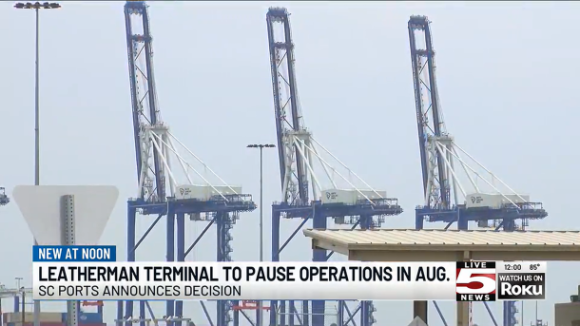
Committee President Mark Mix: “If I were a Leatherman dockworker, I certainly wouldn’t count on Longshore Union bosses to show any flexibility” to get the terminal reopened and “save my job.”

According to AFSCME Local 1632 President Will Harmon, Columbus Water & Power committed a grievous offense by subcontracting out the job of clearing away invasive weeds and brush spread out across two acres of its property to a tribe of roughly 40 goats without first “negotiating” with Big Labor.
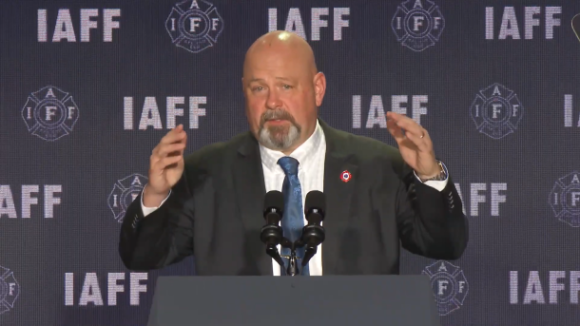
One longtime IAFF official who is now in the spotlight for his crass denigration of “two-hatters” -- that is, professional firefighters who also serve as volunteers -- is Pennsylvania Democrat politician Bob Brooks.