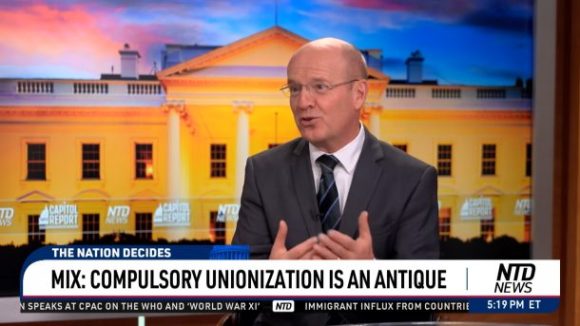
Union Special Privileges vs. Affordability
In addition to helping make the necessities and amenities of life more affordable, Right to Work laws help keep individual and family aggregate state-local tax burdens from spiraling out of control.
Mark Wylie does an admirable job responding to Florida International University’s Bruce Nissen, an advocate of eliminating the secret ballot election for workers to pad the union rolls for union bosses:
There is a great reason why the economy in the right-to-work states of the South has been so robust and the Rust Belt states, like Michigan, have experienced unemployment rates in double digits. It is because of the secret ballot, the exchange of ideas and workers freely choosing to be paid competitively based on merit.
Forming a union should be a basic freedom in the workplace. On that, I agree with Nissen.
Here is where we part company: That decision should also be personal and private — a decision not made under false pretenses, coercion and threats by either side.
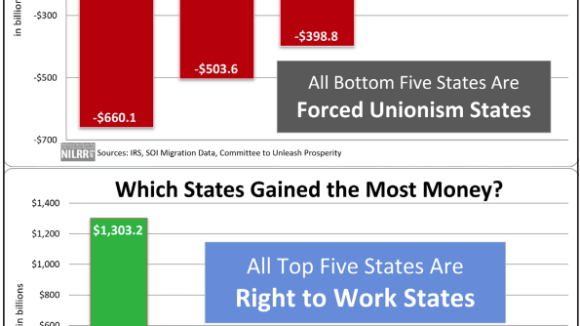
In addition to helping make the necessities and amenities of life more affordable, Right to Work laws help keep individual and family aggregate state-local tax burdens from spiraling out of control.
In response to a staffing crisis, the elected Lee County School Board (LCSB) approved an incentive plan to attract and retain teachers for high-need schools and hard-to-fill subject areas.
Recently updated federal data on the American workforce and employment show that employer demand for college-educated employees rose at a surprisingly rapid clip from 2014 to 2024.