Will Congress End Union Thugs' Free Ride?

Will Congress End Union Thugs' Free Ride?

International longshore union President Bob McEllrath has publicly encouraged lawlessness by his militant followers in Washington State. For example, last September 7 he participated in an illegal blockade of grain terminal deliveries. Credit: Dawn Des Brisay-Longshore Shipping News Freedom From Union Violence Act Would Close 'Lethal Loophole' (source: National Right To Work Committee April 2012 Newsletter) This month, pro-Right to Work U.S. Sen. Mike Lee (R-Utah) will introduce an important legal reform known as the Freedom from Union Violence Act. This bill would hold union officials who plan, commit, or foment extortionate violence against a firm's employees or owners to the same standard as business rivals, gangsters, or anyone else who does the same. Legislation Would Bar Use Of Violence as a Union 'Organizing Tool' Parallel legislation was introduced in the U.S. House earlier this year as H.R.4074 by Congressman Paul Broun (R-Ga.). Like Mr. Lee, Mr. Broun is one of the most outspoken opponents of compulsory unionism in Congress today. If H.R.4074 is enacted, power-hungry, win-at-any-cost Big Labor barons will no longer be able, without fear of federal prosecution, to resort to violence as a union "organizing" or "bargaining" tool. Mark Mix, president of the National Right to Work Committee, vowed over the course of the next few months to mobilize hundreds of thousands of members and other citizens to contact their federal elected officials and express their strong support for this legislation. It's 'Extraordinarily Difficult' to Prosecute Union Lawbreakers Mr. Mix explained: "In today's America, prosecutions of Big Labor arson, assaults, death threats, and other serious crimes are extraordinarily difficult. "Such prosecutions are frequently hindered because of a loophole in federal law that exempts extortionate violence from prosecution when it is committed pursuant to so-called 'legitimate union objectives.'

Right To Work All Top 10  vs. Compulsory Unionism All Bottom 10

Right To Work All Top 10 vs. Compulsory Unionism All Bottom 10

In Chief Executive Magazine's Best and Worst States for Business, all the top ten were from Right To Wok States.  Unsurprisingly, Compulsory Unionism States took all bottom ten positions. States ranking from 1-10 are: Texas, Florida, North Carolina, Tennessee, Indiana, Virginia, South Carolina, Georgia, Utah, Arizona. States ranked from the worst, 50-41: California, New York, Illinois, Massachusetts, Michigan, New Jersey, Connecticut, Pennsylvania, Oregon, Hawaii. From the Chief Executive: 2012 Best & Worst States for business. Source: Chief Executive Magazine

Right to Work is about Freedom and Jobs not Political Parties

Right to Work is about Freedom and Jobs not Political Parties

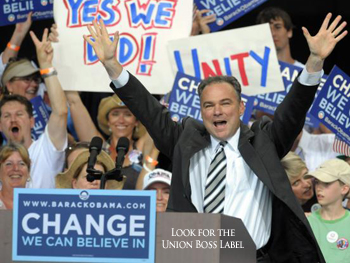
President Obama, pandering to a crowd of Democrat party AFL-CIO union activists, attacked Right to Work laws as being more about politics than economics when the inverse is true -- opposition to Right to Work laws is about the Big Labor-owned Democrat party not economics. The President's own Department of Commerce's proves our point: Somethings never CHANGE, no matter how much we HOPE it does. Today the U.S. Commerce Department’s Bureau of Economic Analysis posted annual personal income data for 2011 on its web site. The data show that Right to Work states continue to enjoy a substantial income growth advantage over forced-unionism states. The Right to Work growth advantage is especially strong when it comes to private-sector compensation – that is, the wages, salaries, bonuses and benefits businesses provide for their employees. From 2010 to 2011 alone, private-sector compensation increased by 2.2% in the 22 Right to Work states, after adjusting for inflation with the U.S. Labor Department’s consumer price index (CPI-U). In the 28 compulsory-unionism states, real private-sector compensation increased by just 1.7%. (Just this month, Indiana became the 23rd Right to Work state as the law banning forced union dues and fees signed by Gov. Mitch Daniels in early February took effect.) Over the past 10 years, from 2001 to 2011, real private-sector compensation in Right to Work states grew by 12.5%. That increase is four times as great as forced-unionism states’ aggregate gain of just 3.1%.