Big Labor’s Multi-Billion-Dollar Power Grab
Union bosses are rallying behind Democrat Texas U.S. Senate candidate James Talarico because he opposes Right to Work protections for employees.
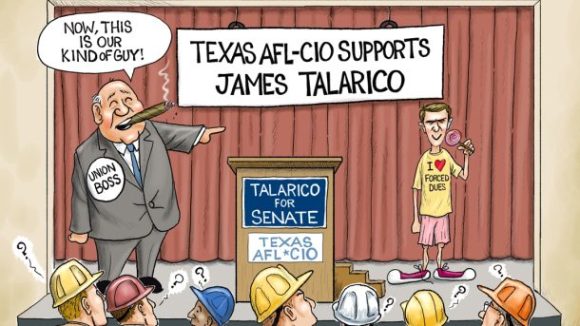
Union bosses are rallying behind Democrat Texas U.S. Senate candidate James Talarico because he opposes Right to Work protections for employees.
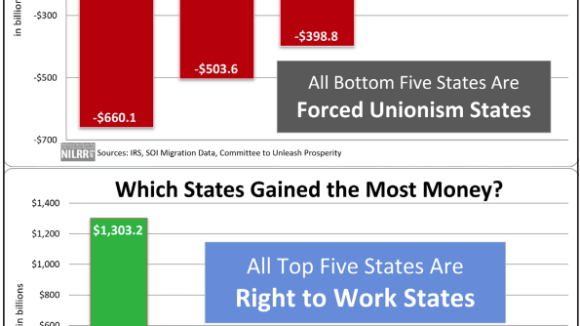
... States that continuously lacked Right to Work protections for employees from 2012-23 lost a net total of $2.05 trillion in cumulative AGI solely as a consequence of domestic out-migration of taxpayers during that 11-year period.
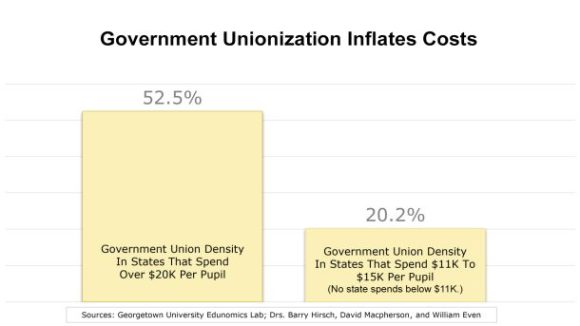
“[L]ast month, state legislation championed by AFSCME and coalition partners [...] was reintroduced to expand collective [monopoly] bargaining . . . to all Virginia public [workplaces]. It is supported by Gov. Abigail Spanberger.”
The Iowa Department of Inspections, Appeals, and Licensing found that, from 2020-2023, nearly half of the elections that were required to take place [...] simply did not occur.
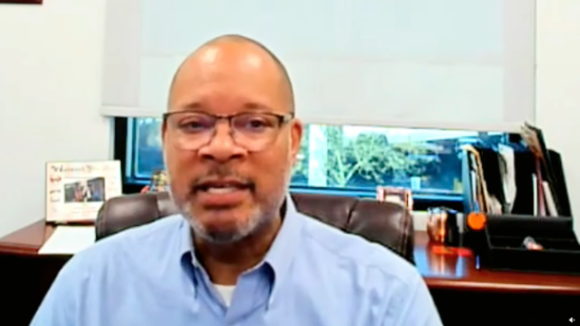
Big Labor Nevada politician Aaron Ford is making no bones about the fact that “getting rid of” Right to Work, as he put it in a podcast interview, will be high on his 2027 agenda.

After a fierce legislative battle, a bill to protect Idaho educators’ freedom of association has been signed by GOP Gov. Brad Little. The Committee is committed to similarly protecting more and more civil servants nationwide.
The ILA hierarchy’s clear motive in suing two carriers that had docked at Leatherman, and in its threat to sue others if they did the same, was to bully the South Carolina Ports Authority (SCPA), with whom the union had no contract, into selling out the freedom of union-free port employees who then operated heavy equipment.

Union-label state Democrat politicians like Mr. Surovell and Gov. Abigail Spanberger evidently calculated that a mandatory monopoly-bargaining law would be a less politically costly way than Right to Work destruction for them to pay back the Big Labor bosses who had been critical to their 2025 electoral successes.

National Right to Work Committee members and supporters across the country are fighting back through their active participation in the federal Committee Survey 2026 citizen mobilization program.