Senate Confirms Trump Labor Board Nominees
The rabidly pro-union boss Biden era at the National Labor Relations Board (NLRB) came to a screeching halt on December 18.
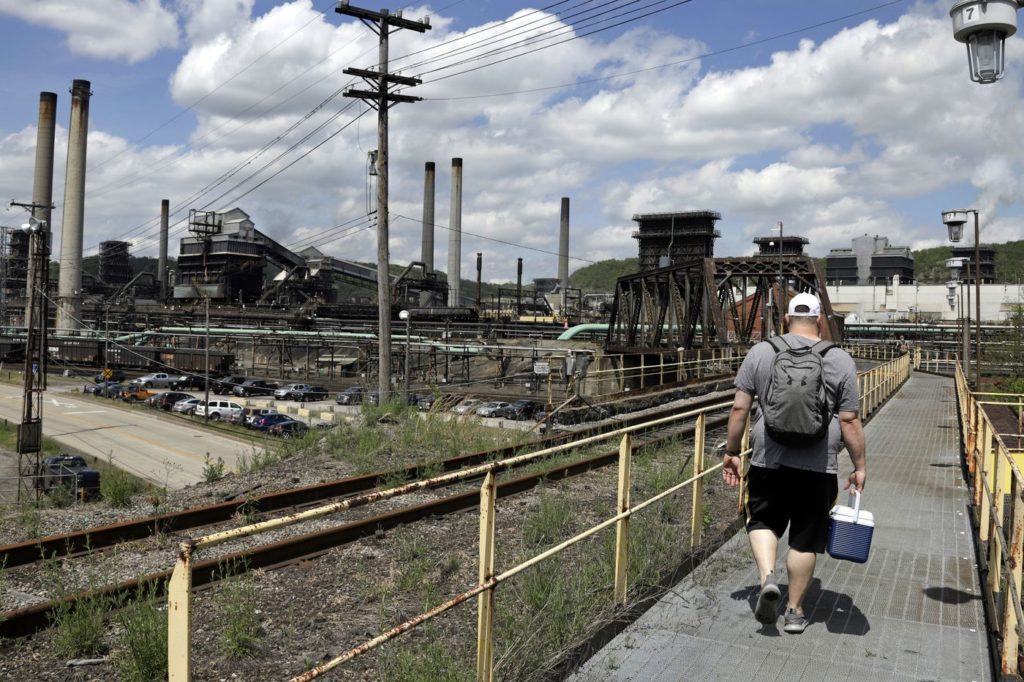
If You Can’t Beat ’Em . . . Buy ’Em!’ Union-Impaired Firm Acquires 49.9% Stake in Union-Free Competitor
Three months ago, the National Right to Work Newsletter reported on the remarkable success of a five-year-old, union-free steel mill located in Right to Work Arkansas.
Citing an August 2019 report for Forbes magazine by business journalist Jonathan Ponciano, the Newsletter noted that the annual cash flow per employee at the Big River Steel (BRS) Flex MillTM in Osceola, Ark., is “a dumbfounding $557,000.”
That’s roughly nine times as great as the $61,000 cash flow “per union-impaired employee” at troubled U.S. Steel (USS).
A large share of the cash generated as a consequence of BRS’s extremely high productivity goes straight into the pockets of front-line employees.
In 2018, according to Mr. Ponciano, the average BRS production worker earned $129,000, including bonus pay, in a state where the cost of living is 12% below the national average, according to the nonpartisan Missouri Economic Research and Information Center.
“The future of American metal production is located” in Right to Work states like Arkansas, concluded the report appearing on page three of this publication’s October edition.
The managers of USS, headquartered in Pittsburgh, Pa., apparently agree. Soon after the October Newsletter went to press, they announced their plan to acquire a 49.9% stake in BRS.
Inefficient Big Labor Work Rules Often Discourage Firms From Making Investments
National Right to Work Committee Vice President Matthew Leen explained that USS, whose production employees are subject to the monopoly control of United Steelworkers (USW/AFL-CIO) union bosses on matters pertaining to their jobs, has been struggling for decades, and its plight has recently worsened:
“Over just the three months that ended September 30, USS lost $84 million, and sales plunged by 16% compared to the same quarter in 2018.
“A key problem for the company has been its heavy reliance on older blast furnace technology.
“Its facilities are as a consequence only profitable when they are operating at full capacity.
“And since the worldwide demand for steel is highly cyclical, USS mills very frequently aren’t operating at full capacity, and bleeding red ink.
“In theory, USS could set itself right by retooling its mills in forced-unionism Pennsylvania and other historic USW stronghold states to make them more flexible.
“In reality, however, employees hamstrung by counterproductive USW and other union work rules are often unable to make a successful switchover to new technology. Well aware of the pitfalls, companies can and often do opt to invest in a new facility in a Right to Work state instead of retooling an existing unionized operation.”
‘Manufacturing in General Has Moved’ Away ‘From the Influence of Labor Unions’
Reporting for the Pittsburgh Post-Gazette, the daily newspaper for the metropolitan area where USS’s Mon Valley Works, Edgar Thompson Works, and Clairton Coke Works are located, journalist Daniel Moore offered a Pennsylvanian’s perspective on the BRS acquisition.
To offset the substantial borrowing costs it is incurring due to its $700 million investment in BRS, USS is rolling back its previous plans to spend $2 billion to refurbish aging plants, wrote Moore in an early November story.
For example, previously announced 2020 expenditures of $400 million in the Mon Valley Works were being slashed by 50%.
Mr. Moore bluntly continued: “Manufacturing in general has moved . . . away from the influence of labor unions. . . . “Arkansas has a right-to-work law, which means any employee can opt out of joining and paying dues to a labor union.”
Next Stop For BRS: Right to Work Texas
Since the effective partnership with USS was announced, BRS CEO David Stickler has reinforced the implicit message that his company regards Right to Work protections for its front-line employees as critical for its success.
In a mid-October interview with S & P Global Platts that only became public in November, Mr. Stickler said the company is “just now aggressively ramping up efforts for a second flat-rolled mill” in Brownsville, Texas.
The Lone Star State has had relatively little flat-rolled steel production until recently, but has had a Right to Work law on the books since 1947.
If you have questions about whether union officials are violating your rights, contact the Foundation for free help. To take action by supporting The National Right to Work Committee and fueling the fight against Forced Unionism, click here to donate now.
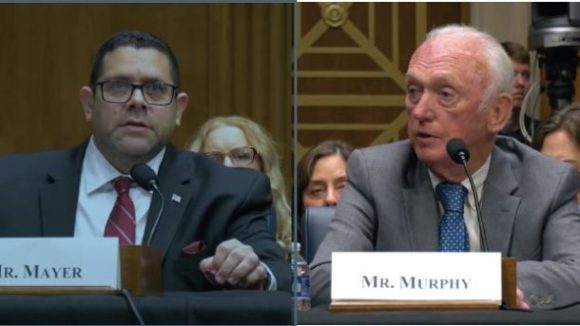
The rabidly pro-union boss Biden era at the National Labor Relations Board (NLRB) came to a screeching halt on December 18.

In addition to helping make the necessities and amenities of life more affordable, Right to Work laws help keep individual and family aggregate state-local tax burdens from spiraling out of control.

In response to a staffing crisis, the elected Lee County School Board (LCSB) approved an incentive plan to attract and retain teachers for high-need schools and hard-to-fill subject areas.