Senate Confirms Trump Labor Board Nominees
The rabidly pro-union boss Biden era at the National Labor Relations Board (NLRB) came to a screeching halt on December 18.

Across America, Right to Work states have long benefited from economic growth far superior to that of states in which millions of employees are forced to join or pay dues or fees to a labor union just to keep their jobs.
And union bosses and their allies have long tried to argue that no one should pay any attention to the data showing that Right to Work status is correlated with faster growth in jobs and aggregate employee compensation.
In recent years, however, Big Labor’s task in trying to distract public attention from forced-unionism states’ comparatively poor economic performance has become increasingly difficult.
Economists Contend Right to Work Laws Cause Accelerated Growth
A key reason why is documented in scholarly studies that identify an undeniable positive relationship between the presence of a Right to Work law and accelerated economic growth.
A 2018 overview by Jeffrey Eisenach, an economist currently affiliated with NERA Economic Consulting, the American Enterprise Institute, and George Mason University, summarized the growing body of evidence regarding the economic impact of state Right to Work laws.
As Dr. Eisenach noted at the outset of his May 2018 paper (“Right to Work Laws: The Economic Evidence”), much of the debate over Right to Work laws, now on the books in 27 states, “has focused on their potential economic impact.”
Dr. Eisenach, a specialist in issues concerning market competition, regulation and consumer protection, has written or edited 19 books and monographs, and served as a vice president of the Economic Club of Washington, D.C., from 2011 until 2018.
His paper cited the findings of earlier studies regarding the impact of Right to Work laws and forced unionism by economists such as Thomas Holmes of the University of Minnesota, Michael Hicks of Ball State University in Indiana, and Barry Hirsch of Georgia State University.
Dr. Eisenach concluded that, other things being equal, “businesses are more likely to locate in states” with Right to Work laws.
There is also evidence, he added, that Right to Work laws have “a direct, positive effect on employment, output, and personal income.”
‘Businesses Are More Inclined to Open Plants’ In Right to Work States
Economic models indicating that Right to Work protections for employees foster higher capital investment levels and enhanced productivity, leading to higher employee pay and more job security, are consistent with straightforward comparisons of growth performance, emphasized Dr. Eisenach.
The data backing up researchers’ conclusion that “businesses are more inclined to open plants” in Right to Work states than in non-Right to Work states are especially strong.
For example, U.S. Census Bureau data cited by Dr. Eisenach show that, from 2001 to 2015, the number of private firms located in the 22 states that were already Right to Work as of 2001 grew by 10.2%.
That increase is nearly seven times as great as the paltry overall gain of just 1.5% for the 25 states that were still forced unionism as of 2015.
(See the chart below for more information.)
National Right to Work Committee Vice President Greg Mourad commented:
“The vital protections state Right to Work laws furnish for personal freedom and the economic energy they foster have been a boon for the entire country.”
Mr. Mourad continued:
“Unfortunately, under the pro-forced unionism National Labor Relations Act and Railway Labor Act, millions of employees in the 23 non-Right to Work states and even some employees in Right to Work states are still forced to fork over money to Big Labor bosses in order to keep their jobs.
“The Committee and its 2.8 million members and supporters are determined to abolish such unjust coercion of workers from coast to coast.”
Committee Leads Charge For Bill Repealing Forced Dues Nationwide
“Adoption by Congress of S.525/H.R.2571, the National Right to Work Act, would be a major step in the right direction,” said Mr. Mourad.
“S.525/H.R.2571 would repeal all the current forced-dues provisions in federal labor law, ensuring that every private-sector employee in America has the Right to Work.
“And thanks primarily to Right to Work members’ persistent lobbying of their elected officials, as of the beginning of August, 70 U.S. representatives and 21 U.S. senators had already signed on as sponsors of federal compulsory-dues repeal.”
If you have questions about whether union officials are violating your rights, contact the Foundation for free help. To take action by supporting The National Right to Work Committee and fueling the fight against Forced Unionism, click here to donate now.
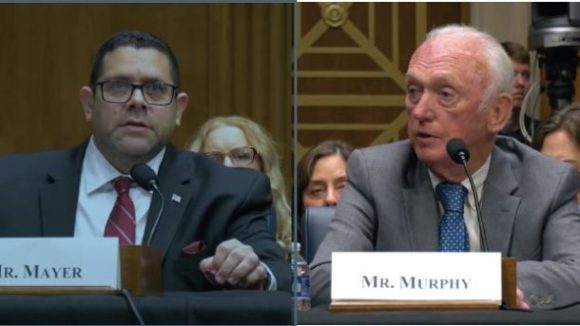
The rabidly pro-union boss Biden era at the National Labor Relations Board (NLRB) came to a screeching halt on December 18.

In addition to helping make the necessities and amenities of life more affordable, Right to Work laws help keep individual and family aggregate state-local tax burdens from spiraling out of control.

In response to a staffing crisis, the elected Lee County School Board (LCSB) approved an incentive plan to attract and retain teachers for high-need schools and hard-to-fill subject areas.