Union Special Privileges vs. Affordability
In addition to helping make the necessities and amenities of life more affordable, Right to Work laws help keep individual and family aggregate state-local tax burdens from spiraling out of control.

Another economic study demonstrates that states that enact Right to Work laws have more prosperity, jobs and economic growth than states dominated by Big Labor.
The American Legislative Exchange Council (ALEC) announced the release of the highly anticipated fifth edition of Rich States, Poor States: ALEC-Laffer State Economic Competitiveness Index. This report explains how state policymakers can most effectively drive economic growth and improve the standard of living for their citizens.
The publication outlines two sets of state rankings. An economic performance ranking is based on the past 10 years of economic data and takes into consideration income, population, and job growth. An economic outlook ranking uses 15 equally weighted policy variables, including various tax rates, regulatory burdens, and labor policies. This year, Utah ranked first in the nation, while New York ranked dead last.
Other leading growth states are South Dakota, Virginia, Wyoming and North Dakota — all Right to Work states. The poorest states — Hawaii, Maine, Illinois, Vermont and New York all are Big Labor dominated and have refused to empower workers with Right to Work protections.

In addition to helping make the necessities and amenities of life more affordable, Right to Work laws help keep individual and family aggregate state-local tax burdens from spiraling out of control.

In the wake of Big Labor’s capture of the governorship and tightening of its grip over the Virginia General Assembly in last fall’s elections, union strategists are eager for passage of a law mandating union monopoly bargaining over the compensation and work rules of state and local civil servants.
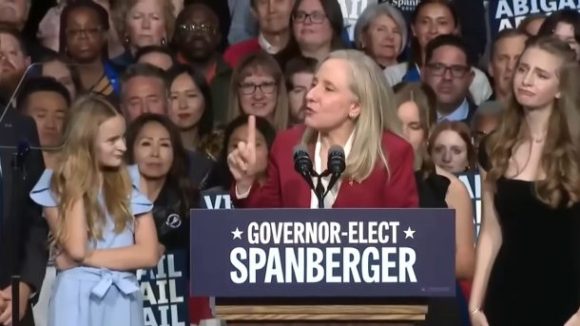
"[Spanberger] voted twice for the so-called ‘PRO Act,’ which would have destroyed the Virginia and every other state Right to Work law, and cosponsored it one last time before stepping down to run for governor."