Union Special Privileges vs. Affordability
In addition to helping make the necessities and amenities of life more affordable, Right to Work laws help keep individual and family aggregate state-local tax burdens from spiraling out of control.
The Last Thing Ordinary Nevadans Need’

Monopoly-Bargaining Bill a Bad Bet For Taxpayers, Civil Servants
Early this year, Big Labor-backed Gov Steve Sisolak (D) announced he is eager to tighten union officials’ stranglehold over the provision of public services in Right to Work Nevada.
Mr. Sisolak proposed that government union bosses, who already wield monopoly-bargaining privileges over Nevada teachers and local employees, including police and firefighters, be handed the same power over state government employees.
Now S.B.135, legislation granting Mr. Sisolak’s wish that state employees be turned over to union-boss control, appears to be headed to the state Senate floor.
More Coercive Power For Government Union Bosses, Heavier Burdens For Taxpayers
If S.B.135 becomes law, state government employees in Nevada who don’t wish to join a union will be statutorily prohibited from dealing directly with their employer on key matters concerning their jobs. This is an assault on civil servants freedom of choice.
And the bitter experience of citizens across the country since monopolistic government unionism became widespread shows that the higher the share of a state’s civil servants who are corralled into unions, the heavier the tax burden is for people from all walks of life.
National Right to Work Committee Vice President Mary King cited data furnished by the nonpartisan, Washington, D.C.-based Tax Foundation and other sources to calculate the price for taxpayers when government union bosses gain even more power:
“Each April, the Tax Foundation reports when ‘Tax Freedom Day,’ the day when the residents of a jurisdiction have earned enough money to pay off their tax burden for the year, occurs nationwide and in each of the 50 states.
“In 2017, there were 16 states in which more than 50% of civil servants were under union monopoly control, according to Unionstats.com, a website maintained by labor economists Barry Hirsch and David Macpherson.
“The Hirsh-Macpherson data also show there were 14 states (including Nevada) where between 25% and 50% of public employees were unionized, and 20 states in which government-sector union density was under 25%.
“In the 16 states with the highest union density, Tax Freedom Day 2017 didn’t come until May 3, on average.”
“That’s 14 days later than the average for states with moderate government-sector union density, and 17 days later than the average for low government union-density states.”
Special Privileges For Big Labor Ultimately Lower Civil Servants’ Job Security
The evidence that monopolistic government unionism is costly to taxpayers is overwhelming, but most unionized public employees don’t come out as winners.
Government union kingpins typically focus their energy on jacking up noncash compensation, especially pension benefits, rather than wages and salaries.
Public employees who have government careers shorter than 20 years (and that’s most of them) often don’t benefit at all from Big Labor pension deals.
By empowering union dons to block reform of improvident pension schemes, comprehensive monopoly-bargaining laws in states like Illinois, New York and California actually lower public employees’ job security.
As Steven Malanga of the Manhattan Institute recently noted, such “legal restrictions” effectively leave “job cuts as the only option” in tough financial times.
Right to Work Mobilizes To Stop S.B.135 From Reaching Steve Sisolak’s Desk
Monopoly bargaining also “places additional burdens on the most effective and productive” employees by “favoring and protecting the least effective” employees, according to Massachusetts finance professor Ben Branch.
(Dr. Branch is the lead plaintiff in a National Right to Work Legal Defense Foundation-backed judicial challenge to state monopoly-bargaining laws.)
Ms. King cautioned Right to Work supporters that they face an uphill battle in Nevada.
“Since substantial majorities of Nevada senators and assemblymen were elected with Big Labor’s assistance, preventing S.B.135 from reaching Steve Sisolak’s desk won’t be easy,” she acknowledged.
“But the Committee and its Nevada members and supporters will do everything we feasibly can to block this power grab.
“The last thing ordinary Nevadans need is for their politicians to replicate the very pro-union monopoly policies that are driving working people and their families out of forced-dues California.
“As L.A. pundit Steve Lopez admitted in 2017, his fellow Golden Staters are fleeing in droves to Nevada so they can ‘live the middle class life that eludes them in California.’
“Why should Nevada emulate its Big Labor-dominated neighbor?”
(source: April 2019 National Right to Work Newsletter)
If you have questions about whether union officials are violating your rights, contact the Foundation for free help. To take action by supporting The National Right to Work Committee and fueling the fight against Forced Unionism, click here to donate now.
In addition to helping make the necessities and amenities of life more affordable, Right to Work laws help keep individual and family aggregate state-local tax burdens from spiraling out of control.
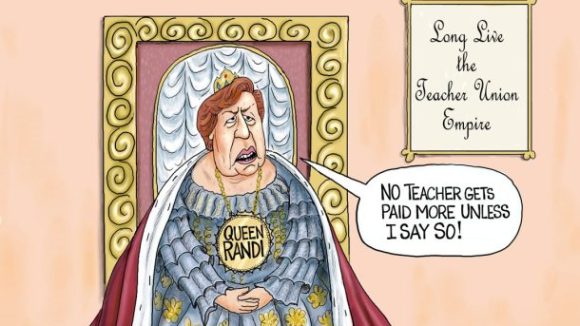
In response to a staffing crisis, the elected Lee County School Board (LCSB) approved an incentive plan to attract and retain teachers for high-need schools and hard-to-fill subject areas.

In the wake of Big Labor’s capture of the governorship and tightening of its grip over the Virginia General Assembly in last fall’s elections, union strategists are eager for passage of a law mandating union monopoly bargaining over the compensation and work rules of state and local civil servants.