Calfornia Reaping What Jerry Brown Planted in the 1970s

Calfornia Reaping What Jerry Brown Planted in the 1970s

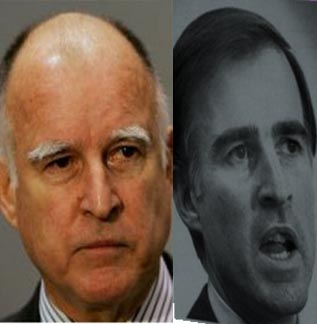
It's not often that a politician has to deal with a problem he created nearly twenty-five years ago. Most politicians sacrifice the short-term political benefit and leave the political headache to future generations of taxpayers and politicians. That's why it is ironic that while Jerry Brown wrestles with a spending and debt crisis in California he is forced to deal with a problem of his own making. In 1976, during Brown's first term as governor, he approved collective bargaining rights for government workers. Since that decision, the government workers unions power and influence have grown California's government spending through the roof as they bargained against the taxpayers for greater salary and benefits that many of their private sector counterparts. One thing you can say about Jerry Brown is that politics runs through his veins. Since 1976, Brown has been defeated for re-election, run for the presidency, elected mayor of a large city and won the governorship again forcing him to deal with a $16 billion deficits and a powerful opposition for reform from government union bosses -- union bosses empowered by his 1976 decision. Brown's solution to this problem shows that while he may have extraordinary staying power he has underwhelming temerity. While he talks about taking on the special interests and making drastic cuts to the state's budget, he is offering large tax increases and minor reforms to the power of the unions. Should the state defeat his tax increase initiative this November, he will be forced to take on the monster of his own making. Don't count on Jerry Brown asking that California become a Right to Work state but it would be a sign that he was serious in addressing the problem of his own making. Chriss Street at Breitbart looks at this problem in greater detail:

Right to Work States Enjoy 'Growth Advantage'

Right to Work States Enjoy 'Growth Advantage'

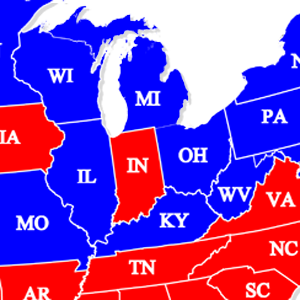
Compulsory Unionism Negatively Correlated With Compensation Growth (source: National Right To Work Committee April 2012 Newsletter) By prohibiting compulsory union dues, state Right to Work laws spur the growth of private-sector employee compensation in the form of wages, salaries, benefits and bonuses, as well as employment growth. Last month, the U.S. Commerce Department's Bureau of Economic Analysis (BEA) issued its estimates for 2011 state personal income. The BEA also issued estimates for an array of specific kinds of income, including employee compensation, at the state level. The 2011 BEA income data in general, and the compensation data especially, show once again that there is a strong negative correlation between compulsory unionism and economic growth. Overall, private-sector employee compensation (including wages, salaries, benefits and bonuses) grew by 6.4% nationwide over the past decade, after adjusting for inflation. Historically speaking, this was slow growth. However, states that protect employees from being fired for refusal to pay dues or fees to an unwanted union typically fared far better than the rest. (From 2001 to 2011, 22 states had Right to Work laws prohibiting forced union dues on the books. Last month Indiana became the 23rd Right to Work state.) A review of how compensation and jobs grew (or failed to grow) in each state suggests the U.S. Congress could dramatically improve America's economic prospects for the next decade by repealing forced union dues and fees nationwide. Current federal law authorizes and promotes the payment of compulsory union dues and fees as condition of getting or keeping a job. Right to Work States' 2001-2011 Compensation Increase Nearly Double the National Average

Right to Work States Enjoy 'Growth Advantage'

Right to Work States Enjoy 'Growth Advantage'

Compulsory Unionism Negatively Correlated With Compensation Growth (source: National Right To Work Committee April 2012 Newsletter) By prohibiting compulsory union dues, state Right to Work laws spur the growth of private-sector employee compensation in the form of wages, salaries, benefits and bonuses, as well as employment growth. Last month, the U.S. Commerce Department's Bureau of Economic Analysis (BEA) issued its estimates for 2011 state personal income. The BEA also issued estimates for an array of specific kinds of income, including employee compensation, at the state level. The 2011 BEA income data in general, and the compensation data especially, show once again that there is a strong negative correlation between compulsory unionism and economic growth. Overall, private-sector employee compensation (including wages, salaries, benefits and bonuses) grew by 6.4% nationwide over the past decade, after adjusting for inflation. Historically speaking, this was slow growth. However, states that protect employees from being fired for refusal to pay dues or fees to an unwanted union typically fared far better than the rest. (From 2001 to 2011, 22 states had Right to Work laws prohibiting forced union dues on the books. Last month Indiana became the 23rd Right to Work state.) A review of how compensation and jobs grew (or failed to grow) in each state suggests the U.S. Congress could dramatically improve America's economic prospects for the next decade by repealing forced union dues and fees nationwide. Current federal law authorizes and promotes the payment of compulsory union dues and fees as condition of getting or keeping a job. Right to Work States' 2001-2011 Compensation Increase Nearly Double the National Average

Will Big Labor Get Its Revenge in Wisconsin?

Will Big Labor Get Its Revenge in Wisconsin?

Union Bosses Plot to Recover All of Their Forced-Dues Privileges (source: National Right To Work Committee April 2012 Newsletter) Early last year, Wisconsin Gov. Scott Walker (R) infuriated the union hierarchy, in his own state and nationwide, when he introduced legislation (S.B.11) that would abolish forced union dues for teachers and many other public employees and also sharply limit the scope of government union monopoly bargaining. In response, teacher union bosses in Madison, Milwaukee, and other cities called teachers out on illegal strikes so they could stage angry protests at the state capitol and at legislators' residences. Government union militants issued dozens of death threats against Mr. Walker, his administration, and their families. Fourteen Big Labor-backed state senators, all Democrats, temporarily fled the state to deny the pro-S.B.11 Senate majority a quorum to pass the bill. But thanks in part to public support mobilized by the National Right to Work Committee's e-mail and telecommunications activities, pro-Right to Work legislators were able to withstand the Big Labor fury. Ultimately, S.B.11 was sent to Gov. Walker's desk, and on March 11, 2011, he signed into law the measure now known as Act 10. '[T]o Get Things Out of the Contract and Make Needed Changes Was Impossible'

Tim Kaine: "Friend of Labor Bosses"

Tim Kaine: "Friend of Labor Bosses"

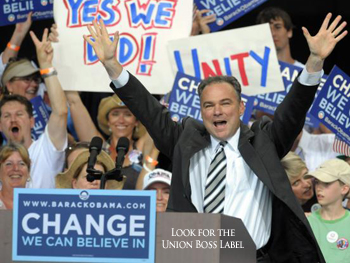
Virginia is a battleground state for the presidency and for control of the US Senate this year. Former GOP Senator and Right to Work champion George Allen is running against former Obama's handpicked Democratic National Committee Chairman and while  Virginia governor and Tim Kaine. Kaine claims to support the state's Right to Work law, but does not support a national Right to Work law. The Richmond Times Dispatch noticed how President Obama in a speech deriding Right to Work called Tim Kaine a "friend of labor." "Friend of labor" is a euphemism for "friends of the union bosses." American workers who have 'friends' like these, who needs enemies: In a recent speech calling Tim Kaine a "friend of labor," President Barack Obama took a swipe at states — including Virginia — that have right-to-work laws. Not surprisingly, he misrepresented not only the laws but the facts. The president says right-to-work laws are an attempt to "take collective bargaining rights away." No, they aren't. Unions can still bargain collectively in right-to-work states. What they can't do is make union membership a condition of employment. The president also said he likes to call right-to-work "right-to-work-for-less laws." Good one. But studies about wages in right-to-work versus non-right-to-work states differ; some say they're higher, others say they're lower. And others note that both economic output and wages have risen faster in right-to-work states.

Tim Kaine:

Tim Kaine: "Friend of Labor Bosses"

Virginia is a battleground state for the presidency and for control of the US Senate this year. Former GOP Senator and Right to Work champion George Allen is running against former Obama's handpicked Democratic National Committee Chairman and while  Virginia governor and Tim Kaine. Kaine claims to support the state's Right to Work law, but does not support a national Right to Work law. The Richmond Times Dispatch noticed how President Obama in a speech deriding Right to Work called Tim Kaine a "friend of labor." "Friend of labor" is a euphemism for "friends of the union bosses." American workers who have 'friends' like these, who needs enemies: In a recent speech calling Tim Kaine a "friend of labor," President Barack Obama took a swipe at states — including Virginia — that have right-to-work laws. Not surprisingly, he misrepresented not only the laws but the facts. The president says right-to-work laws are an attempt to "take collective bargaining rights away." No, they aren't. Unions can still bargain collectively in right-to-work states. What they can't do is make union membership a condition of employment. The president also said he likes to call right-to-work "right-to-work-for-less laws." Good one. But studies about wages in right-to-work versus non-right-to-work states differ; some say they're higher, others say they're lower. And others note that both economic output and wages have risen faster in right-to-work states.