School Bus Drivers Tell Teamster Union Bosses to Hit the Road
From the National Right to Work Legal Defense Foundation: School bus drivers desperately need Right to Work protections Lyons, IL (April 26, 2012) – A large majority…

From the National Right to Work Legal Defense Foundation: School bus drivers desperately need Right to Work protections Lyons, IL (April 26, 2012) – A large majority…

From the National Right to Work Legal Defense Foundation: New York public employees desperately need Right to Work protections Rochester, NY (April 24, 2012) –…
From the National Right to Work Legal Defense Foundation: Union officials ignore workers’ repeated requests to resign Kissimmee, FL (April 19, 2012) – An Osceola Regional…
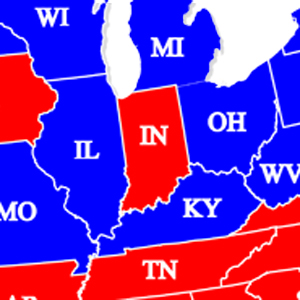
From the National Right to Work Legal Defense Foundation: Union lawyers seek to shut workers out of the proceedings Hammond, IN (April 2,…

In a remarkable article in the Fiscal Times, Liz Peek looks at President’s plan to direct more tax dollars to Big Labor through so-called "green energy projects." The plan will require “a ‘green’ certificate for workers in government-funded construction, renewable power and energy efficient transportation industries and for manufacturers of sustainable products.” And of course those certificates will come from “the AFL-CIO’s Center for Green Jobs.” Peek writes: Though the president has also proposed some streamlining of existing programs, he wants to expand the job training budget by $2.8 billion. While upgrading our workforce could make sense, the administration may have a secondary purpose – payback for Labor’s $400 million support of his 2008 campaign, and its expected boost to his reelection effort. Here’s how: the government funds job training programs administered by organized labor. Through such efforts, unions can expand their outreach to the unemployed and disaffected. In the process, they sign up new workers. Meanwhile, Big Labor is offering workers “green” certification through these programs. At the same time, the White House wants to funnel money into “green” industries. It is only a matter of time before such works demand “green” certification, guaranteeing union workers preferred status.

With the Democrat National Committee (DNC) short on funds needed for their national convention this year, Democrat party leaders have turned to Big Labor Bosses to ask that they their union treasuries pay the freight. In 2008, Big Labor…
With the Democrat National Committee (DNC) short on funds needed for their national convention this year, Democrat party leaders have turned to Big Labor Bosses to ask that they their union treasuries pay the freight. In 2008, Big Labor…
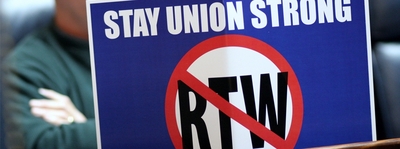
The continues Investors Business Daily its excellent job of defining and promoting Right to Work: Should workers be forced to join unions or pay them dues as a condition of employment? Indiana recently became the 23rd state to say "no," and polls show support for similar right-to-work laws in union bastions like Minnesota, Michigan and Ohio. In Michigan, unions are so fearful that they are pushing to amend the state constitution to prevent such a law. The presumption is that if such laws passed, many employees would drop out of unions or stop paying dues, weakening labor. There's just one thing: There is little evidence that right-to-work laws cause people to leave unions. In fact, what evidence there is suggests the vast majority stick with their unions. That may be in part because the laws force unions to be more attentive to members' needs. "Somebody asked me how many workers got out because of right-to-work and I said, well, we don't track that number," said Jimmy Curry, president of Oklahoma AFL-CIO, whose state adopted a right-to-work law in 2001. He claims that no more than 10% of his members even register complaints.

The beginning of (forced-dues financed) SEIU Propaganda Minister Scott Courtney’s e-mail is pictured above. He proclaims that it is “a chance for all of us to come together to create a new future for our country.” Not much…