Heritage Foundation: Right to Work Creates Jobs and Choice

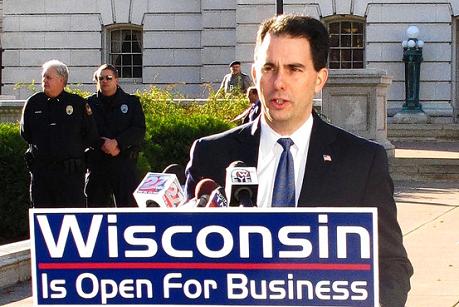
James Sherk of the Heritage Foundation confirms what we have known for decades, enacting Right to Work laws create jobs and promote choice for workers: Union contracts frequently require employees to pay union dues or lose their jobs. This forces workers to support the union financially even if the union contract harms them or they oppose the union’s agenda. Several states, including New Hampshire and Indiana, are considering right-to-work laws, which protect workers from being fired for not paying union dues. Unions oppose these laws because they reduce union membership and income. However, the rest of the economy benefits from right-to-work laws. States can and should reduce unemployment by becoming right-to-work states. Right-to-Work Unions often negotiate contracts requiring all workers to pay union dues or lose their jobs, whether or not they support the union. But many workers reject unions. Some do so because union contracts reduce their pay. Others oppose unions’ political agendas: Unions almost exclusively support Democrats, despite 37 percent of their members voting Republican in the last election.[1] To prevent workers from being forced to support unions financially, 22 states have passed right-to-work laws. Such laws prevent companies from firing workers who do not pay union dues. Workers may still pay voluntarily, but unions cannot threaten their jobs if they do not join. Lawmakers in several states, including New Hampshire, Indiana, and Michigan, are considering right-to-work bills. Forced Unionization Is Not an American Value The government should not force workers to pay for unwanted union representation. In a free society, workers alone should make that choice. Right-to-work laws also make good economic sense. They reduce the incentive for union organizers to target companies that treat their workers well. Since unions hurt businesses, less aggressive union organizing attracts investment—and jobs. Lawmakers considering right-to-work proposals should ignore the union movement’s self-interested opposition. Unions could negotiate contracts that apply only to their members—they simply prefer not to. Unions should not be able to force workers to choose between financially supporting them and losing their jobs. Unions Lose Money When Workers Opt Out

The Government Workers Union Albatross

The Government Workers Union Albatross

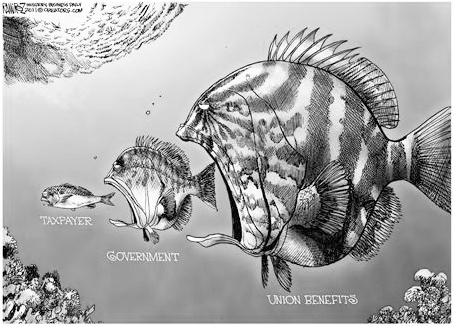
Phillip K. Howard examines how union bosses for government workers are fleecing the taxpayers: The indictment of seven Long Island Rail Road workers for disability fraud last week cast a spotlight on a troubled government agency. Until recently, over 90% of LIRR workers retired with a disability—even those who worked desk jobs—adding about $36,000 to their annual pensions. The cost to New York taxpayers over the past decade was $300 million. As one investigator put it, fraud of this kind "became a culture of sorts among the LIRR workers, who took to gathering in doctor's waiting rooms bragging to each [other] about their disabilities while simultaneously talking about their golf game." How could almost every employee think fraud was the right thing to do? The LIRR disability epidemic is hardly unique—82% of senior California state troopers are "disabled" in their last year before retirement. Pension abuses are so common—for example, "spiking" pensions with excess overtime in the last year of employment—that they're taken for granted. Governors in Wisconsin and Ohio this year have led well-publicized showdowns with public unions. Union leaders argue they are "decimat[ing] the collective bargaining rights of public employees." What are these so-called "rights"? The dispute has focused on rich benefit packages that are drowning public budgets. Far more important is the lack of productivity. "I've never seen anyone terminated for incompetence," observed a long-time human relations official in New York City. In Cincinnati, police personnel records must be expunged every few years—making periodic misconduct essentially unaccountable. Over the past decade, Los Angeles succeeded in firing five teachers (out of 33,000), at a cost of $3.5 million. Collective-bargaining rights have made government virtually unmanageable. Promotions, reassignments and layoffs are dictated by rigid rules, without any opportunity for managerial judgment. In 2010, shortly after receiving an award as best first-year teacher in Wisconsin, Megan Sampson had to be let go under "last in, first out" provisions of the union contract. Even what task someone should do on a given day is subject to detailed rules. Last year, when a virus disabled two computers in a shared federal office in Washington, D.C., the IT technician fixed one but said he was unable to fix the other because it wasn't listed on his form. Making things work better is an affront to union prerogatives. The refuse-collection union in Toledo sued when the city proposed consolidating garbage collection with the surrounding county. (Toledo ended up making a cash settlement.) In Wisconsin, when budget cuts eliminated funding to mow the grass along the roads, the union sued to stop the county executive from giving the job to inmates.

Barack Obama, President of the SEIU

Barack Obama, President of the SEIU

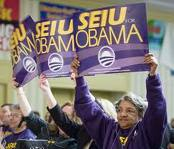
Barack Obama is an effective president, unfortunately not of the United States but of the SEIU argues Arizona Gov. Jan Brewer: Unions — particularly public-employee unions — support illegal immigration because it serves their interests to have a permanent class of people who are financially dependent on the government. The sad secret about private-sector unions is that they are dying.  All they do now is drive up the cost of doing business, thereby preventing their own members from getting hired. Arizona is what we call a “right to work” state. As mandated by the Arizona Constitution, Arizonans are free to join a union or not — it’s their choice, not some union boss’s command. And interestingly enough, when employees are given the choice of whether or not to join a union, they increasingly say no. These workers understand that the rigid workplace rules and regulations that unions promote are bad for growth, bad for competitiveness, and bad for jobs. More and more workers recognize this. That’s why in the private sector, where employees have a real stake in the success of the businesses they work for, only 7.5 percent of workers are unionized. By contrast, more than 36 percent of public-sector workers are unionized, and more than 42 percent of local-government workers. That’s because public-sector workers in the federal government don’t have to worry about unemployment. Ever. In many federal agencies, the primary threat to job security is actually death. Democratic-party bosses love government workers because each of those workers must rely upon the health and growth of government to pay his salary and guarantee his benefits. If the government contracts or shuts down for any reason, those workers are out of a job. And public-sector unions love the Democratic bosses because they keep on growing government. The more people the Democrats can put on the payroll, the more voters they can lock up for their candidates. That gives public-sector unions like the SEIU (which includes huge numbers of public employees) unbelievable leverage. Because the party bosses want to keep government workers employed and happy, they’ll give the unions just about anything they want. And the best part (for them) is that it doesn’t cost them a thing. The taxpayers pick up the tab. Liberal politicians spend taxpayer money to grow government; the unions keep voting for (and contributing to) Democrats, and the Democrats stay in office so they can spend more of the taxpayers’ money growing government. It’s a simple, corrupt, mutual back-scratching circle. How does illegal immigration play into this? Most illegal aliens work hard. That is not in dispute. But the unfortunate fact is that most illegal aliens are also unskilled and uneducated. Unskilled workers have higher unemployment rates and lower earnings. Many rely on government programs to help support them and their families. Much of this access to the welfare system by these households is gained through their American-born children, who are U.S. citizens. That means more government, which means more public-sector-union members. Even if, in the short term, more illegal immigration means fewer union jobs, the unions are okay with that. It is a strategic cost they are willing to bear. Because they know that if the Democrats keep winning, they will give the unions subsidies, grow government, and employ more union members.
Forced-Dues Drive Pennsylvania Public Union Salaries,  Outpace Private Sector's and Members' Wages

Forced-Dues Drive Pennsylvania Public Union Salaries, Outpace Private Sector's and Members' Wages

Forced-dues continue to fill the coffers of unions, as well as, union presidents'  and politicians' pockets according to this recent study by the Commonwealth Foundation: Government Unions and Forced Dues Almost half of government workers in Pennsylvania are union members, compared to 9.3 percent in the private sector. Pennsylvania is a forced union state, meaning that workers can be forced to join a union or pay a [so-called] "fair share fee" just to keep their job.  Most government units in Pennsylvania are "agency shops," with a specified union to which workers must pay a fee. When state and local governments automatically deduct dues and fair share fees from government workers' paychecks—as is the practice in Pennsylvania—employees have little or no say in how their money is used. Union Bosses Union bosses collect hefty salaries derived from member dues and fair share fees. In most cases, the salaries are several times the average union member's annual pay. While acknowledging that budgets were tight, AFSCME Council 13 President David Fillman got a 6 percent raise in 2010, making his salary higher than Gov. Tom Corbett's. Dues and fees often go towards expensive conferences, outings and junkets.  For example, in 2009-10 the Pennsylvania State Education Association—the state's largest public sector union—spent: More than $250,000 on a board of directors retreat in Gettysburg. More than $89,000 for a "political institution meeting" at the Radisson Penn Harris in Camp Hill, Pa. $20,000 for advertising in the Pittsburgh Steelers Yearbook. Almost $5,900 at Kimberton Golf Club and more than $5,100 at Concord Country Club in Chadd's Ford. Political Activity and Lobbying

Forced-Dues Drive Pennsylvania Public Union Salaries,  Outpace Private Sector's and Members' Wages

Forced-Dues Drive Pennsylvania Public Union Salaries, Outpace Private Sector's and Members' Wages

Forced-dues continue to fill the coffers of unions, as well as, union presidents'  and politicians' pockets according to this recent study by the Commonwealth Foundation: Government Unions and Forced Dues Almost half of government workers in Pennsylvania are union members, compared to 9.3 percent in the private sector. Pennsylvania is a forced union state, meaning that workers can be forced to join a union or pay a [so-called] "fair share fee" just to keep their job.  Most government units in Pennsylvania are "agency shops," with a specified union to which workers must pay a fee. When state and local governments automatically deduct dues and fair share fees from government workers' paychecks—as is the practice in Pennsylvania—employees have little or no say in how their money is used. Union Bosses Union bosses collect hefty salaries derived from member dues and fair share fees. In most cases, the salaries are several times the average union member's annual pay. While acknowledging that budgets were tight, AFSCME Council 13 President David Fillman got a 6 percent raise in 2010, making his salary higher than Gov. Tom Corbett's. Dues and fees often go towards expensive conferences, outings and junkets.  For example, in 2009-10 the Pennsylvania State Education Association—the state's largest public sector union—spent: More than $250,000 on a board of directors retreat in Gettysburg. More than $89,000 for a "political institution meeting" at the Radisson Penn Harris in Camp Hill, Pa. $20,000 for advertising in the Pittsburgh Steelers Yearbook. Almost $5,900 at Kimberton Golf Club and more than $5,100 at Concord Country Club in Chadd's Ford. Political Activity and Lobbying

Public Servants' Right to Work in Jeopardy

Public Servants' Right to Work in Jeopardy

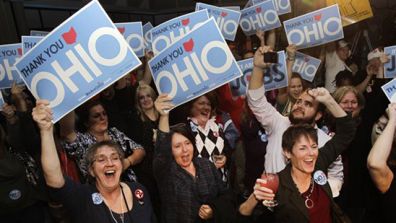
The experience of state after state shows that public-sector compulsory unionism as well as private-sector compulsory unionism devours job- and income-creating opportunities for taxpaying businesses and employees. Credit: Michael Ramirez/Investors Business Daily  Union Bosses Aim to Kill Recent Buckeye State Reform Next Month (Source: October 2011 NRTWC Newsletter) Over the past decade, the citizens of forced-unionism Ohio have been afflicted with one of the worst-performing state economies in the country. Across the U.S. as a whole, despite the severe recent recession, private employers' inflation-adjusted outlays for employee compensation (including wages, salaries, bonuses and benefits) did increase from 2000 to 2010, by an average of 4.3%. And many states fared much better than that. In the 22 states with Right to Work laws on the books protecting both private- and public-sector employees from being fired for refusal to pay dues or fees to an unwanted union, real private-sector employee compensation grew by an aggregate 11.3%. Private employees in 20 of the 22 Right to Work states experienced 2000-2010 compensation growth greater than the national average. Unfortunately, in the 28 states without Right to Work laws on the books, private-sector outlays for employee compensation rose only by a combined 0.7%, after adjusting for inflation. Thirteen of the 14 states with the lowest compensation growth lack a Right to Work law. Ohio was one of just five states with negative real private-sector compensation growth over the last decade. In 2010, Ohio's business expenditures for private employee compensation were 6.6% less than they had been in 2000. Region, Job Mix Can't Account For Buckeye State's Shrinking Private Employee Compensation When confronted with such data, apologists for the forced-unionism policies that prevailed across the board in Ohio for decades until this year try to explain them away by blaming the Buckeye State's location in the U.S. Midwest or its historically high manufacturing density for its abysmal economic record. But such excuses won't wash.

Public Servants' Right to Work in Jeopardy

Public Servants' Right to Work in Jeopardy

The experience of state after state shows that public-sector compulsory unionism as well as private-sector compulsory unionism devours job- and income-creating opportunities for taxpaying businesses and employees. Credit: Michael Ramirez/Investors Business Daily  Union Bosses Aim to Kill Recent Buckeye State Reform Next Month (Source: October 2011 NRTWC Newsletter) Over the past decade, the citizens of forced-unionism Ohio have been afflicted with one of the worst-performing state economies in the country. Across the U.S. as a whole, despite the severe recent recession, private employers' inflation-adjusted outlays for employee compensation (including wages, salaries, bonuses and benefits) did increase from 2000 to 2010, by an average of 4.3%. And many states fared much better than that. In the 22 states with Right to Work laws on the books protecting both private- and public-sector employees from being fired for refusal to pay dues or fees to an unwanted union, real private-sector employee compensation grew by an aggregate 11.3%. Private employees in 20 of the 22 Right to Work states experienced 2000-2010 compensation growth greater than the national average. Unfortunately, in the 28 states without Right to Work laws on the books, private-sector outlays for employee compensation rose only by a combined 0.7%, after adjusting for inflation. Thirteen of the 14 states with the lowest compensation growth lack a Right to Work law. Ohio was one of just five states with negative real private-sector compensation growth over the last decade. In 2010, Ohio's business expenditures for private employee compensation were 6.6% less than they had been in 2000. Region, Job Mix Can't Account For Buckeye State's Shrinking Private Employee Compensation When confronted with such data, apologists for the forced-unionism policies that prevailed across the board in Ohio for decades until this year try to explain them away by blaming the Buckeye State's location in the U.S. Midwest or its historically high manufacturing density for its abysmal economic record. But such excuses won't wash.