
Union Bosses Going All Out to Capture Congress
During the months leading up to Election Day 2026, Big Labor bosses’ focus on politics has never been more explicit.

Forced-dues continue to fill the coffers of unions, as well as, union presidents’ and politicians’ pockets according to this recent study by the Commonwealth Foundation:
Government Unions and Forced Dues
- Almost half of government workers in Pennsylvania are union members, compared to 9.3 percent in the private sector.
- Pennsylvania is a forced union state, meaning that workers can be forced to join a union or pay a [so-called] “fair share fee” just to keep their job. Most government units in Pennsylvania are “agency shops,” with a specified union to which workers must pay a fee.
- When state and local governments automatically deduct dues and fair share fees from government workers’ paychecks—as is the practice in Pennsylvania—employees have little or no say in how their money is used.
Union Bosses
- Union bosses collect hefty salaries derived from member dues and fair share fees. In most cases, the salaries are several times the average union member’s annual pay.

- While acknowledging that budgets were tight, AFSCME Council 13 President David Fillman got a 6 percent raise in 2010, making his salary higher than Gov. Tom Corbett’s.
- Dues and fees often go towards expensive conferences, outings and junkets. For example, in 2009-10 the Pennsylvania State Education Association—the state’s largest public sector union—spent:
- More than $250,000 on a board of directors retreat in Gettysburg.
- More than $89,000 for a “political institution meeting” at the Radisson Penn Harris in Camp Hill, Pa.
- $20,000 for advertising in the Pittsburgh Steelers Yearbook.
- Almost $5,900 at Kimberton Golf Club and more than $5,100 at Concord Country Club in Chadd’s Ford.
Political Activity and Lobbying
- Union interests mean leaders frequently do not advocate for the best policies for their members, or for tax-payers.
- The PSEA promotes a “last in, first out” policy for teacher lay-offs, meaning seniority, rather than competence, determines who keeps their jobs. This especially hurts excellent, but more junior, teachers.
- The PSEA opposes options for parents, such as school vouchers, tax credits, and charter schools, which foster competition in education.
- All four public sector unions profiled here are members of the Coalition for Labor Engagement and Accountable Revenues (CLEAR). CLEAR advocates for job and retirement protection for government workers “without the threat of layoffs, rolling furloughs or privatization”—a policy that inevitably privileges tax increases over spending cuts.
- Union PAC contributions, while voluntary, are also deducted from workers’ paychecks by state and local government. These deductions help make government union PACs some of the most well-funded in the state.
During the months leading up to Election Day 2026, Big Labor bosses’ focus on politics has never been more explicit.
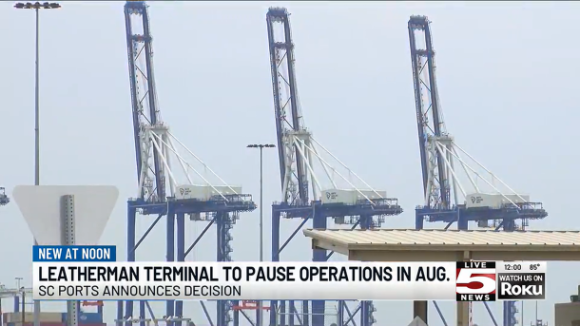
Committee President Mark Mix: “If I were a Leatherman dockworker, I certainly wouldn’t count on Longshore Union bosses to show any flexibility” to get the terminal reopened and “save my job.”
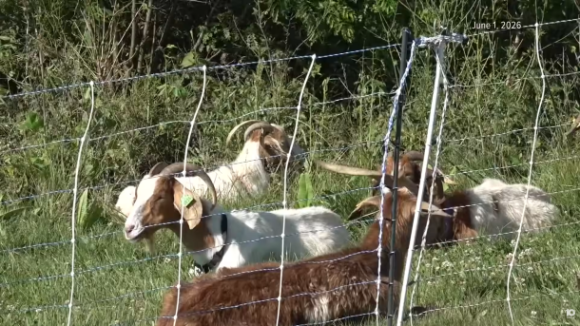
According to AFSCME Local 1632 President Will Harmon, Columbus Water & Power committed a grievous offense by subcontracting out the job of clearing away invasive weeds and brush spread out across two acres of its property to a tribe of roughly 40 goats without first “negotiating” with Big Labor.