Damn Our Union Members,

Damn Our Union Members, "There's Bigger Fish to Fry"

Why Right To Work Laws Are Important While Big Labor Bosses continue to pour forced-union dues into campaigns to stop Right To Work freedom, they also continue to shower Barack Obama with forced-dues money even-though Obama just killed a pipeline project that would have created jobs for 20,000 workers, many of which would be union members. If most of their members had the Right To Work, they could stop paying dues and force union officials to pay attention to union member jobs rather playing politics with union families' income. From Lachlan Markay's post: The Obama Administration’s decision to forego the Keystone pipeline has forced the country’s labor groups into a bitter civil war. At issue is the central purpose of the labor movement: those who feel it should represent workers in the workplace generally oppose the administration’s decision; those who see unions as primarily political organizations have generally supported it. Unions that had a stake in the Keystone decision were livid that the administration abandoned it, and equally angry at their fellow union members who had supported that decision, according to a Friday report from Politico Pro ($): “People are p****d,” said one U.S. labor official who supports the proposed TransCanada pipeline. “The emotions are really, really raw right now. This is a big deal.” “It’s repulsive, it’s disgusting and we’re not going to stand idly by,” Laborers’ International Union of North America General President Terry O’Sullivan told POLITICO. “The rules have changed. So we’ll react accordingly.”… But other top figures in the labor movement defended the decision. Their argument: re-electing President Obama is a higher priority than preserving union jobs, and to that end, unions had to prevent Republicans from gaining the upper hand on the top political issue of the day.
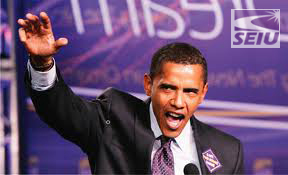

Damn Our Union Members, "There's Bigger Fish to Fry"

Damn Our Union Members, "There's Bigger Fish to Fry"

Why Right To Work Laws Are Important While Big Labor Bosses continue to pour forced-union dues into campaigns to stop Right To Work freedom, they also continue to shower Barack Obama with forced-dues money even-though Obama just killed a pipeline project that would have created jobs for 20,000 workers, many of which would be union members. If most of their members had the Right To Work, they could stop paying dues and force union officials to pay attention to union member jobs rather playing politics with union families' income. From Lachlan Markay's post: The Obama Administration’s decision to forego the Keystone pipeline has forced the country’s labor groups into a bitter civil war. At issue is the central purpose of the labor movement: those who feel it should represent workers in the workplace generally oppose the administration’s decision; those who see unions as primarily political organizations have generally supported it. Unions that had a stake in the Keystone decision were livid that the administration abandoned it, and equally angry at their fellow union members who had supported that decision, according to a Friday report from Politico Pro ($): “People are p****d,” said one U.S. labor official who supports the proposed TransCanada pipeline. “The emotions are really, really raw right now. This is a big deal.” “It’s repulsive, it’s disgusting and we’re not going to stand idly by,” Laborers’ International Union of North America General President Terry O’Sullivan told POLITICO. “The rules have changed. So we’ll react accordingly.”… But other top figures in the labor movement defended the decision. Their argument: re-electing President Obama is a higher priority than preserving union jobs, and to that end, unions had to prevent Republicans from gaining the upper hand on the top political issue of the day.

The Greece Next Door to Wisconsin

The Greece Next Door to Wisconsin

It is worth remembering that Illinois has become the belly of the beast when it comes to pleasing the union bosses at expense of the taxpayer.  Even after raising taxes at the demand of union activists, the state is still suffering through an economic crisis.  This is the point that Wisconsin Gov. Scott Walker has been making -- we can't balance state budgets without reforming the power of the union bosses.  The Wall Street Journal notices the difference between Illinois and Wisconsin in a recent Op-Ed: Run up spending and debt, raise taxes in the naming of balancing the budget, but then watch as deficits rise and your credit-rating falls anyway. That's been the sad pattern in Europe, and now it's hitting that mecca of tax-and-spend government known as Illinois. Though too few noticed, this month Moody's downgraded Illinois state debt to A2 from A1, the lowest among the 50 states. This wasn't supposed to happen. Only a year ago, Governor Pat Quinn and his fellow Democrats raised individual income taxes by 67% and the corporate tax rate by 46%. They did it to raise $7 billion in revenue, as the Governor put it, to "get Illinois back on fiscal sound footing" and improve the state's credit rating. It's worth contrasting this grim picture with that of Wisconsin north of the border. Last winter Madison was occupied by thousands of union protesters trying to bully legislators to defeat Republican Governor Scott Walker's plan. The reforms passed anyway. In contrast to the Illinois downgrade, Moody's has praised Mr. Walker's budget as "credit positive for Wisconsin," adding that the money-saving reforms bring "the state's finances closer to a structural budgetary balance." As a result, Wisconsin jumped in Chief Executive magazine's 2011 ranking of each state's business climate—moving to 17th from 41st. Illinois dropped to 48th from 45th as ranked by the nation's top CEOs.

Big Labor Monopoly Power Won in Ohio but Workers and Taxpayers are Losing

Big Labor Monopoly Power Won in Ohio but Workers and Taxpayers are Losing

Writing for RedState.com, Jason Hart looks at the continued hardship union bosses are imposing on the state thanks, in part, to their victorious efforts to overturn needed reforms including Right to Work  protections. In Wisconsin, Governor Walker’s public union reforms are pummeling the Big Labor narrative by saving taxpayer dollars and teachers’ jobs. Meanwhile, the professional class-warriors who get rich pushing “solidarity” force districts into layoffs by refusing to revisit unaffordable contracts. After similar reforms failed in Ohio thanks to a smear campaign exceeding $30 million, Ohio’s public workers are enjoying the sort of union victory that’s often accompanied by a pink slip. A month ago I shared stories from around the state of firings caused by the same union bosses who screeched against Governor Kasich’s “attack on workers.” To the surprise of neither of my website’s readers, this avoidable trend continues. Voters who opposed reform have caused the very problems Big Labor insisted reform would create: Marion Police say they are committed to answering the city’s 9-1-1 calls but come the [sic] January 1st, callers could see delays in response times. That’s because the [sic] 15 officers are being cut from the department. In Lorain, millions in cuts plus millions borrowed from the state aren’t enough:The cuts would be in addition to laying off 18 teachers and nine teachers’ aides, which was approved Wednesday night by board members and would save $1.5 million. The layoffs take effect Jan. 23. In Wapakoneta, home of Neil Armstrong, the teachers’ union is preparing to strike over a pay freeze and increased benefit costs, although administrators and non-union staff have already taken a pay freeze. The district, like many, has faced difficult financial times. It had $1.2 million of deficit spending last fiscal year and is projected to spend $1.6 million more than its annual revenue this year.

Bloated State Budgets Thanks to Big Labor Contracts

Bloated State Budgets Thanks to Big Labor Contracts

The Fiscal Times' Liz Peeks investigates how union budgets have busted state budgets and asks "Is it possible that the real divide in the United States today is between unions and… everybody else?." The answer, unfortunately for taxpayers, is yes. From Bloated Union Contracts Have Busted State Budgets: Consider the issues making headlines: education reform, busted state budgets, the battle to recall Wisconsin Governor Scott Walker, free trade agreements,Occupy Wall Street, the fight to make Indiana a right-to-work state. What these stories have in common is the waning influence of organized labor and the all-out battle by union leaders to hold on. Take the Obama Administration’s Race to the Top initiative. Education Secretary Duncan recently warned that several states, including New York, might not receive monies earlier awarded through that program because they have not followed through on required reforms. The stumbling block? Teacher evaluations. New York City Mayor Michael Bloomberg laid out new education initiatives in his recent State of the City address, among them a proposal to give $20,000 raises to the best teachers, in return for changing the way educators are evaluated. Today, teachers are rated either satisfactory or unsatisfactory; 97 percent fall in the former category. UFT President Michael Mulgrew immediately denounced the plan, describing Mr. Bloomberg as “lost in his own fantasy world of education.” Mr. Mulgrew may be the one living in a fantasy world. Pressure to boost our country’s public schools is one of the rare priorities on both Republicans’ and Democrats’ to-do lists. Americans are appalled by our plummeting world education rankings, and by our graduates’ lack of preparedness for today’s job market. While the decline in our schools stems from a number of sources, most reformers – including Secretary Duncan – see the intransigence of unions on the “job for life” rules that perpetuate mediocre teaching as a major roadblock to progress. Likewise, the recession has forced politicians to confront bloated public employee contracts that have torpedoed many states’ budgets. Estimated at over $3 trillion, the underfunding of state and local pension plans has been described as one of our most serious fiscal problems. Voters now understand that unless elected officials overhaul pay and benefits packages they will face soaring taxes or reduced services.

Facts Show Right to Work is Right for America

Facts Show Right to Work is Right for America

Writing in the Miami Herald, James Sherk of the Heritage Foundation makes the case of Indiana and other states to enact Right to Work laws to protect their workers: Who could fault a worker who did not pay dues to the Teamsters? In the past two years the Department of Labor has charged or convicted of corruption 11 Teamsters officers. A government monitor recently accused the union’s president, Jimmy Hoffa, of trying to bribe election opponents with Teamster funds. Should a worker be fired for not paying union dues? Unions think so. They negotiate contracts that force workers to pay union dues or lose their job. Some workers object to their union’s political spending. Other workers could earn more than their union negotiated for them. Still others feel their union is corrupt. Right-to-work has returned to the national agenda. Twenty-two states have passed right-to-work laws that let workers decide whether to support unions or not.  It protects employees’ right to work, whether or not they support unions. New Hampshire legislators narrowly failed to override their governor’s veto of right-to-work. The Indiana legislature will soon debate whether to make the Hoosier state America’s 23rd right-to-work state. They should. Right-to-work benefits the economy as well as personal freedom. Unions organize more aggressively in non- right-to-work states. It is worth it to attempt to unionize any business they have a shot at. If a state becomes right-to-work, however, expensive organizing drives at good employers becomes less worthwhile — unions cannot force content workers to pay dues. Businesses want to know that, if they treat their workers well, unions will leave them alone. Right-to-work makes that more likely — and businesses notice. Studies show right-to-work laws are a major factor in business location decisions. Most new auto plants have been built in right-to-work states. More investment means more jobs.