Senate Confirms Trump Labor Board Nominees
The rabidly pro-union boss Biden era at the National Labor Relations Board (NLRB) came to a screeching halt on December 18.
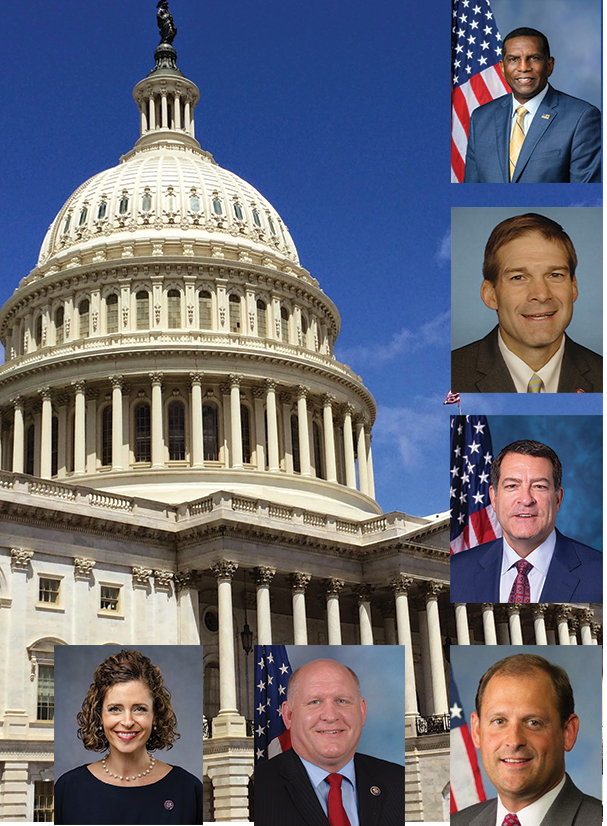
Thanks largely to relentless grass-roots activism by members of the National Right to Work Committee, the number of congressional cosponsors of the forced-dues repeal legislation introduced in the U.S. House and Senate early this year continues to rise. H.R.1275 and S.406, the National Right to Work Act measures respectively introduced in the 2021-22 Congress by Rep. Joe Wilson (R-S.C.) and Sen. Rand Paul (R-Ky.), had a combined total of well over 100 cosponsors as this Newsletter went to press in early September.
These identical bills would not add a single word to federal labor law.
Instead, they would simply repeal the current provisions in the federal code that authorize and promote the termination of employees for refusal to pay dues or fees to an unwanted union.
“When H.R.1275 or S.406 becomes law, private-sector employees in all 50 states will have the freedom to choose as individuals whether or not to join or bankroll a union,” explained Right to Work President Mark Mix.
“No employees covered by federal labor statutes will face job loss as a consequence of their decision to refuse to pay dues or fees to a union they would never join voluntarily.”
Compulsory unionism is, above all, a moral issue.
At the same time, of all the economic reforms Congress may consider during its 2021-22 session, federal forced-dues repeal, otherwise known as the National Right to Work Act, would surely have the strongest positive impact for incomes and jobs.
To illustrate the point, Mr. Mix called attention to a 2020 National Institute for Labor Relations Research analysis showing that the mean cost of living-adjusted, after-tax household income in Right to Work states in 2019 was $64,472 — roughly $4,300 higher than the forced-dues state average.
The Institute’s sources for this analysis were the U.S. Census Bureau (BOC), the Missouri Economic Research and Information Center (a state government agency), and the nonpartisan, Washington, D.C.-based Tax Foundation.
“Working men and women find again and again that they cannot provide as well for their families in states that continue to allow forced union dues as they can in states that have adopted laws protecting the Right to Work,” commented Mr. Mix.
“That’s why, when they have a choice, working-aged people prefer not to live in forced-unionism states.”
Considered together, age-grouped state population data for 2020 recently released by the BOC and comparable data for 2010 tell an important story.
They show that, over the past decade, the total population of people in their peak-earning years (aged 35-54) for the 23 states that have yet to adopt and implement a Right to Work law, barring the termination of employees for refusal to bankroll an unwanted union, fell from 43.98 million to 40.73 million.
This article was originally published in our monthly newsletter. Go here to access previous newsletter posts.
To support our cause and help end forced unionism, go here to donate.
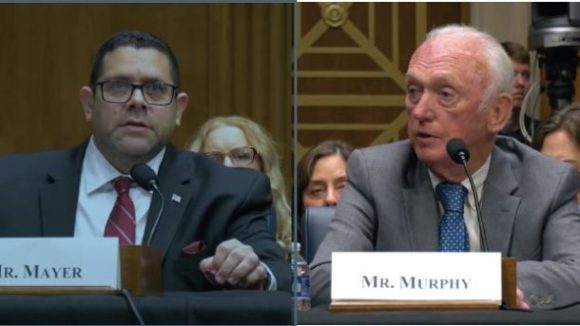
The rabidly pro-union boss Biden era at the National Labor Relations Board (NLRB) came to a screeching halt on December 18.

In addition to helping make the necessities and amenities of life more affordable, Right to Work laws help keep individual and family aggregate state-local tax burdens from spiraling out of control.

In response to a staffing crisis, the elected Lee County School Board (LCSB) approved an incentive plan to attract and retain teachers for high-need schools and hard-to-fill subject areas.