Union-Only Port Terminal Suspends Operations
Committee President Mark Mix: “If I were a Leatherman dockworker, I certainly wouldn’t count on Longshore Union bosses to show any flexibility” to get the terminal reopened and “save my job.”
While nothing is set in stone, this TradingMarkets.com article highlights the attraction of Right to Work states for employment opportunities. No doubt about it, if your state wants to attract jobs, then it should pass right to work laws.
Spokesman Bob Klein said by e-mail last week said the current economy was not the only economic consideration at work. The company is looking at long-term competitiveness.
Going south?
Boyd said that the trend for company relocation within the United States has been from the North to the South, where a big attraction is Right-to-Work laws in southern states.
Right-to-Work allows companies more flexibility in handling labor issues than in non Right-to-Work states.
Right-to-Work refers to a worker being able to work at a company without necessarily joining a union when one is in place, which puts less power in the hands of unions.
One example is that a company can be more flexible in moving workers from one job to another.
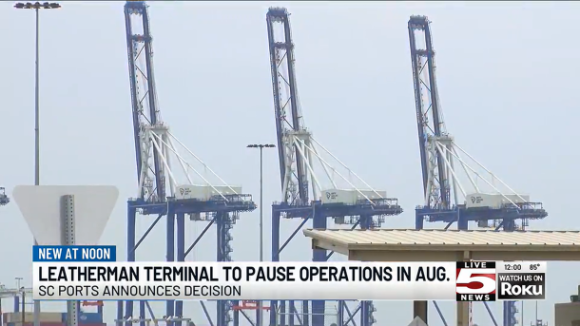
Committee President Mark Mix: “If I were a Leatherman dockworker, I certainly wouldn’t count on Longshore Union bosses to show any flexibility” to get the terminal reopened and “save my job.”
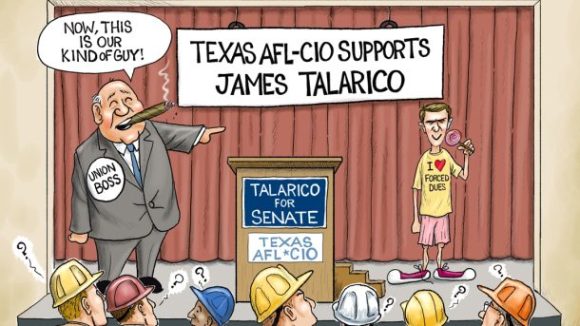
Union bosses are rallying behind Democrat Texas U.S. Senate candidate James Talarico because he opposes Right to Work protections for employees.

... States that continuously lacked Right to Work protections for employees from 2012-23 lost a net total of $2.05 trillion in cumulative AGI solely as a consequence of domestic out-migration of taxpayers during that 11-year period.