Radical Teacher Unions Get Even More Radical
Incoming NEA President Princess Moss: Teachers Must Be Full-Time Political Activists
As more and more workers are faced with higher mandatory dues for their coerced union membership, let’s keep in mind where their hard-earned money is going — politics.
Union officials gave $61.5 million directly to candidates in 2004 and Democrat candidates enjoyed nearly 90% of the treasure according to the Center for Responsive Politics. Campaign finance experts have documented that this “hard money” is just the tip of Big Labor’s forced dues political juggernaut. Union officials spend an estimated 10 times their reported hard money contributions on political expenditures that help Big Labor candidates but don’t go directly to the campaign accounts of their favorite politicians.
As USA Today reported, between Jan. 1, 2005, and June 30, 2006, federal reports show major unions raised more money than they did for the last non-presidential campaign in 2002:
• The main Service Employees International Union (SEIU) political action committee and five local SEIU PACs raised about $15 million to give to candidates, a 62% increase.
• The main PAC for the American Federation of State, County and Municipal Employees (AFSCME), part of the AFL-CIO, has raised $9.1 million, a 39% increase.
Nationally, the AFL-CIO and Change to Win are on track to spend considerably more than the AFL-CIO spent in 2002 to register, educate and turn out union voters.
The AFL-CIO says it plans to spend $40 million this year on such efforts in 21 states. Change to Win plans a similar program and higher spending than 2002, but Chairwoman Anna Burger would not give a figure. The two groups are in talks to coordinate outreach to union voters.
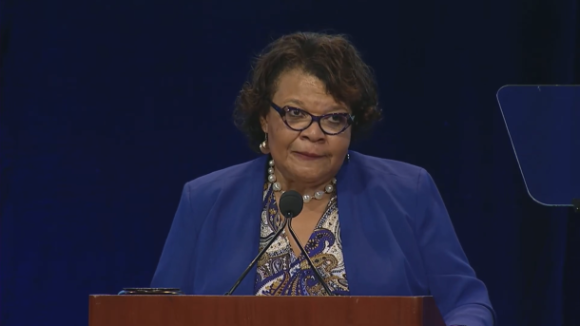
Incoming NEA President Princess Moss: Teachers Must Be Full-Time Political Activists
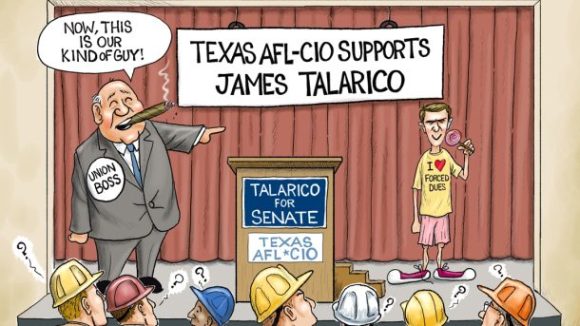
Union bosses are rallying behind Democrat Texas U.S. Senate candidate James Talarico because he opposes Right to Work protections for employees.
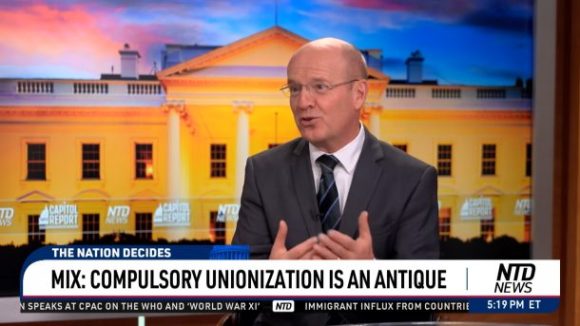
"Vullo makes it clear that using the threat of federal prosecution to force any employer to put employees’ Right to Work on the bargaining table violates the First Amendment.”