Union Special Privileges vs. Affordability
In addition to helping make the necessities and amenities of life more affordable, Right to Work laws help keep individual and family aggregate state-local tax burdens from spiraling out of control.
As Michigan labor unions continue to impede progress and job creation, a group of free-market economists released a report arguing that Michigan’s economy could improve dramatically if it became a Right to Work state like neighboring Indiana.
Timothy Nash, the study’s director, led a team from Northwood University and Central Michigan University. Their findings: States with right-to-work laws performed better economically than Michigan.
Some examples:
Personal income growth: Per capita income grew 20 percent in Michigan from 2000 to 2010; in the U.S., 36 percent; 39 percent in right-to-work states and 34 percent in non-RTW states.
Real growth in gross state product: From 1998 to 2001, Michigan lagged all three benchmark groups with growth of 26.5 percent, compared with 71.5 percent in the U.S. overall; 85 percent in right-to-work and 64 percent non-RTW.
Job growth: Michigan’s nonfarm employment dropped nearly 17 percent from 2001 to 2010. At the same time, the U.S. grew 2 percent, right-to-work states nearly 4 percent and states without such laws 0.5 percent.
The complete, 175-page 2012 Michigan Economic Competitiveness Study can be found on the Michigan Chamber of Commerce website, michamber.com.

In addition to helping make the necessities and amenities of life more affordable, Right to Work laws help keep individual and family aggregate state-local tax burdens from spiraling out of control.
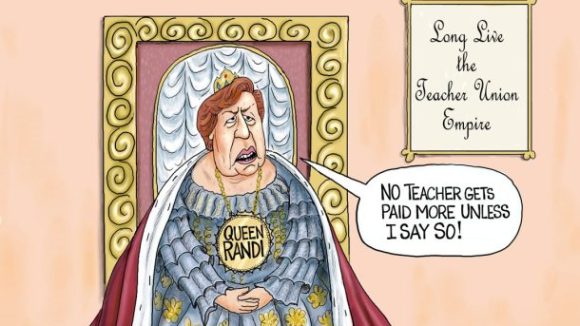
In response to a staffing crisis, the elected Lee County School Board (LCSB) approved an incentive plan to attract and retain teachers for high-need schools and hard-to-fill subject areas.

In the wake of Big Labor’s capture of the governorship and tightening of its grip over the Virginia General Assembly in last fall’s elections, union strategists are eager for passage of a law mandating union monopoly bargaining over the compensation and work rules of state and local civil servants.