Radical Teacher Unions Get Even More Radical
Incoming NEA President Princess Moss: Teachers Must Be Full-Time Political Activists
From NPR’s Josh Rogers:
House Speaker William O’Brien says he’s convinced the needed two-thirds vote will happen.
“What drives state economic growth, first, is whether or not a state’s got an income tax. New Hampshire does pretty well with that. The second is whether a state’s got a right-to-work law,” said John Kalb, director of New England Citizens for Right to Work, at a statehouse news conference.
He was flanked by conservative and Tea Party activists. They worked hard during last year’s elections and are working hard now for a law that some say would have been almost unthinkable before Republicans’ big 2010 election gains. The GOP went from the minority to holding a 3-to-1 legislative fdge. But even with that margin, right-to-work backers admit the override is still touch and go.
“We’ve been calling our legislators nonstop, letting them know that this is why the voters put them in their position last November,” says Kevin Smith, who leads the conservative group Cornerstone Action.
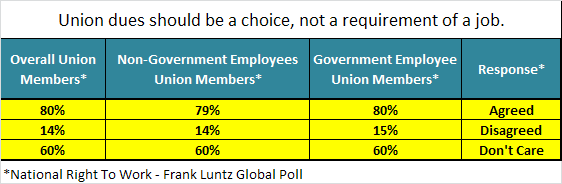
Sign-up for NRTWC’s Free Once-a-Day e-mailed update summaries
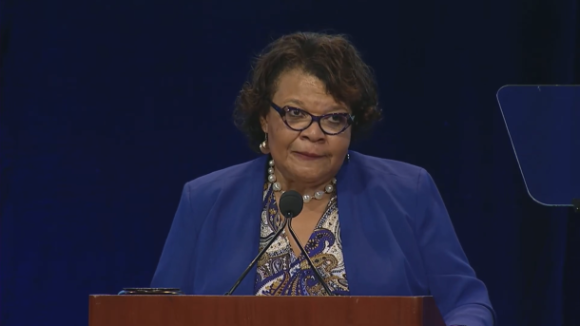
Incoming NEA President Princess Moss: Teachers Must Be Full-Time Political Activists
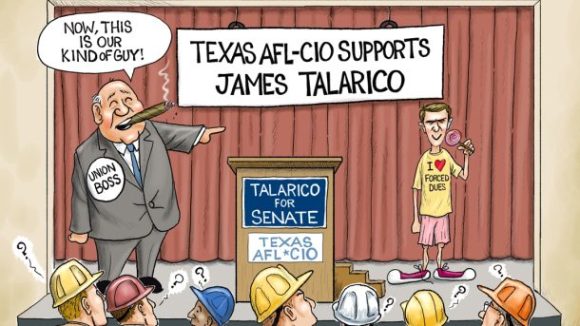
Union bosses are rallying behind Democrat Texas U.S. Senate candidate James Talarico because he opposes Right to Work protections for employees.
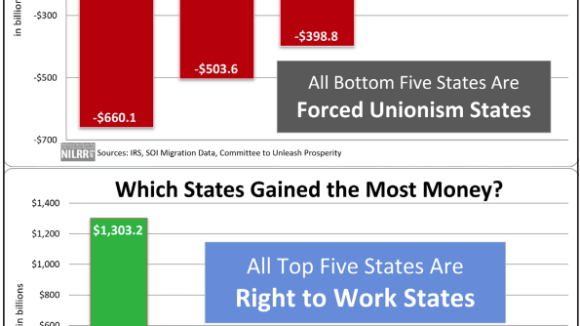
... States that continuously lacked Right to Work protections for employees from 2012-23 lost a net total of $2.05 trillion in cumulative AGI solely as a consequence of domestic out-migration of taxpayers during that 11-year period.