Union-Only Port Terminal Suspends Operations
Committee President Mark Mix: “If I were a Leatherman dockworker, I certainly wouldn’t count on Longshore Union bosses to show any flexibility” to get the terminal reopened and “save my job.”
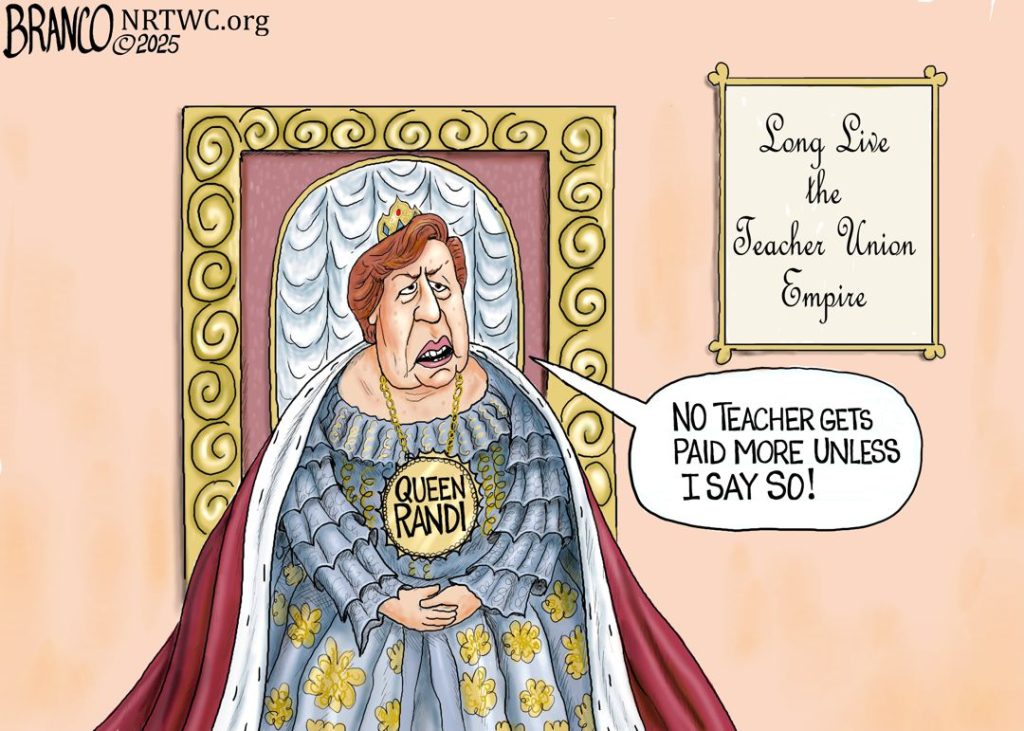
As recent scientific surveys conducted by the nonpartisan group Educators for Excellence (E4E) have shown, the vast majority of rank-and-file American teachers support common-sense pay reforms to enable school districts to attract and retain good teachers and deploy them where they are needed.
For example, a 2023 nationwide E4E survey found that 92% of teachers support bonus pay for working in hard-to-staff schools.
Another E4E survey conducted in 2024 confirmed there is strong support among teachers for enhancing “[o]pportunities for higher pay for working in a hard-to-staff school or subject area.”
Unfortunately, teacher union bosses, who wield monopoly-bargaining control over how the vast majority of today’s K-12 government school educators are compensated, are completely out of step with most teachers regarding such matters.
As education specialist Thomas Toch explained in a 2022 article for the New York Times, teacher union bosses routinely resist compensation strategies that “concentrate resources where there’s a clear need.” Instead, they back “expensive” schemes offering across-the-board pay hikes for easy-to-recruit, as well as hard-to-recruit, positions.
National Right to Work Committee Vice President John Kalb cited an ongoing battle in Lee County, Fla., as a dismaying illustration of what teacher union bosses’ one-size-fits-all compensation mentality means in practice.
“Late last spring,” explained Mr. Kalb, “in response to a staffing crisis, the elected Lee County School Board (LCSB) approved an incentive plan to attract and retain teachers for high-need schools and hard-to-fill subject areas.
“As the Naples News-Press reported at the time, the LCSB initiative offered ‘annual financial bonuses of up to $9,000 to educators who work in low-performing schools or teach critical subjects such as math, science, and special education during the 2025-26 academic year.’
“Unfortunately, top bosses of the Teachers Association of Lee County [TALC/FEA/NEA/AFT] union almost immediately filed a lawsuit to kill this worthy plan.
“And TALC President Kevin Daly made it crystal-clear that Big Labor opposition to the supposedly ‘unfair’ initiative was not merely based on the fact that the LCSB had crafted it and begun implementing it without his and other union bosses’ acquiescence.
“Mr. Daly opposes the very idea of school officials’ offering bonuses to teachers who are qualified and willing to fill positions that they haven’t been able to fill at Big Labor-negotiated pay rates, without also offering bonuses for positions the board has filled easily.”
Even in the wake of a December 1 ruling by a Florida Public Employees Relations Commission (PERC) officer that the LCSB’s initiative is legal, the TALC brass is continuing its quest to block it.
According to Mr. Daly, this PERC decision cannot stand, because it “reinforces the idea that the district can unilaterally deal with things” without first seeking and obtaining Big Labor’s permission!
Mr. Kalb noted that top national union bosses like American Federation of Teachers President Randi Weingarten and National Education Association President Becky Pringle are effectively every bit as hostile to viable financial incentives for good teachers as local bosses like Kevin Daly are.
He concluded: “Until elected school officials across the U.S. can freely make use of the same pay incentives that leaders of private businesses and even officers of union-free government agencies commonly use, government schools will continue to be a vast black hole for taxpayer dollars.
“And genuine, comprehensive compensation reform for teachers is incompatible with union monopoly bargaining in K-12 schools.
“That’s a key reason why the Committee has assisted in recent years successful grassroots efforts to roll back the scope of K-12 union monopoly bargaining in states like Florida, Arkansas, West Virginia and Tennessee. In 2026, the Committee hopes to help citizens target teacher union bosses’ special privileges in states like Idaho and Oklahoma.”
This article was originally published in our monthly newsletter. Go here to access previous newsletter posts.
To support our cause and help end forced unionism, go here to donate.
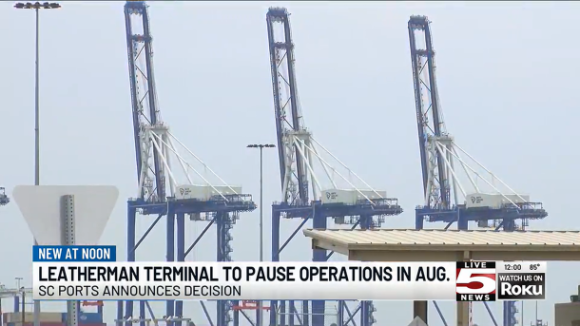
Committee President Mark Mix: “If I were a Leatherman dockworker, I certainly wouldn’t count on Longshore Union bosses to show any flexibility” to get the terminal reopened and “save my job.”

According to AFSCME Local 1632 President Will Harmon, Columbus Water & Power committed a grievous offense by subcontracting out the job of clearing away invasive weeds and brush spread out across two acres of its property to a tribe of roughly 40 goats without first “negotiating” with Big Labor.
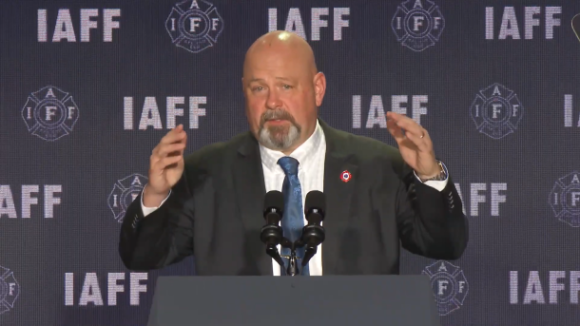
One longtime IAFF official who is now in the spotlight for his crass denigration of “two-hatters” -- that is, professional firefighters who also serve as volunteers -- is Pennsylvania Democrat politician Bob Brooks.