Right to Work States Have Lower Unemployment Rates
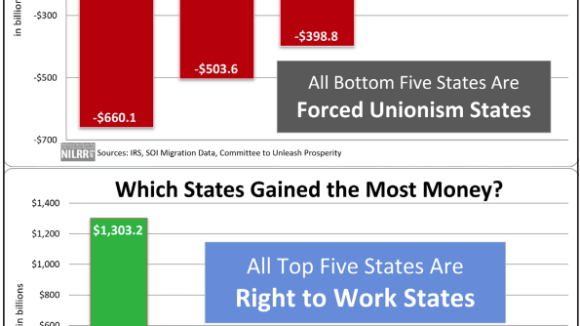
The latest state unemployment figures, released by the Bureau of Labor Statistics, show that state Right to Work laws have a significant effect on unemployment rates. In December 2008, states with Right to Work laws had an average unemployment rate of 6.2 percent, compared to 7.0 percent for states without Right to Work. Under a Right to Work law, individual workers cannot be forced to pay union dues or fees to a labor union just to get or keep a job.
Michigan has the highest unemployment of all 50 states, at 10.6 percent. Rhode Island, another non-Right to Work state, had the nation’s second highest unemployment rate, at 10.0 percent. The lowest unemployment rates are all in Right to Work states.