Big Labor’s Multi-Billion-Dollar Power Grab
Union bosses are rallying behind Democrat Texas U.S. Senate candidate James Talarico because he opposes Right to Work protections for employees.
Mark Perry looks at the economic performance of Right to Work states in comparison to forced unionism states and provides further evidence that Right to Work states foster prosperity. In the economic downturn year of 2009, forced unionism states economic growth fell by 2.42% but in Right to Work states, it only decreased 1.66%.
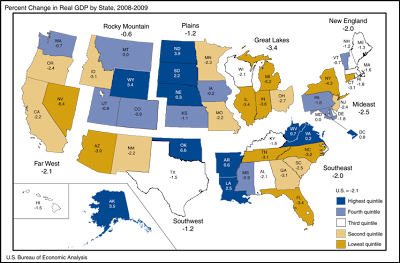 As Perry states, “In other words, the decline in economic growth growth in forced unionism states (-2.42%) was 0.76% worse in 2009 than the decline in right-to-work states (-1.66%). Further, of the ten states that experienced positive growth in 2009, only two were forced unionism states (Alaska and W. Virginia) and eight were right-to-work states (Nebraska, N. Dakota, S. Dakota, Arkansas, Louisiana, Virginia, Oklahoma and Wyoming). The three top states with the highest growth in 2009 were all right-to-work states: Oklahoma (6.6%), Wyoming (5.4%) and North Dakota (3.9%). “
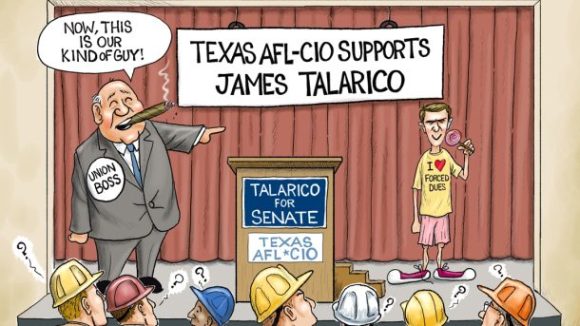
Union bosses are rallying behind Democrat Texas U.S. Senate candidate James Talarico because he opposes Right to Work protections for employees.
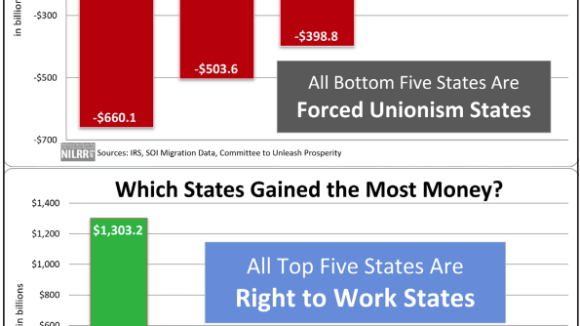
... States that continuously lacked Right to Work protections for employees from 2012-23 lost a net total of $2.05 trillion in cumulative AGI solely as a consequence of domestic out-migration of taxpayers during that 11-year period.
"Vullo makes it clear that using the threat of federal prosecution to force any employer to put employees’ Right to Work on the bargaining table violates the First Amendment.”