A ‘Duty to Bargain’ Over Employees’ Freedom?!
"Vullo makes it clear that using the threat of federal prosecution to force any employer to put employees’ Right to Work on the bargaining table violates the First Amendment.”
Fred Barnes at the Weekly Standard reads the political tea leaves and sees a Democrat political tidal wave coming. If Barnes is right, payback to the union bosses will be swift:
. . . This means the worst case scenario is now a distinct possibility: a Democrat in the White House, a Democratic Senate with a filibuster-proof majority, and a Democratic House with a bolstered majority.
If this scenario unfolds, Washington would become a solidly liberal town again for the first time in decades. And the prospects of passing the liberal agenda–nearly all of it–would be bright. Enacting major parts of it would be even brighter. You can forget about bipartisanship.
Start with “card check.” It would permit organized labor to unionize the private sector without winning a certification election by secret ballot. It’s easy to get workers to sign cards saying they want a union, but it’s hard to get them to vote that way when labor organizers aren’t hounding them. Card check is labor’s last hope for more dues-paying union members.
Unions simply aren’t popular and neither is card check. But it passed the House last year, only to be blocked in the Senate by a Republican filibuster. In 2009, with Washington controlled by Democrats, it would sail through Congress and President Obama would sign it. After all, neither Obama nor congressional Democrats have bucked organized labor even once.
Then Democrats might go after a longstanding target of big labor, section 14(b) of the Taft-Hartley Act. It allows states to enact right-to-work laws, which bar workers from being forced to join a union. Twenty-two states have right-to-work laws.
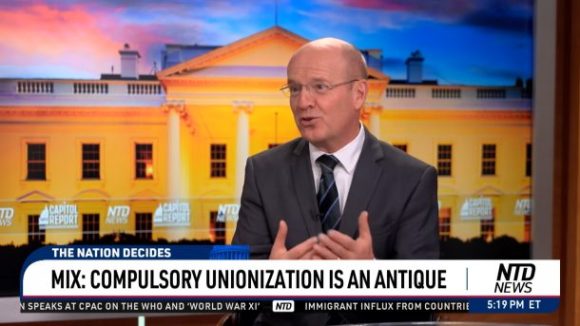
"Vullo makes it clear that using the threat of federal prosecution to force any employer to put employees’ Right to Work on the bargaining table violates the First Amendment.”
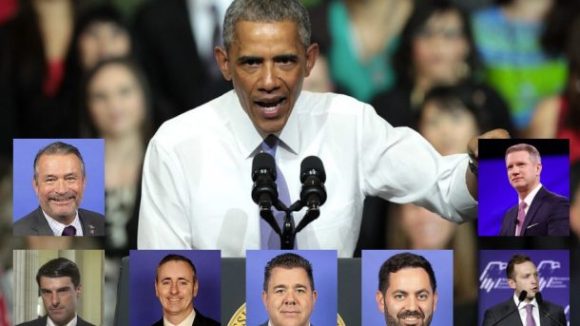
“Under the FLCA [...] monopolistic union contracts would be imposed on employees and business owners after only 120 days of negotiation."
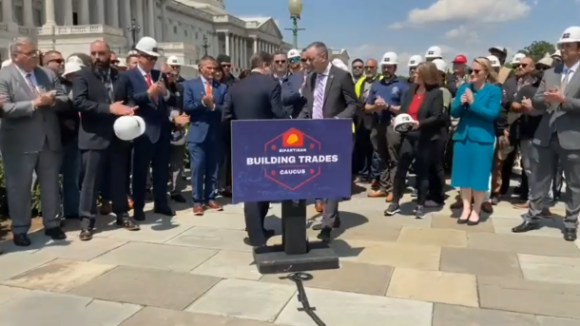
"If Big Labor succeeds in pushing the FLCA through the House, as expected, the Committee will go all out to stop it in the Senate.”