The insightful Tim Carney of the Washington Examiner looks at the business side of big labor in his recent column. It’s clear that in many cases big labor is becoming synonymous with big business:
Imagine if President George W. Bush used strong-arm tactics to bend the law to favor a politically connected company with $1.2 billion in assets, including a private golf course. What if that company’s political action committee had spent $13 million in the previous election, including more than $4 million to elect him?
Barack Obama has done just that. The company is called the United Automobile, Aerospace & Agricultural Implement Workers of America International Union – or the UAW for short.
Obama and the Democrats will employ euphemisms when discussing the President’s plan to circumvent bankruptcy law and hand majority ownership of Chrysler over to the UAW. They will speak about “the workers” taking ownership of the company, with some arguing that the workers, by right, are the senior creditors in Chrysler’s bankruptcy.
This paints the union-versus-creditors battle for control of Chrysler as a fight between blue-collar workingmen and greedy hedge fund speculators in suits.
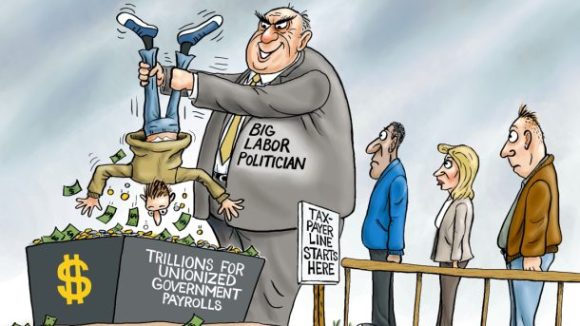
But that abstraction-equating the UAW with “the workers”-is grossly misleading. John Doe on the assembly line will not be running Chrysler or directing the use of billions in bailout dollar. No, the union management will become Chrysler’s management.