Big Labor Flying Too Close to the Sun

Big Labor Flying Too Close to the Sun

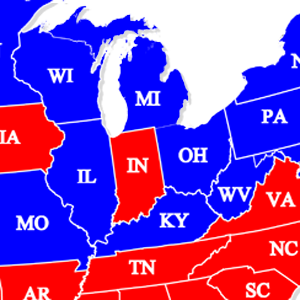
Fox All Star and syndicated columnist Charles Krauthammer discusses the meaning of the Wisconsin recall election and how taxpayers have finally had enough of Big Labor's power and pocketbook grabs while union bosses claimed mythical societal benefits arose from forced-dues: Tuesday, June 5, 2012, will be remembered as the beginning of the long decline of the public-sector union. It will follow, and parallel, the shrinking of private-sector unions, now down to less than 7 percent of American workers. The abject failure of the unions to recall Wisconsin Gov. Scott Walker (R) — the first such failure in U.S. history — marks the Icarus moment of government-union power. Wax wings melted, there’s nowhere to go but down. The ultimate significance of Walker’s union reforms has been largely misunderstood. At first, the issue was curtailing outrageous union benefits, far beyond those of the ordinary Wisconsin taxpayer. That became a nonissue when the unions quickly realized that trying to defend the indefensible would render them toxic for the real fight to come. But as the recall campaign progressed, the Democrats stopped talking about bargaining rights. It was a losing issue. Walker was able to make the case that years of corrupt union-politician back-scratching had been bankrupting the state. The real threat behind all this, however, was that the new law ended automatic government collection of union dues. That was the unexpressed and politically inexpressible issue. That was the reason the unions finally decided to gamble on a high-risk recall. Without the thumb of the state tilting the scale by coerced collection, union membership became truly voluntary. Result? Newly freed members rushed for the exits. In less than one year, -AFSCME, the second-largest public-sector union in Wisconsin, has lost more than 50 percent of its membership.

"Wisconsin, the rebellion of those who pay the freight against the public employee unions"

From Rick Manning at NetRightDaily.com: Democrats are spinning the Wisconsin results, saying, "The exit polls show O is leading in the state, so it doesn’t matter." Of course, those same exit polls showed that the Big Labor Walker recall was too close to call, when it was a veritable blowout. So much for hanging your hat on exit polls. The shocking realization for Big Labor out of the Wisconsin campaign is that its president was unwilling to expend any of his political capital at the moment of greatest need on its behalf. One has to wonder if this will hurt Obama’s ability to mobilize the shock troops of the Democratic Party in November. If it does, the failed Wisconsin recall will be devastating to Obama’s reelection bid nationally whether he wins the state in November or not. Beyond the unsavory fact of public employee unions being the major contributor to the campaigns of those whom they negotiate contracts with, the decision to dramatically raise their profile has made public employee unions fair political game.

"Wisconsin, the rebellion of those who pay the freight against the public employee unions"

From Rick Manning at NetRightDaily.com: Democrats are spinning the Wisconsin results, saying, "The exit polls show O is leading in the state, so it doesn’t matter." Of course, those same exit polls showed that the Big Labor Walker recall was too close to call, when it was a veritable blowout. So much for hanging your hat on exit polls. The shocking realization for Big Labor out of the Wisconsin campaign is that its president was unwilling to expend any of his political capital at the moment of greatest need on its behalf. One has to wonder if this will hurt Obama’s ability to mobilize the shock troops of the Democratic Party in November. If it does, the failed Wisconsin recall will be devastating to Obama’s reelection bid nationally whether he wins the state in November or not. Beyond the unsavory fact of public employee unions being the major contributor to the campaigns of those whom they negotiate contracts with, the decision to dramatically raise their profile has made public employee unions fair political game.

How California Unions Hijacked the Golden State

How California Unions Hijacked the Golden State

Liz Peeks at the Fiscal Times looks at the political and economic damage big labor has done to the once Golden State: President Obama raked in a hefty $15 million from Hollywood’s elite at George Clooney’s home last week. The $40,000 per plate star-studded crowd cheered the president’s just-in-time conversion to same-sex marriage; are they equally enthused about Mr. Obama’s economic prescriptions? Californians should know better. Their state, best known for red carpets, is awash in red ink, just like the federal government. Earlier this week, Governor Jerry Brown announced that the state’s budget deficit will approach $16 billion this year, up from $9.2 billion projected just a few months ago. Years of misguided financial policies have led to this: stifling taxes and savage cuts to public services – including Medicaid, childcare and welfare programs. Even movie stars occasionally venture out. What do they find? A state with 12 percent of the country’s population and one third of its welfare recipients. A state with the nation’s lowest bond ratings, the second-highest marginal income tax rate and the third highest unemployment rate. Most important – a state that CEOs rank the worst in the country for doing business. Dead last! For the eighth year in a row. The upshot? Businesses are leaving California. Spectrum Location Solutions reports that254 California companies moved some or all of their work and jobs out of state in 2011, an increase of 26 percent over the previous year and five times as many as in 2009. According to the Labor Department, California’s private employment actually shrank 1.4 percent over the past decade, while Texas added 1.15 million jobs.

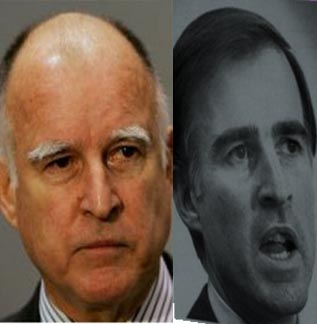
Calfornia Reaping What Jerry Brown Planted in the 1970s

Calfornia Reaping What Jerry Brown Planted in the 1970s

It's not often that a politician has to deal with a problem he created nearly twenty-five years ago. Most politicians sacrifice the short-term political benefit and leave the political headache to future generations of taxpayers and politicians. That's why it is ironic that while Jerry Brown wrestles with a spending and debt crisis in California he is forced to deal with a problem of his own making. In 1976, during Brown's first term as governor, he approved collective bargaining rights for government workers. Since that decision, the government workers unions power and influence have grown California's government spending through the roof as they bargained against the taxpayers for greater salary and benefits that many of their private sector counterparts. One thing you can say about Jerry Brown is that politics runs through his veins. Since 1976, Brown has been defeated for re-election, run for the presidency, elected mayor of a large city and won the governorship again forcing him to deal with a $16 billion deficits and a powerful opposition for reform from government union bosses -- union bosses empowered by his 1976 decision. Brown's solution to this problem shows that while he may have extraordinary staying power he has underwhelming temerity. While he talks about taking on the special interests and making drastic cuts to the state's budget, he is offering large tax increases and minor reforms to the power of the unions. Should the state defeat his tax increase initiative this November, he will be forced to take on the monster of his own making. Don't count on Jerry Brown asking that California become a Right to Work state but it would be a sign that he was serious in addressing the problem of his own making. Chriss Street at Breitbart looks at this problem in greater detail: