Union Bosses Encourage Illegal Voting in Nevada

The powerful union bosses in Nevada are encouraging non-citizens to go to the polls. From the Las Vegas Review Journal: Voter registration fraud is not a groundless conspiracy. It is not a hypothetical threat to election integrity. In Nevada, a battleground state that could decide the presidency and control of the U.S. Senate, it is real. Last week, I met with two immigrant noncitizens who are not eligible to vote, but who nonetheless are active registered voters for Tuesday's election. They said they were signed up by Culinary Local 226. They speak and understand enough English to get by. But they don't read English especially well. They say the Culinary official who registered them to vote didn't tell them what they were signing and didn't ask whether they were citizens. The immigrants said they trusted that the union official's request was routine, thought nothing of it and went about their work. Then the election drew closer. Then the Culinary canvassers started seeking them out and ordering them to go vote. One of the immigrants was visited at home by a Culinary representative and said the operative made threats of deportation if no ballot was cast.
Court Allows Union Bosses to Ignore Identity Theft Laws, Harass Employees

Court Allows Union Bosses to Ignore Identity Theft Laws, Harass Employees

Washington Examiner, Mark Mix is president of National Right to Work OpEd:. One November day in 2007, 33 AT&T workers in central North Carolina found out that their Social Security numbers and other private information had been posted for the world to see -- exposing them to identity theft and credit fraud. [media-credit name="The National Right to Work Committee®" align="alignright" width="227"][/media-credit]There has never been any doubt about who posted the workers' private information, but the perpetrators have now escaped justice. All the employees whose names and personal information were posted had exercised their freedom under North Carolina's Right to Work law to resign from membership in a labor union -- the Communications Workers of America, or CWA -- and cease paying union dues. In retaliation, the union bosses of CWA Local 3602 proved that they know no bounds when it comes to making workers toe the union line. When these workers exercised their right to refrain from union affiliation, they were subjected to an extended union campaign of workplace harassment and intimidation. After the workers exercised their Right to Work, CWA union official Judy Brown emailed a spreadsheet that contained the employees' personal data (including their Social Security numbers) to other CWA officials with instructions to "forward this information to your affected locals." CWA Local 3602 union president John Glenn posted the spreadsheet on a public bulletin board. Other CWA union officials likely disseminated the information through email and other means.

Battleground Michigan

Battleground Michigan

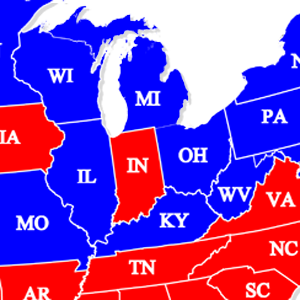
Shikha Dalmia of Reason looks at big labor's effort keep Michigan a second rate economic state through a series of referendums on the statewide ballot next month: We've seen Gov. Scott Walker's battle in Wisconsin and the Chicago Teachers Union strike next door. Now in Michigan comes another Midwestern political showdown that will carry enormous implications for the role of unions in American life. [media-credit name=" " align="alignright" width="300"][/media-credit]The Michigan Supreme Court recently approved the placement of a proposed constitutional amendment on the November ballot. If passed by voters, the so-called Protect Our Jobs amendment would give public-employee unions a potent new tool to challenge any laws—past, present or future—that limit their benefits or collective-bargaining powers. It would also bar Michigan from becoming a right-to-work state in which mandatory union dues are not a condition of employment. The budget implications are dire. Michigan public unions began pushing the initiative last year, shortly after Michigan Gov. Rick Snyder—facing a $2 billion fiscal hole—capped public spending on public-employee health benefits at 80% of total costs. This spring, national labor unions joined the amendment effort after failing to prevent Indiana from becoming a right-to-work state. Bob King of the United Auto Workers said that Michigan's initiative would "send a message" to other states tempted to follow Indiana's example. The UAW, along with allies in the AFL-CIO and the Teamsters, poured $8 million into gathering 554,000 signatures—some 200,000 more than needed—to put Protect Our Jobs on the Michigan ballot.

New Mexico is Right for Right to Work

New Mexico is Right for Right to Work

[media-credit id=7 align="alignright" width="300"][/media-credit]Eric Fruits, the president and chief economist at Economics International Corp., an economics consulting firm, makes the case on why passing a Right to Work statute in New Mexico would help create jobs and prosperity: Right-to-work legislation is one of the very few pro-growth policies that is virtually costless to enact. And a large body of research has found that it benefits states economically. New Mexico, along with much of the country, still struggles to recover from a recession that began more than four years ago. While the state has benefited from the recent energy boom, states like New Mexico have struggled to cope with the employment consequences of the recession. In response, policymakers have tended to focus on fiscal policies such as tax cuts and “stimulus spending” rather than market structural solutions. Right-to-work laws can be a key component of a pro-investment and pro-employment package for New Mexico that encourages firms to locate and expand in the state. A large body of research has found that, as a group, right-to-work states have enjoyed more rapid employment growth, better job preservation and faster recoveries from recession that states without right-to-work laws in place. New Mexico has recognized this when the Legislature passed right-to-work legislation twice – in 1979 and 1981 – only to see the legislation vetoed by then-Gov. Bruce King. Proponents of right-to-work legislation argue that individuals should have the choice of whether or not to join a union and that the choice of whether to join a union should not be a condition of employment. They point to the relatively rapid growth in employment and incomes in right-to-work states relative to non-right-to-work states.