Union-Only Port Terminal Suspends Operations
Committee President Mark Mix: “If I were a Leatherman dockworker, I certainly wouldn’t count on Longshore Union bosses to show any flexibility” to get the terminal reopened and “save my job.”

Investors Business Daily looks at the thriving American Auto Industry — no not the one in excessively-taxed and forced-unionism dominated Michigan but the lower-taxed Right to Work Tennessee:
President Obama triumphantly told the United Auto Workers last month that car manufacturing in America is back, thanks to the federal GM (GM) and Chrysler bailouts. In Tennessee, the reaction was: Don’t call it a comeback — we’ve been here for years.
Michigan may be Motor City’s home in most people’s minds, but Tennessee has emerged as another major hub of auto manufacturing and related industries. Big domestic and foreign automakers have several facilities here and are expanding rapidly.
Tennessee, one of many Super Tuesday GOP primary states, has mostly been spared the trauma of mass layoffs, closures and bailouts that plagued the Rust Belt. Business and free-market groups cite a key advantage: It is a right-to-work state, effectively preventing Big Labor from being a major player there.

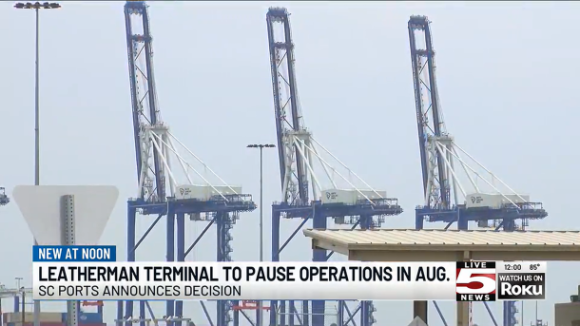
Committee President Mark Mix: “If I were a Leatherman dockworker, I certainly wouldn’t count on Longshore Union bosses to show any flexibility” to get the terminal reopened and “save my job.”
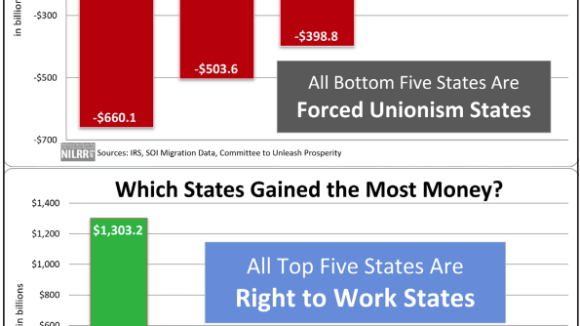
... States that continuously lacked Right to Work protections for employees from 2012-23 lost a net total of $2.05 trillion in cumulative AGI solely as a consequence of domestic out-migration of taxpayers during that 11-year period.
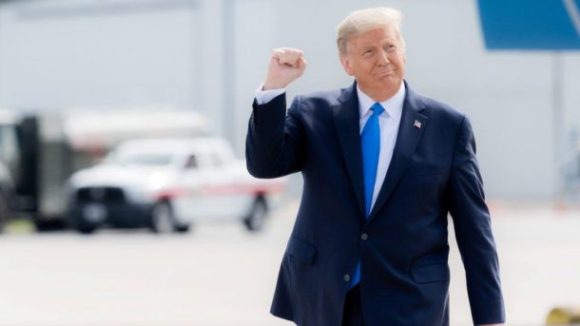
One of the key goals of the U.S. Department of Labor since President Donald Trump’s second term commenced in January 2025 has been to expand the number of apprenticeships in America to “at least a million.”