Union-Only Port Terminal Suspends Operations
Committee President Mark Mix: “If I were a Leatherman dockworker, I certainly wouldn’t count on Longshore Union bosses to show any flexibility” to get the terminal reopened and “save my job.”

Maybe, at least, according to Stephen Moore’s Wall Street Journal Political Diary note:
With all eyes on Wisconsin this past week, overlooked has been the conservative policy changes that are moving ahead in New Hampshire. In recent days the New Hampshire House, where the GOP controls nearly three-quarters of the 400 seats, passed a bill to repeal the state cap-and-trade law that imposes a tax on energy use and a bill to make New Hampshire a Right-To-Work state.
Democratic Gov. John Lynch has vowed to veto both bills, but my sources in Concord say there’s a chance that the vetoes could be overridden. Meanwhile, Republicans are also set to pass a spending reduction bill with the kinds of public sector pension reforms that have incited protests from the labor unions in the Midwest.
(for Mr. Moore’s complete story, “commentary, political gossip and more subscribe to Political Diary.”)
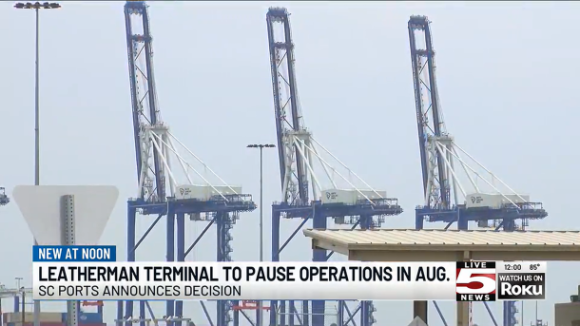
Committee President Mark Mix: “If I were a Leatherman dockworker, I certainly wouldn’t count on Longshore Union bosses to show any flexibility” to get the terminal reopened and “save my job.”

Incoming NEA President Princess Moss: Teachers Must Be Full-Time Political Activists
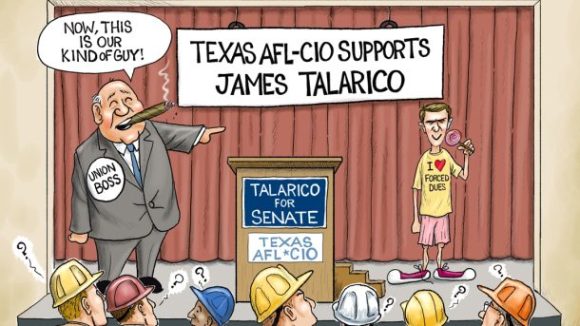
Union bosses are rallying behind Democrat Texas U.S. Senate candidate James Talarico because he opposes Right to Work protections for employees.