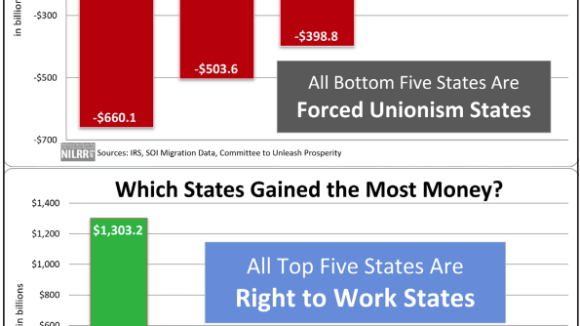
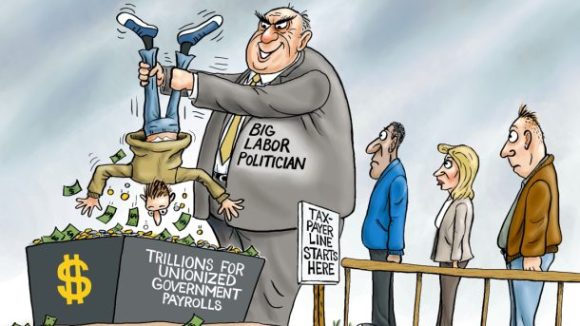
Michigan is in the throes of a Big Labor induced economic recession and Crain’s Detroit Business report has weighed in with an idea that is a small step in the right direction.
Crain’s suggests the state enact Right to Work zones. That, of course, is not an equitable solution as some workers would be protected from Big Labor coercion and others would not be, based solely on the location of their place of employment.
What was the cause of their suggestion? Michigan’s loss of a near $1 billion automobile facility to two Right to Work states — Tennessee and Alabama.
Where will Volkswagen build its new U.S. plant? That’s the $788 million question.
By late last week, sister publication Automotive News was reporting the automaker was leading toward Huntsville, Ala., and Chattanooga, Tenn.
Michigan tried hard, with its $18.7 million “Choose Michigan” program of loans and tax credits, but it wasn’t enough.
According to Crain’s:
To many manufacturers, Michigan suffers from the perception that organized labor calls the shots. Labor strikes, including this year’s shutdown at American Axle and Manufacturing Holdings Inc., don’t help that image.
Perception?
In this case, clearly perception is reality.
All workers deserve the same protections from forced unionism. And if Michigan would take that step, the whole state would benefit from new jobs and new economic growth.
The editors of Crain’s have taken a small step in the right direction, but it is still a step indeed.