Union-Only Port Terminal Suspends Operations
Committee President Mark Mix: “If I were a Leatherman dockworker, I certainly wouldn’t count on Longshore Union bosses to show any flexibility” to get the terminal reopened and “save my job.”
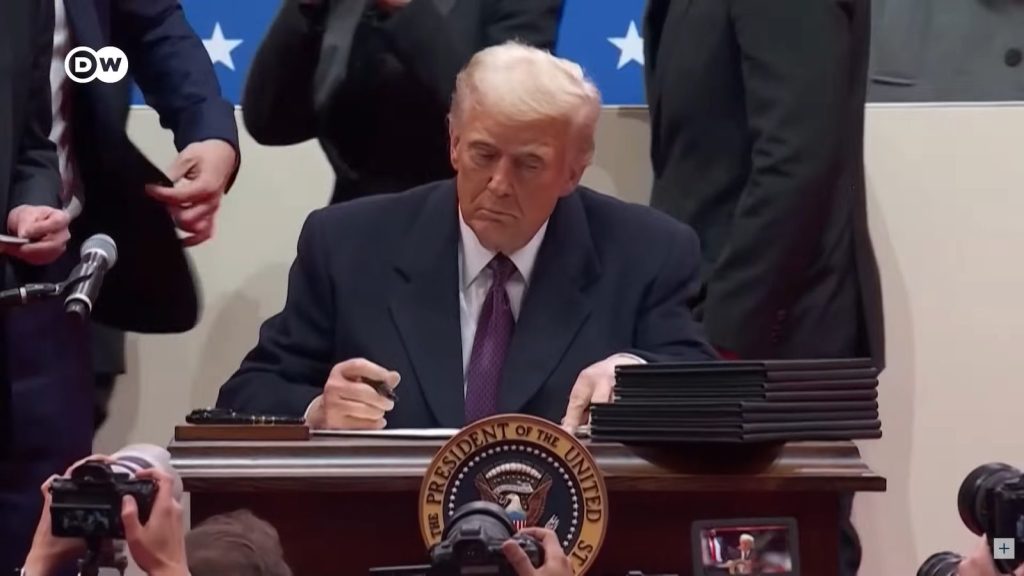
Last year, President Donald Trump exercised his constitutional and statutory authority to terminate Big Labor’s so-called “exclusive bargaining privileges” over federal civil servants, handing a huge victory to opponents of government-sector monopolistic unionism.
Thanks to two 2025 Trump executive orders, and presidential appointees’ implementation of them, more than a million federal workers who were previously subject to union-boss control over key terms and conditions of their employment are, for the time being, union-free.
Unfortunately, all Democrat members of Congress, along with a small group of turncoat Capitol Hill Republicans, have been pushing, and continue to push, to overturn the Trump orders and reinstate Big Labor bosses’ power to dictate how these million-plus civil servants are managed and disciplined.
Last year, union-label Democrat Jared Golden (Maine) introduced H.R.2550, a bill that would completely nullify the two executive orders.
But Speaker Mike Johnson (R-La.) refused to schedule a vote.
H.R.2550 supporters had to resort to a “discharge petition” to force consideration of the bill on the floor.
“The discharge petition is used only rarely and as a last resort, but five House Republicans [pictured below] were so eager to signal their support for government union bosses that they signed on to it and helped override their party’s speaker,” said National Right to Work Committee President Mark Mix.
The adoption of the discharge petition paved the way for passage of H.R.2550 on December 11, with the support of every Democrat member present.
In addition to ramming H.R.2550 through the House, Big Labor legislators snuck language into the National Defense Authorization Act (NDAA) that blocked implementation of Trump’s policy at the Pentagon.
The House’s version of the NDAA, a bill Congress must pass each year to set an agenda for the military, would have quietly reversed the President’s order and restored union-boss control over Pentagon employees.
But Committee staff discovered the offending language and raised the alarm.
In a letter to Congress, Mr. Mix explained the evils of government monopoly bargaining:
“The outgoing Biden Administration rushed to ink as many union agreements as possible because it knew that the incoming Trump Administration had been elected by the American people after promising to change how federal agencies operate. Biden officials knew that union monopoly agreements would slow down the implementation of changes that they opposed, but which Americans supported. There is no better illustration of the way in which union monopoly bargaining subverts the democratic process.
“Union bosses often use their leverage to promote policies that make government less efficient, including by preventing the firing of poor performers and promoting absurd ‘work from home’ policies that left some government office buildings virtually empty long after the COVID pandemic had ended.
“This kind of waste is intolerable at any government agency, but it is a particular problem where national security is on the line.”
Despite pleas from union bosses, members of the joint House-Senate “conference committee” that produced the final version of the NDAA ultimately sided with Right to Work leaders and members and did not include the pro-union boss provision in the bill that ended up on the President’s desk.
“In a major win for the grassroots opponents of Big Labor, Congress sent a defense bill to the President that did not include the nullification of one of his signature achievements,” said Mr. Mix.
“We will continue to rally opposition to all attempts to hand control over federal staffing policy to union bosses.
“It is outrageous that most members of the House believe that union bosses should wield monopoly-bargaining control over the federal workforce even when they exploit that power to undermine the President.
“Now the battle is moving to the Senate, where H.R.2550 could be considered at any time.”
Committee staffers have persistently highlighted the ills ushered in by union monopolies in the federal government.
They include the enormous cost of “official time,” which enables government union employees to remain “on the clock” at their taxpayer-funded jobs while performing union business.
Official time lets government workers lobby Congress, recruit new union members, and even devote 100% of their time to union activities, all while drawing a government salary.
Reports by the Trump White House’s Office of Management and Budget show that official time cost taxpayers over $200 million in 2024 alone.
Committee staff members have also highlighted the ways in which federal union bosses protect bad employees.
At a federal prison in Dublin, Calif., more than 100 women accused corrections officers of sexual abuse, behavior that sources told San Francisco’s KTVU was enabled by Ed Canales, president of the union with monopoly control over the prison’s guards.
Even David Fathi, a program director at the otherwise pro-Organized Labor American Civil Liberties Union, admits that union bosses have “frustrated and undermined accountability” for federal prison officers.
Yet Mr. Fathi still found reason to praise prison union bosses because, though they make it harder to punish bad guards, they have also pushed the government to spend more money on prisons by hiring more guards.
“This is a classic example of the way that union bosses make the government work less efficiently,” said Mr. Mix.
“Instead of firing bad employees and replacing them with better ones, union bosses want us to keep the bad ones while padding payrolls with additional hires.
“More federal employees means more people putting dues into government unions’ coffers, so union bosses have every incentive to push for unnecessary government hiring.
“Stories like the Dublin sex-abuse outrage illustrate why the Senate should reject the House’s push to restore monopoly bargaining in the federal workforce.
“President Trump got this one right, and his executive orders should remain in place.”
This article was originally published in our monthly newsletter. Go here to access previous newsletter posts.
To support our cause and help end forced unionism, go here to donate.
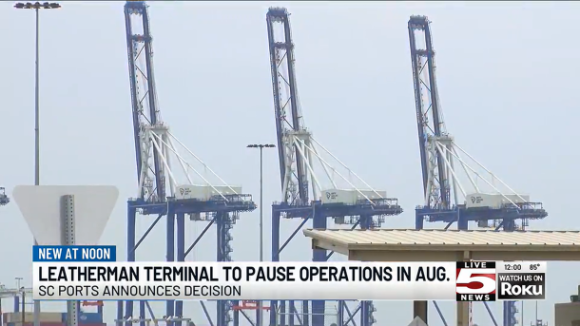
Committee President Mark Mix: “If I were a Leatherman dockworker, I certainly wouldn’t count on Longshore Union bosses to show any flexibility” to get the terminal reopened and “save my job.”

According to AFSCME Local 1632 President Will Harmon, Columbus Water & Power committed a grievous offense by subcontracting out the job of clearing away invasive weeds and brush spread out across two acres of its property to a tribe of roughly 40 goats without first “negotiating” with Big Labor.
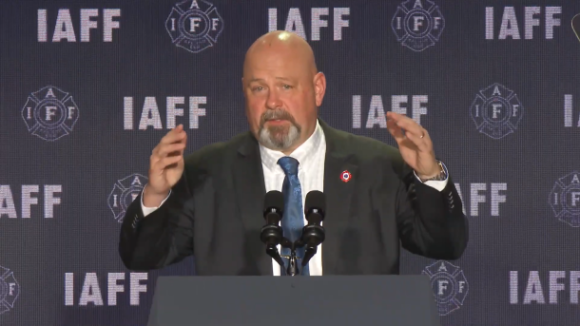
One longtime IAFF official who is now in the spotlight for his crass denigration of “two-hatters” -- that is, professional firefighters who also serve as volunteers -- is Pennsylvania Democrat politician Bob Brooks.