Radical Teacher Unions Get Even More Radical
Incoming NEA President Princess Moss: Teachers Must Be Full-Time Political Activists
 Illinois Gov. Pat Quinn (D-Big Labor) is trying to assure his state that Indiana’s decision to give worker’s Right to Work protection will have no impact on his state. Quinn said major companies are “thriving” in forced unionized Illinois. But reality tells a different story.
The News Gazette reported in January Jimmy Johns corporate headquarters is just one of many companies looking to leave the state for its anti-business and anti-worker policies:
Jimmy John Liautaud told The News-Gazette on Tuesday that he is angry about the moves, which boosted the individual income tax from 3 percent to 5 percent and the corporate income tax from 7.3 percent to 9.5 percent. The founder of Jimmy John’s said he has applied for Florida residency and may recommend that his corporate headquarters move out-of-state as a result of the Illinois tax increases enacted last week.
Stateline News also reported that Quinn’s tax hikes have governors in Wisconsin, Texas and even in New Jersey courting businesses from the Land of Lincoln. Indiana Gov. Mitch Daniels, who know has the Right to Work arrow in his quiver to court businesses to his state, has compared Illinois to “living next door to the Simpsons.”
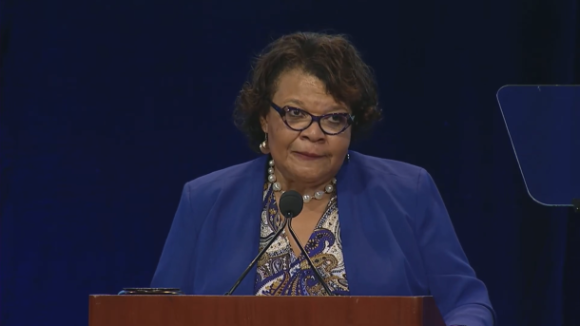
Incoming NEA President Princess Moss: Teachers Must Be Full-Time Political Activists
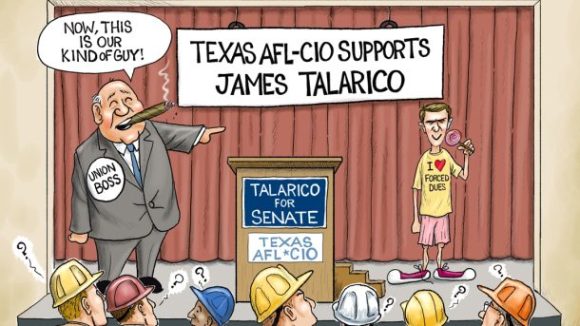
Union bosses are rallying behind Democrat Texas U.S. Senate candidate James Talarico because he opposes Right to Work protections for employees.
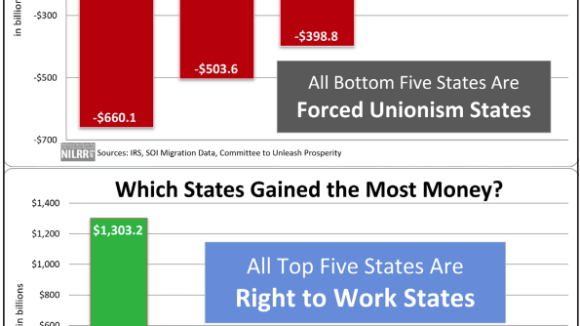
... States that continuously lacked Right to Work protections for employees from 2012-23 lost a net total of $2.05 trillion in cumulative AGI solely as a consequence of domestic out-migration of taxpayers during that 11-year period.