Union Special Privileges vs. Affordability
In addition to helping make the necessities and amenities of life more affordable, Right to Work laws help keep individual and family aggregate state-local tax burdens from spiraling out of control.
The National Right to Work Committee has posted numerous analyses (see the first link below, for example) over the years citing U.S. Census Bureau data that show forced-unionism states as a group chronically fail to offer appealing economic opportunities to retain and attract college-educated, working-age adults.
Now a study jointly prepared by Georgetown University’s Center for Education and the Workforce and J.P. Morgan Chase confirms that states that fail to protect employees from mandatory union dues and fees are failing to offer good employment opportunities for people with less than a bachelor’s degree education as well.
The study (see the second link below) gauges changes over time in the availability of blue-collar and skilled-services jobs that do not require a bachelor’s degree and offer median annual earnings of $55,000. There are roughly 30 million such jobs across the U.S., and nationwide the number is growing.
According to the study, from 1991 to 2015 some states experienced substantial declines in the number of good-paying jobs that don’t require a BA. Connecticut, Illinois, Maryland, Massachusetts, Michigan, New Hampshire, New Jersey, New York, Ohio, Pennsylvania, Rhode Island, and West Virginia all experienced decreases of 8% or more.
Eleven of these 12 otherwise diverse states have one thing in common: They lacked Right to Work protections for the entire quarter-century period covered by the study. The sole exception, Michigan, was a forced-unionism state for more than 90% of the years analyzed. Michigan’s Right to Work law took effect in the spring of 2013.
During the same study period, 13 states experienced increases of more than 40% in the number of good-paying jobs that don’t require a BA: Arizona, Arkansas, Florida, Georgia, Idaho, Louisiana, Montana, Nevada, North Dakota, South Dakota, Texas, Utah and Wyoming. With the sole exception of Montana, these were all Right to Work states that prohibit the termination of employees for refusal to pay dues or fees to an unwanted union for the entire period covered by the study.
Overall, the 21 states that were already Right to Work as of 1991 experienced a 41% increase in the number of these “good-paying jobs” over the past quarter-century, while the 25 states that were still forced-unionism as of the end of 2015 experienced a 4% decline in good-paying jobs.

Among the 12 states suffering declines of 8% or more from 1991-2015 in the number of good jobs that don’t require a four-year college degree, 11 were forced-unionism for the entire period examined, and one was forced-unionism until 2013. Image: Georgetown University Center on Education and the Workforce, Good Jobs That Pay Without a BA: A State by State Analysis, 2017.
Forced-Unionism States Suffer From ‘Brain Drain’ – NRTWC.org

In addition to helping make the necessities and amenities of life more affordable, Right to Work laws help keep individual and family aggregate state-local tax burdens from spiraling out of control.
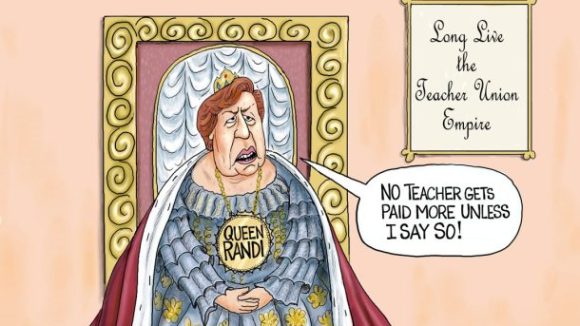
In response to a staffing crisis, the elected Lee County School Board (LCSB) approved an incentive plan to attract and retain teachers for high-need schools and hard-to-fill subject areas.

In the wake of Big Labor’s capture of the governorship and tightening of its grip over the Virginia General Assembly in last fall’s elections, union strategists are eager for passage of a law mandating union monopoly bargaining over the compensation and work rules of state and local civil servants.