Michigan Workers and Families Have Been Hurt
“If Michiganders can keep the momentum going this year, they may soon have their Right to Work law back.”
David Gillis of the Times Herald newspaper in Port Huron, Michigan has looked at the numbers and concludes Michigan can no longer afford to restrict workers’ Right to Work. Why?
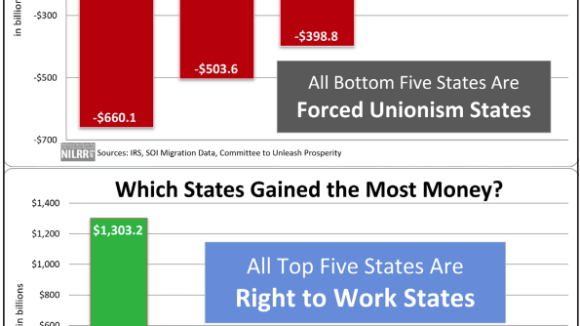
According to the U.S. Department of Labor, in the 22 states that have right-to-work laws, private-sector employment grew 79% faster than in non-right-to-work states in a 10 year period ending in 2005. During this same period of time, real personal income grew by 37% in right-to-work states compared to 26% in those states without these laws.
“If Michiganders can keep the momentum going this year, they may soon have their Right to Work law back.”
On average, forced-unionism states are roughly 22% more expensive to live in than Right to Work states. And decades of academic research show that compulsory unionism actually fosters a higher cost of living.
In addition to helping make the necessities and amenities of life more affordable, Right to Work laws help keep individual and family aggregate state-local tax burdens from spiraling out of control.