Michigan Workers and Families Have Been Hurt
“If Michiganders can keep the momentum going this year, they may soon have their Right to Work law back.”
Why is Michigan’s car industry struggling but Alabama’s is thriving? How is the “Yellowhammer State” successfully courting companies like Honda, Toyota Motor Corp. and Daimler AG’s Mercedes-Benz?
Steve Sewell, executive vice president for the Economic Development Partnership of Alabama, said availability of an educated work force is the top concern for such companies, but Alabama’s status as a right-to-work state is often touted. In right-to-work states, joining a union cannot be a condition of employment.
“Right-to-work can be an advantage if a company wants to have a direct relationship with its employees, without a third party,” he said.
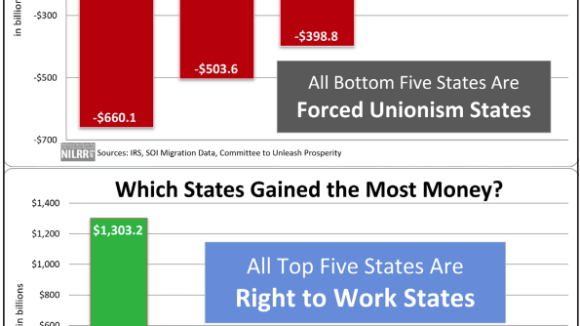
The difference was profiled in the Detroit News.
“If Michiganders can keep the momentum going this year, they may soon have their Right to Work law back.”
On average, forced-unionism states are roughly 22% more expensive to live in than Right to Work states. And decades of academic research show that compulsory unionism actually fosters a higher cost of living.
In addition to helping make the necessities and amenities of life more affordable, Right to Work laws help keep individual and family aggregate state-local tax burdens from spiraling out of control.