Union-Only Port Terminal Suspends Operations
Committee President Mark Mix: “If I were a Leatherman dockworker, I certainly wouldn’t count on Longshore Union bosses to show any flexibility” to get the terminal reopened and “save my job.”
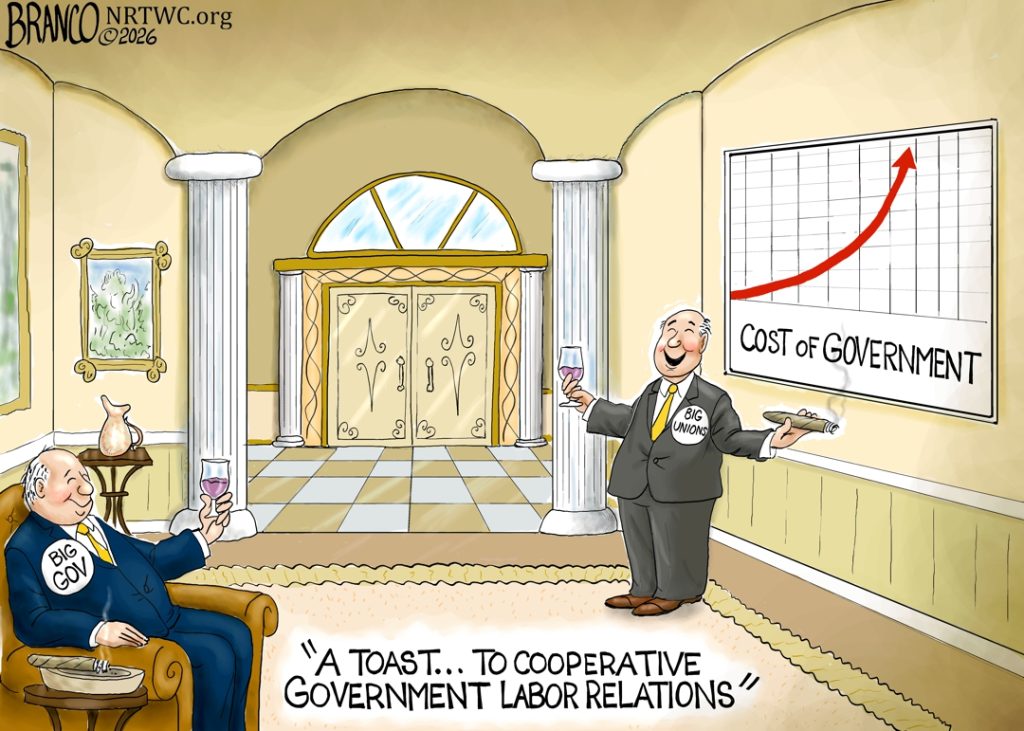
Over 65 years ago, union-label politicians in Wisconsin initiated what soon became common practice in the vast majority of the 50 states:
In exchange for ongoing campaign support from government union bosses, Badger State legislators and then-Gov. Gaylord Nelson handed them new monopoly-bargaining privileges over rank-and-file educators.
Today, all but a handful of states have laws authorizing the officers of a single union to speak for all teachers in a school district, whether union members or not, on matters concerning pay, and typically also benefits and work rules, in dealings with elected and appointed school officials.
Extensive research shows union bosses routinely wield their bargaining power to undercut the economic interests of many teachers, such as those with low seniority and those who specialize in hard-to-fill subject areas such as advanced math and science and English as a second language.
For example, in New Jersey, as one perceptive commentator explained in 2022, new teachers are, largely as a result of school union bosses’ extraordinary clout, “forced to join a state pension system” that takes 7% of their salaries. Meanwhile, “almost half of the new teachers will leave the system before they vest,” leaving them with nothing.
Besides hurting a majority of teachers to benefit a relatively small share of them, monopolistic unionism in K-12 education is associated with lower student achievement at a higher cost to taxpayers when demographic differences among students in different states are factored in.
And over the course of the last 10 years for which data are available, the total share of parents opting to protect their children from union monopoly bargaining’s harmful impact by exercising their constitutional right to enroll them in a private or home school has risen substantially.
“Despite the high direct cost normally associated with private schooling and the high opportunity cost of homeschooling, more and more parents are withdrawing their kids from unionized government schools,” said National Right to Work Committee Vice President Matthew Leen.
“Data furnished by the National Center for Education Statistics [NCES] show that all of the net nationwide decline in government school enrollment since 2013 has occurred in the 17 states with the highest government union density, as measured by the Union Membership and Coverage Database.
“From the 2013-14 school year through the 2023-24 school year, the most recent for which NCES data are available, aggregate enrollment in K-12 public schools in these union stronghold states fell by 5.0%, or over 1.1 million.
“Meanwhile, public school enrollment actually rose by nearly 470,000, or 2.8%, in the third of states with the lowest government union density.”
When they acknowledge government school enrollment is declining at all, apologists for the U.S. education establishment like to say it is largely a consequence of demographics.
The reality is very different.
The latest available U.S. Census Bureau data show that, from 2014 to 2024, the nationwide total of K-12-aged U.S. residents (five to 17 years) rose by more than 840,000.
Mr. Leen commented:
“The data show that teacher union bosses have lost all credibility with parents, who are striving to get their children away from union-controlled government schools any way they can: by homeschooling, by paying for private school, or by moving to a state where public-sector unions are less powerful.
“Politicians who continue to court the support of teacher union bigwigs whom American parents now clearly recognize as their enemies do so at their own peril.
“Unfortunately, union boss-puppet politicians in state after state are continuing to pump more and more taxpayer money into Big Labor-misruled school districts whose enrollments are falling because parents recognize them as the failures that they are.
“The fact is, no amount of taxpayer money will make a system designed to further the interests of union monopolists and their allies serve the interests of schoolchildren.”
This article was originally published in our monthly newsletter. Go here to access previous newsletter posts.
To support our cause and help end forced unionism, go here to donate.
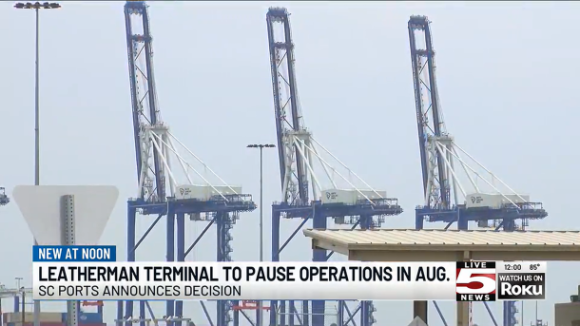
Committee President Mark Mix: “If I were a Leatherman dockworker, I certainly wouldn’t count on Longshore Union bosses to show any flexibility” to get the terminal reopened and “save my job.”

According to AFSCME Local 1632 President Will Harmon, Columbus Water & Power committed a grievous offense by subcontracting out the job of clearing away invasive weeds and brush spread out across two acres of its property to a tribe of roughly 40 goats without first “negotiating” with Big Labor.
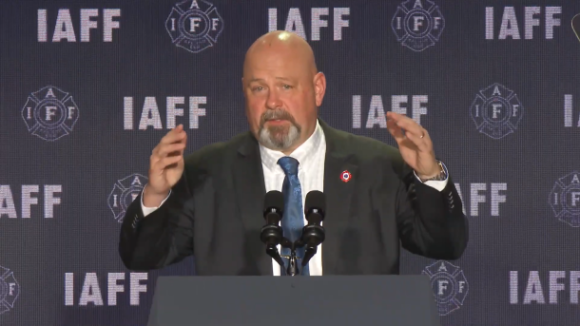
One longtime IAFF official who is now in the spotlight for his crass denigration of “two-hatters” -- that is, professional firefighters who also serve as volunteers -- is Pennsylvania Democrat politician Bob Brooks.