Union Special Privileges vs. Affordability
In addition to helping make the necessities and amenities of life more affordable, Right to Work laws help keep individual and family aggregate state-local tax burdens from spiraling out of control.
The Washington Examiner reports on how Virginia’s Right to Work law allows states to implement reforms that offer better educational opportunities for children:
An inability to remove bad teachers from the classroom has stymied education reform in Maryland and the District of Columbia, according to a report released Monday by the U.S. Chamber of Commerce and two prominent think tanks.
About 77 percent of D.C. Public Schools principals and 72 percent of Maryland’s principals said “teacher unions or associations are a barrier to the removal of ineffective teachers,” compared with a national average of about 61 percent of principals.
In Virginia, a right-to-work state, less than one-third of principals cited the same troubles. That data was collected as part of a U.S. Education Department survey in 2007-08, and compiled with dozens of other measures for a “Leaders and Laggards” state report card on innovation in education. The left-leaning Center for American Progress and the right-leaning American Enterprise Institute helped to write the report.
While Virginia and federal law protect every individual’s right to join a union, the Commonwealth of Virginia prohibits the recognition of union officials as bargaining agents for government employees. The bill was signed into law by then Governor Doug Wilder in 1993.


In addition to helping make the necessities and amenities of life more affordable, Right to Work laws help keep individual and family aggregate state-local tax burdens from spiraling out of control.

In the wake of Big Labor’s capture of the governorship and tightening of its grip over the Virginia General Assembly in last fall’s elections, union strategists are eager for passage of a law mandating union monopoly bargaining over the compensation and work rules of state and local civil servants.
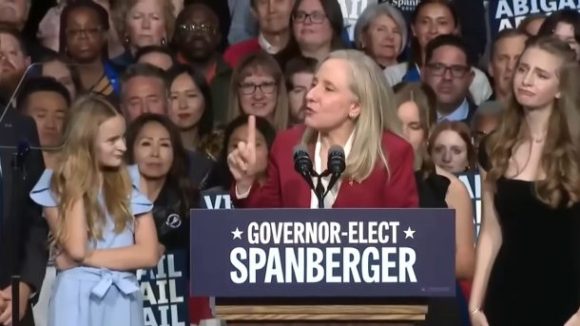
"[Spanberger] voted twice for the so-called ‘PRO Act,’ which would have destroyed the Virginia and every other state Right to Work law, and cosponsored it one last time before stepping down to run for governor."