A ‘Duty to Bargain’ Over Employees’ Freedom?!
"Vullo makes it clear that using the threat of federal prosecution to force any employer to put employees’ Right to Work on the bargaining table violates the First Amendment.”
Here we go again.
It is a good thing that the U. S. Supreme Court “has . . . granted a petition for a writ of certiorari filed by National Right to Work Foundation attorneys for a group of twenty Maine state employees objecting to the misuse of their compulsory union dues.”
Taking their case all the way to the Supreme Court is one of the few ways non-union victims of Big Labor’s gluttonous misuse of their federally granted forced-dues powers can seek redress.
The case, Daniel Locke et al. v. Edward Krauss et al., will directly address whether non-union employees can be forced to pay for litigation activities far removed from their workplaces. But the U.S. Supreme Court’s ruling may provide much-needed clarity to the criteria it had established previously that determine what union activities employees can be lawfully forced to fund.
Though necessary under current law, this piecemeal approach to deciding just how much forced-dues money can be conscripted from non-union workers’ earnings is costly, time consuming, and retroactive. What is really needed is a National Right to Work Law protecting a worker’s right to decide for himself or herself whether or not he or she wants to join, or pay dues or fees to, a union in the first place.
To read more about the case go here.
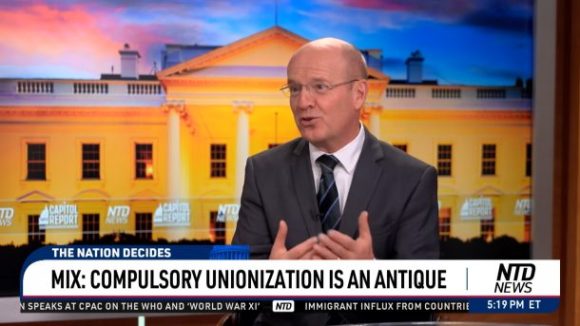
"Vullo makes it clear that using the threat of federal prosecution to force any employer to put employees’ Right to Work on the bargaining table violates the First Amendment.”
“Since Janus, the actively employed membership of the nation’s largest teacher union, the [NEA], has fallen substantially."

After a fierce legislative battle, a bill to protect Idaho educators’ freedom of association has been signed by GOP Gov. Brad Little. The Committee is committed to similarly protecting more and more civil servants nationwide.