Union-Only Port Terminal Suspends Operations
Committee President Mark Mix: “If I were a Leatherman dockworker, I certainly wouldn’t count on Longshore Union bosses to show any flexibility” to get the terminal reopened and “save my job.”
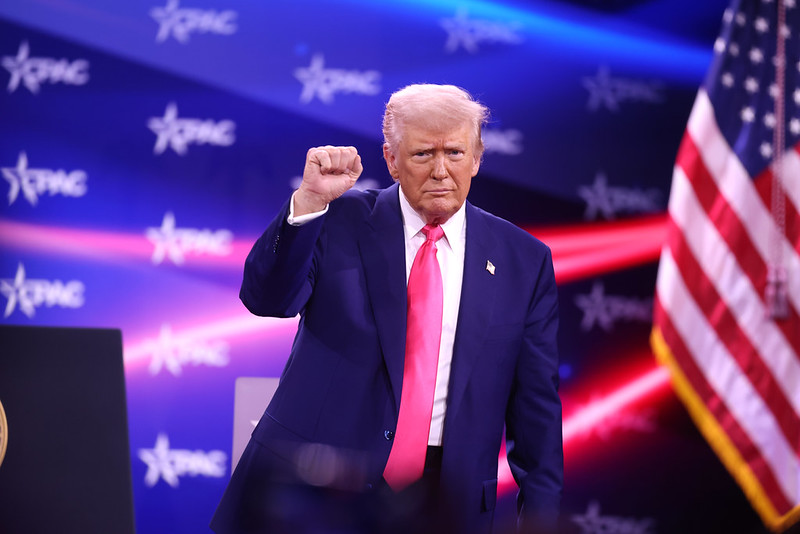
With the second year of Republican Donald Trump’s second presidential term now well underway, Trump appointees to the U.S. Labor Department (DOL) and the National Labor Relations Board (NLRB) have recently sent encouraging signals to the vast majority of Americans who support the Right to Work principle.
On February 26, the Trump DOL released a proposed rule that would completely reverse a Biden-era rule issued with the clear aim of redefining tens of millions of independent workers as “employees” so that they could be corralled into a union
National Right to Work Committee President Mark Mix commented:
“The new proposed rule regarding independent contractors must have come as a deep disappointment to Teamster President Sean O’Brien, who successfully lobbied the Trump transition team in late 2024 to select just-defeated GOP Congresswoman Lori Chavez-DeRemer [Ore.] as DOL secretary.
“Mr. O’Brien obviously hoped that, as a politician who had compiled an anti-Right to Work voting record on Capitol Hill, Ms. Chavez-DeRemer would leave in place Biden bureaucratic power grabs such as his DOL’s March 2024 anti-independent-contractor rule.
“Instead, the Trump DOL is now proposing a new rule that makes it easier to understand who is and who isn’t an independent contractor, and harder for union lawyers to claim that various categories of workers are not independent and are therefore vulnerable to compulsory unionization.”
Rabidly pro-forced unionism Biden DOL acting Sec. Julie Su, who is now a lieutenant of openly socialist New York City Mayor Zohran Mamdani, tried to justify her attack on freelance employment by falsely implying that few American workers want to be independent.
The reality is that a scientific survey conducted by the DOL’s own Bureau of Labor Statistics found that 79% of independent contractors prefer independence over traditional employment.
Freelancers across the country highlighted how Ms. Su’s twisted redefinition of “independent contractor” would either put them out of business or force them into less flexible traditional employment.
The real motivation behind taking away workers’ option to be independent was simple: Traditional employees, unlike independent contractors, can be unionized and forced to pay union dues.
“The strong backlash against the Biden DOL by freelancers, including many who had habitually voted Democrat prior to 2024, was undoubtedly a factor in Donald Trump’s victory a year-and-a-half ago over handpicked Biden successor and then-Vice President Kamala Harris,” noted Mr. Mix.
“Now it appears that, despite the disappointing Chavez-DeRemer appointment, help is on the way for independent contractors.”
The day after the Trump DOL issued its new proposed independent-contractor rule, the Trump NLRB formally announced that the agency would once again regard remote companies as “joint employers” only if their actions have direct and immediate control on workers’ terms and conditions of employment.
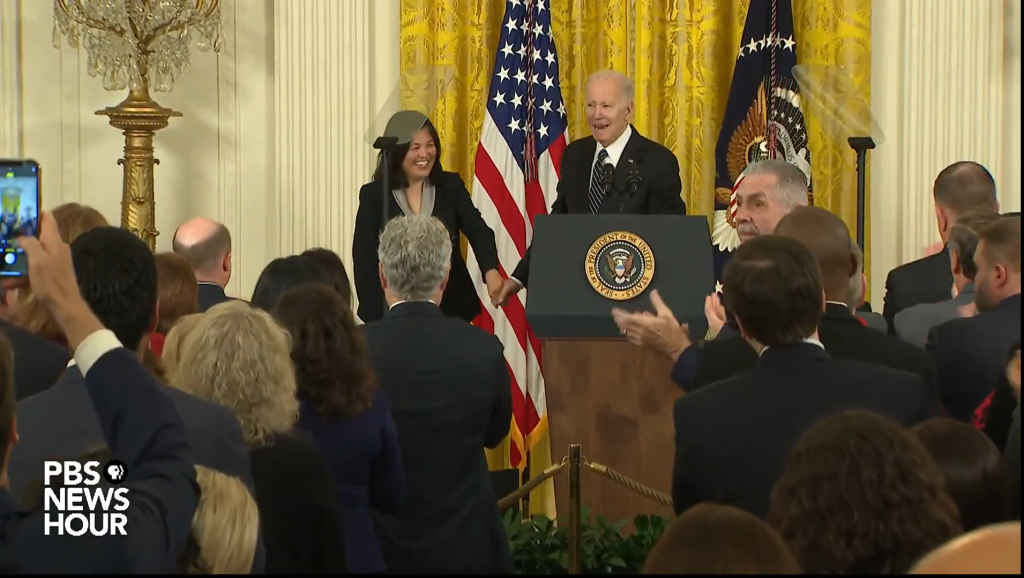
This is the traditional legal definition of “joint employer,” and it protects the freedom of small-business employees.
Unfortunately, in October 2023, the Biden NLRB scrapped that understanding, declaring that, from that time on, franchisors and companies that employ subcontractors and temporary staffing agencies could frequently be regarded as “joint employers” of franchise and subcontractor employees.
Even the “potential” power to “significantly influence” working conditions or wages at the subcontractor or franchisee could suffice to turn a company into a “joint employer,” according to the Biden NLRB.
“Union bosses know from experience that small companies are far more likely to stand up to Big Labor pressure and refuse to sell out employees who wish to remain union-free than large firms are,” explained Mr. Mix.
“The October 2023 Biden NLRB rule was plainly intended to help union officials grab monopoly-bargaining power over even more employees.
“By deciding businesses will once again be considered joint employers only if they actually have control over employees’ job conditions, the Trump NLRB has given workers a much better chance of at least getting to vote a union up or down in a secret-ballot election before they are subjected to Big Labor monopoly control.”
The Trump DOL and NLRB affirmations that they will rely on the traditional understandings, respectively, of “independent contractor” and “joint employer” in their implementation of federal labor policy are both good news for Right to Work supporters.
Indeed, both these moves had long been recommended to Trump staff members in communications from Committee legislative officers.
“The late February actions of the Trump DOL and NLRB sent messages that the President continues to understand that standing up for Americans’ Right to Work is good policy and smart politics,” said Mr. Mix.
The overwhelming popularity of Right to Work protections for employees was reconfirmed in 2024 in a nationwide scientific survey of registered voters, released on Labor Day weekend that year. RMG Research, a firm headed by legendary pollster Scott Rasmussen, conducted the survey for the Committee.
Overall, RMG Research found that 82% of registered voters agree with the statement that workers “should never be forced to join a union or pay dues to a union as a condition of employment.”
Moreover, the survey showed there is very little daylight between unionized employees and union-free employees on the Right to Work issue.
According to RMG Research, 79% of actively employed voters who currently belong to a union support Right to Work. Among employees who don’t belong to a union at this time, there is 84% opposition to compulsory unionism
Ignoring the 2024 RMG poll results and a host of other evidence, a handful of self-styled “Republican” strategists such as former Mitt Romney staffer Oren Cass, the head of the pro-union boss think tank American Compass, continue to push for Big Labor appeasement as a “winning” GOP political strategy.
“The selection of Lori Chavez DeRemer as DOL secretary and a few other moves by the Trump Administration indicate there are elements within the White House that are heeding Oren Cass’s siren song,” acknowledged Mr. Mix.
“But the recent moves by Trump agencies to shield independent contractors and employees of franchises and staffing agencies from forced dues-hungry union bosses show the President himself is far from sold.
“Both common sense and ample experience show that siding with Big Labor against independent-minded workers, businesses of all sizes, and the free market isn’t a smart strategy for GOP elected officials and candidates.
“If the Trump Administration can now begin acting on this understanding consistently, it has the potential to make great strides in labor policy by January 2029.”
This article was originally published in our monthly newsletter. Go here to access previous newsletter posts.
To support our cause and help end forced unionism, go here to donate.

Committee President Mark Mix: “If I were a Leatherman dockworker, I certainly wouldn’t count on Longshore Union bosses to show any flexibility” to get the terminal reopened and “save my job.”

According to AFSCME Local 1632 President Will Harmon, Columbus Water & Power committed a grievous offense by subcontracting out the job of clearing away invasive weeds and brush spread out across two acres of its property to a tribe of roughly 40 goats without first “negotiating” with Big Labor.
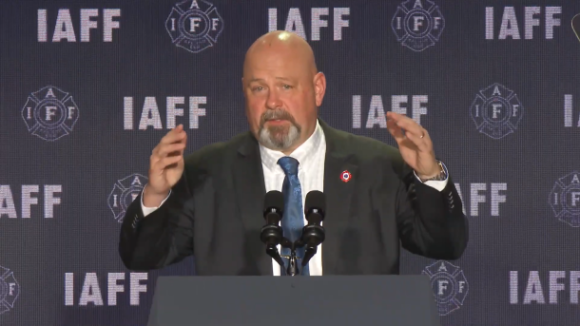
One longtime IAFF official who is now in the spotlight for his crass denigration of “two-hatters” -- that is, professional firefighters who also serve as volunteers -- is Pennsylvania Democrat politician Bob Brooks.