Union Special Privileges vs. Affordability
In addition to helping make the necessities and amenities of life more affordable, Right to Work laws help keep individual and family aggregate state-local tax burdens from spiraling out of control.
 As union bosses try to tell tall tales to auto workers in Tennessee, Mike Patterson sets them straight with his own version:
Once upon a time, in Chattanooga a young girl made her way to work, picking flowers to add to her basket of posies which she plucked with fingers and cheeks so rosy.
“Where are you going,” came a sudden voice from the shadows, “on such a bright day as this?”
“Just to work, kind sir,” she answered, “and off I must go or my shift I will miss.”
“You don’t want to go there,” said the voice with a growl. “Not without my help.” And he stepped from the bush as she let out a yelp. “So you work at the factory,” said the half beast/half man, “toiling on the line of assembly for the company plan.”
“That is my job,” said she. “Which I do every day, and for which I’m rewarded with benefits and pay.”
“So you believe,” said he, “a bill you’ve been sold, bundled in a bow with the lies you’ve been told. The truth is your superiors design to oppress, to use and abuse, which crimes I can redress. Bring you with me to your factory, and I can bargain for you collectively.” He squinted his red eyes at her. “More pay you will see and benefits too, will be your reward for paying my due.”
“Actually,” said Volksmaiden, “entry-level workers at Volkswagen AG make almost exactly what comparable workers get at unionized General Motors.”
“In addition,” she continued, “the President’s signature health care law has undermined your argument to be able to provide me with superior health benefits. In fact, three major labor bosses have written a letter to Congressional leaders complaining that the legislation they supported has now made the type of health plans that unions negotiate ‘unsustainable.’”
“Well,” stuttered the beast, “what I can promise to thee for accompanying me is peace of mind and job security.”
“Uh, I don’t think so,” replied Volksmaiden. “… the unionized Big Three Detroit auto companies have shed hundreds of thousands of jobs in the last dozen years, in large part because of burdensome union work rules, while non-union factories like we have here in Chattanooga have created thousands of jobs throughout the South.”
“Uh, uh … OK, it’s true,” growled the beast. “It’s not for your benefit I am here, you see. It’s the King, the King! Who’s hungry for fees!”
“Tell Bob, no thanks,” said Volksmaiden. “Now if you’ll excuse me,” she said, “my ride is here; it’s a Passat, driven by my grandmother. It was Car of the Year, you know, according to Motor Trend. A success, Mr. Wolf, that for you spells….
…The End.”
In addition to helping make the necessities and amenities of life more affordable, Right to Work laws help keep individual and family aggregate state-local tax burdens from spiraling out of control.
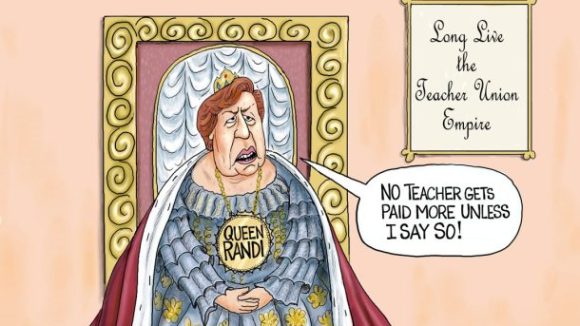
In response to a staffing crisis, the elected Lee County School Board (LCSB) approved an incentive plan to attract and retain teachers for high-need schools and hard-to-fill subject areas.

In the wake of Big Labor’s capture of the governorship and tightening of its grip over the Virginia General Assembly in last fall’s elections, union strategists are eager for passage of a law mandating union monopoly bargaining over the compensation and work rules of state and local civil servants.