Union-Only Port Terminal Suspends Operations
Committee President Mark Mix: “If I were a Leatherman dockworker, I certainly wouldn’t count on Longshore Union bosses to show any flexibility” to get the terminal reopened and “save my job.”
Mort Zuckerman is an establishment journalist who writes for U.S. News and World Report. Even Zuckerman believes that the public union bosses are crippling the American economy:
It is galling for private sector workers to see so many public sector workers thriving because of the power their unions exercise. Take California. Investigative journalist Steve Malanga point out in the City Journal that California’s schoolteachers are the nation’s highest paid; its prison guards can make six-figure salaries; many state workers retire at 55 with pensions that are higher than the base pay they got most of their working lives. All this when California endures an unemployment rate steeper than the nation’s. It will get worse. There’s an exodus of firms that want to escape California’s high taxes, stifling regulations, and recurring budget crises. When Cisco’s CEO, John Chambers, says he will not build any more facilities in California, you know the state is in trouble.
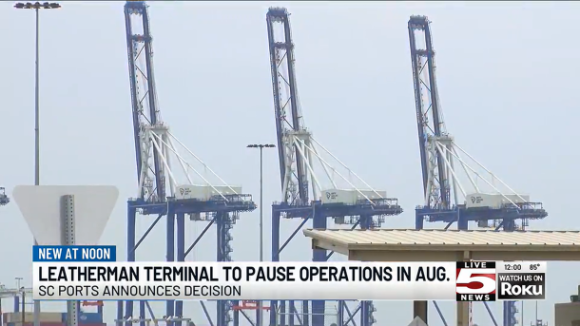
Committee President Mark Mix: “If I were a Leatherman dockworker, I certainly wouldn’t count on Longshore Union bosses to show any flexibility” to get the terminal reopened and “save my job.”
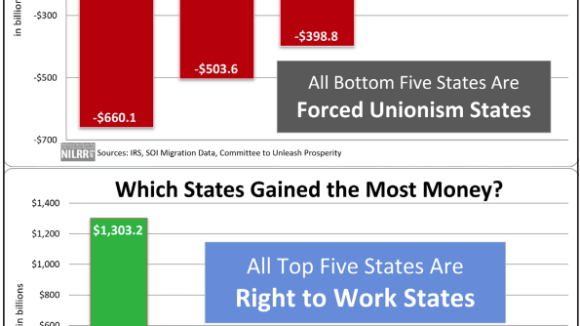
... States that continuously lacked Right to Work protections for employees from 2012-23 lost a net total of $2.05 trillion in cumulative AGI solely as a consequence of domestic out-migration of taxpayers during that 11-year period.

One of the key goals of the U.S. Department of Labor since President Donald Trump’s second term commenced in January 2025 has been to expand the number of apprenticeships in America to “at least a million.”