Union-Only Port Terminal Suspends Operations
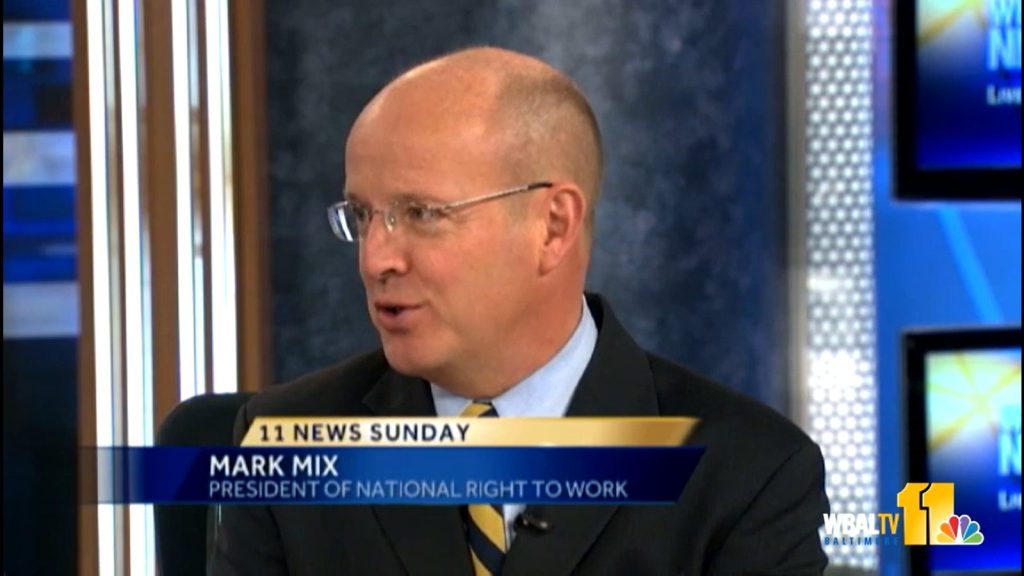
Committee President Mark Mix: “If I were a Leatherman dockworker, I certainly wouldn’t count on Longshore Union bosses to show any flexibility” to get the terminal reopened and “save my job.”
When Congress took up legislation establishing the Transportation Security Administration in response to the 9/11 terrorist attacks, the National Right to Work Committee fought hard to protect the TSA’s rank-and-file workers from government-union abuses.
Thanks largely to the Committee’s grassroots mobilization of resistance to a takeover of airport security by federal union monopolists, the confrontation over homeland-security legislation became a major issue in the 2002 elections.
Big Labor Sens. Max Cleland (D-Ga.) and Jean Carnahan (D-Mo.) faced electoral backlashes because they had refused to support any bill setting up the proposed Department of Homeland Security unless it gutted presidential authority to exempt TSA and other DHS employees from union monopoly rule.
They both lost their seats.
This issue also helped keep a few other Senate seats out of the hands of union bosses that year, including seats in Colorado and New Hampshire. Bowing to reality, then-Sen. Mary Landrieu (DLa.) turned on the union-boss effort post-Election Day when the bill creating the TSA was finally enacted without the monopoly-bargaining poison pill. She had previously voted with Big Labor.
That debate is important to remember as the Trump Administration seeks to exercise its authority under the Homeland Security Act (HSA) to suspend union monopoly bargaining over TSA employees.
Unfortunately, Trump-appointed Homeland Security Sec. Kristi Noem’s planned January 18 suspension of union rule has not gone into effect at press time because of an injunction issued by a Big Labor-“friendly” federal judge.
“Since the start of the second Trump Administration, public-sector union bosses have consistently ignored the history of the national-security exception to their own peril,” National Right to Work Committee President Mark Mix explained.
“When the Federal Labor Relations Act [FLRA] of 1978 was passed, over vigorous opposition by the Committee, it provided — as bad as it was and still is — a broad exception for the President to circumvent the monopoly-bargaining privileges of the public-sector union brass in the interest of national security.
“This exception was actually invoked under the Bush Administration in 2001 for all Department of Defense [DoD] civilian employees, and not even the union bosses could object then.
“It was only when DHS was getting established that they attempted to do so. They were repudiated so thoroughly at the ballot box in 2002 that a Democrat senator, Zell Miller [Ga.], and congressman, Martin Frost [Texas], called them out for their miscalculation, among other political players on their side.
“Of course, after the elections of Big Labor Democrats Barack Obama and later Joe Biden, they moved to expand monopoly bargaining to DoD civilian and TSA employees administratively, knowing full well this could be undone by a later President.”
Mr. Mix concluded: “President Trump is quite properly moving to exercise his authority under the HSA to suspend monopoly bargaining throughout the agency, because he knows how damaging Big Labor control over national security employees has been to the country and to federal workers themselves.”
In addition to Big Labor litigation, pending legislation in Congress aims to undo the Trump executive orders and Noem memorandum halting federal union bosses’ monopoly privileges.
The most outrageous attempt to undermine President Trump was last year’s discharge petition to force a vote on Maine Democrat Rep. Jared Golden’s H.R.2550 over GOP Speaker Mike Johnson’s opposition. The Golden scheme would overturn all attempts by the President to utilize the FLRA exception, and thus restore union-boss control over more than a million federal employees.
The discharge petition was adopted only because five turncoat Republican House members — Reps. Don Bacon (Neb.), Rob Bresnahan (Pa.), Brian Fitzpatrick (Pa.), Nick LaLota (N.Y.), and Mike Lawler (N.Y.) — had joined unionlabel Democrats in supporting it.
“Efforts to stop President Trump and his appointees from rolling back union monopoly bargaining in the federal government represent a direct challenge to his efforts to make civil servants accountable, once again, to elected officials and the people,” said Mr. Mix.
“Even more important, curtailing, and ultimately eliminating, government-sector monopoly bargaining is one of the Committee’s core objectives. Votes in support of H.R.2550 and other related schemes are a clear sign that a politician is an enemy of Right to Work.”
This article was originally published in our monthly newsletter. Go here to access previous newsletter posts.
To support our cause and help end forced unionism, go here to donate.
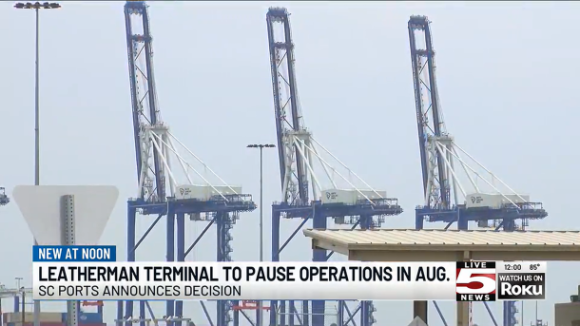
Committee President Mark Mix: “If I were a Leatherman dockworker, I certainly wouldn’t count on Longshore Union bosses to show any flexibility” to get the terminal reopened and “save my job.”

According to AFSCME Local 1632 President Will Harmon, Columbus Water & Power committed a grievous offense by subcontracting out the job of clearing away invasive weeds and brush spread out across two acres of its property to a tribe of roughly 40 goats without first “negotiating” with Big Labor.
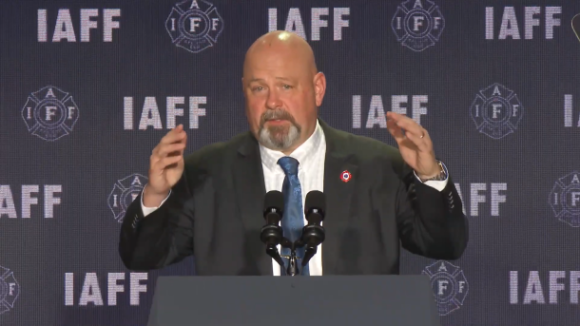
One longtime IAFF official who is now in the spotlight for his crass denigration of “two-hatters” -- that is, professional firefighters who also serve as volunteers -- is Pennsylvania Democrat politician Bob Brooks.