Union-Only Port Terminal Suspends Operations
Committee President Mark Mix: “If I were a Leatherman dockworker, I certainly wouldn’t count on Longshore Union bosses to show any flexibility” to get the terminal reopened and “save my job.”
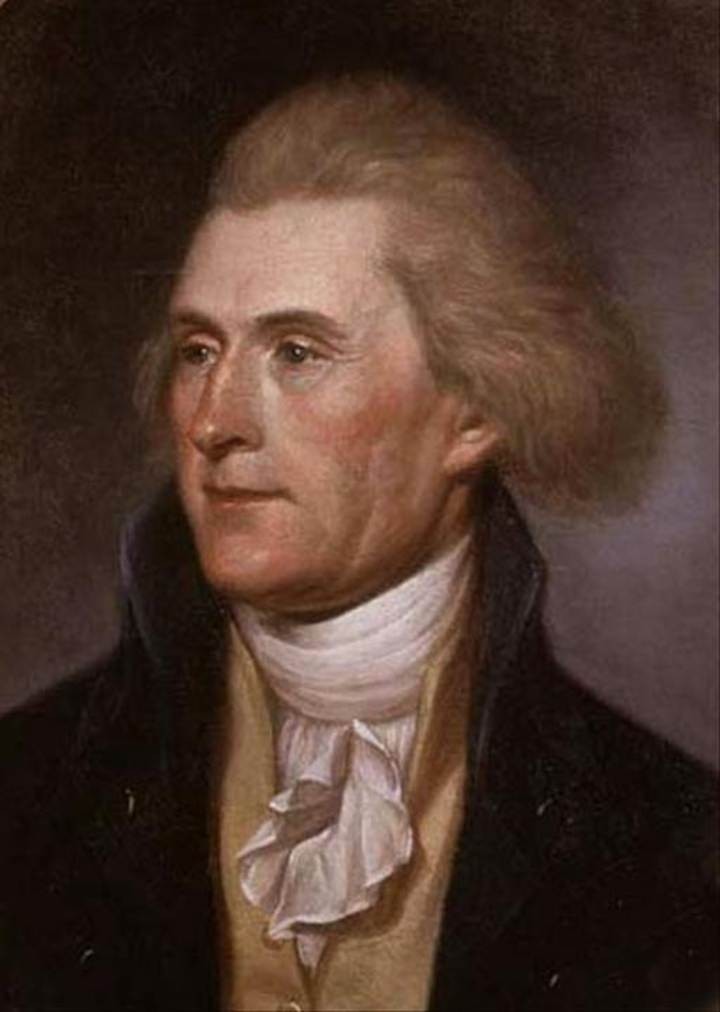
As we celebrate the 250th anniversary, otherwise known as the “semiquincentennial,” of our Declaration of Independence, many Americans’ thoughts are often focusing on the belief in individual freedom that motivated our country’s founders.
Men from diverse backgrounds and walks of life like Thomas Jefferson, John Adams, and Benjamin Franklin were united in their strong support for the right of the individual to live free from unwarranted government coercion.
Unfortunately, for nearly a century now, the heritage of individual freedom bestowed upon us by Jefferson, Adams, Franklin and others has been undercut by federal policies that authorize and promote the firing of employees for refusal to join or pay dues to a union.
National Right to Work Committee Vice President Matthew Leen cited the Virginia Statute for Religious Freedom: “To ‘compel a man to furnish contributions of money for the propagation of opinions’ he ‘disbelieves’ is ‘sinful and tyrannical.’
“So wrote Thomas Jefferson, primary author of the Declaration of Independence and future U.S. President, in 1777.
“Today, Jefferson’s conviction that ‘the opinions of men are not the object of civil government’ is enshrined in Right to Work laws that are so far on the books in 26 states, including Virginia, where he served as governor from 1779 to 1789.
“These statutes and constitutional provisions prohibit Big Labor bosses from wielding their federal government-granted monopoly privileges to get employees fired for refusal to pay union dues or fees.
“Sadly, many 21st Century politicians care little about individual liberty.”
Mr. Leen continued:
“Employees who exercise their freedom under a Right to Work law not to bankroll an unwanted union may do so because they disagree with union officials’ ideological activities, or because they believe they actually get paid less as a consequence of being under union monopoly control.
“It is undeniably true that many union bosses spend vast sums of workers’ dues money advancing controversial causes. It is also undeniably true many talented and/or hardworking employees get paid less because they are subject to union ‘exclusivity.’
“Nevertheless, pro-forced unionism politicians insist they know better than workers do what’s good for workers. Jefferson decried such politicians’ ‘impious presumption.’”
The principles of sound government developed by a number of America’s other Founders are also incompatible with the government-authorized compulsory unionism that first became widespread during the New Deal.
In his Notes for an Oration at Braintree, entered into his diary in 1772, future Revolutionary War leader and President John Adams warned against affording excessive power to private factions as well as to public officials:
“The only Maxim of a free Government, ought to be to trust no Man living, with power to endanger the public Liberty.”
Declaration signer and “First American” Benjamin Franklin similarly warned in his commentary “Emblematical Representations” (circa 1774) against the “ordaining of laws in favor of one part of the nation to the prejudice and oppression of another . . . .”
An “equal dispensation of protections, rights, privileges, and advantages,” continued Franklin, “is what every part is entitled to, and ought to enjoy.”
“If Jefferson, Adams, Franklin, and other Founders were alive today,” said Mr. Leen, “how could we explain to them the now-entrenched federal policy that authorizes compelling men and women who are not members of a labor union to furnish contributions of money to that same union?
“How could we explain to the Founders that this conscripted money is often used to advance ideological causes the forced dues-payers abhor?
“The reality is no explanation or excuse could render this practice acceptable to the Founders. And the best way Americans could celebrate our 250th would be by prohibiting forced union dues and fees nationwide.”
This article was originally published in our monthly newsletter. Go here to access previous newsletter posts.
To support our cause and help end forced unionism, go here to donate.
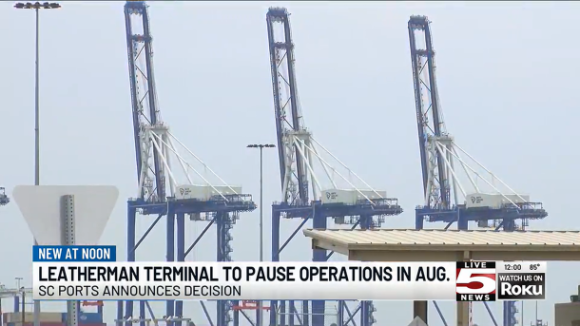
Committee President Mark Mix: “If I were a Leatherman dockworker, I certainly wouldn’t count on Longshore Union bosses to show any flexibility” to get the terminal reopened and “save my job.”

According to AFSCME Local 1632 President Will Harmon, Columbus Water & Power committed a grievous offense by subcontracting out the job of clearing away invasive weeds and brush spread out across two acres of its property to a tribe of roughly 40 goats without first “negotiating” with Big Labor.
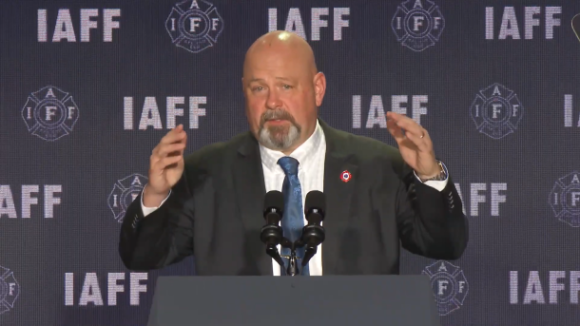
One longtime IAFF official who is now in the spotlight for his crass denigration of “two-hatters” -- that is, professional firefighters who also serve as volunteers -- is Pennsylvania Democrat politician Bob Brooks.