Paying Good Teachers More Is ‘Unfair’??!!
In response to a staffing crisis, the elected Lee County School Board (LCSB) approved an incentive plan to attract and retain teachers for high-need schools and hard-to-fill subject areas.
 The Chicago Tribune has published a remarkable editorial about the depth of coercive unionization has taken hold among government employees in the state:
Across the country, union membership has plunged during the last few decades. Just 6.9 percent of the private-sector workforce is in a labor union today.
Organized labor is stronger in the public sector, with unions representing 37 percent of the government workforce.
And then there is Illinois. Try to find a state worker who isn’t in a union. It’s almost impossible. Nearly 96 percent of the state government workforce is unionized. Yes, almost everybody. Bosses, middle managers, front-line workers.
Gov. Pat Quinn exacerbated the situation by cutting an election-year deal in 2010 with the American Federation of State, County and Municipal Employees. The deal guaranteed union workers would not be laid off through June 2012. That meant nonunion workers got stuck with forced furlough days, layoffs and no pay raises. In some cases, they watched the union employees who worked beneath them pass them up on the pay scale. (Recall that, as the ink was drying on this agreement, AFSCME rewarded Quinn with its election endorsement. Don’t you love coincidences? Those moments when like-minded people find one another?)
Today, many managers — the people who are supposed to carry out policy decisions, press for efficiency, impose discipline — are in unions alongside the people they supervise:
The state Environmental Protection Agency has more than 1,000 staffers — yet only 16 are nonunion. In the Department of Human Services’ Division of Rehabilitation Services, 47 of the 52 field offices have no nonunion staff, according to the governor’s office.
Makes you wonder who’s in charge. Union work rules now apply to virtually everyone. Disciplining employees, even for minor infractions, gets complicated when both supervisor and worker are in the same union. Managers have divided loyalties.
Lawmakers are supposed to return to Springfield this summer to enact pension reform. That has to be soon. Averting further financial disaster in this state requires that the lawmakers reconvene to finish their work — preferably before credit rating agencies smack Illinois with another round of downgrades.
Pensions are Job One, but not the only job: Restoring common-sense balance to the labor-management ratio within the state’s workforce must be on legislators’ agenda, too.
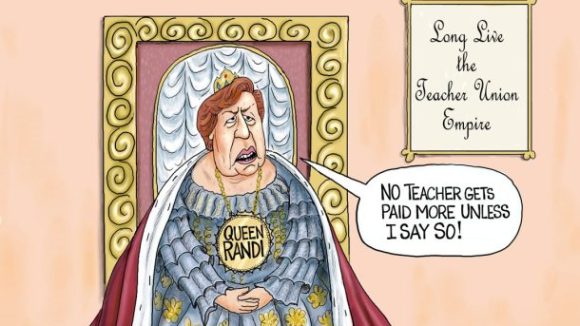
In response to a staffing crisis, the elected Lee County School Board (LCSB) approved an incentive plan to attract and retain teachers for high-need schools and hard-to-fill subject areas.
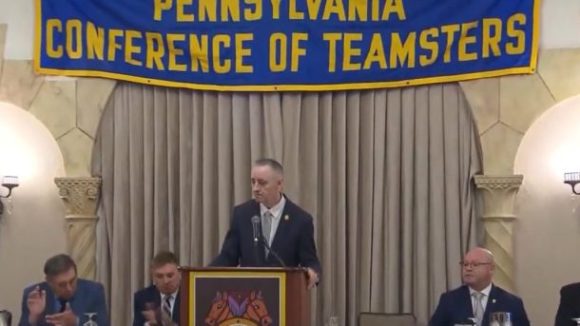
Every Democrat House Member Supported Pro-Union Monopoly Bill’s Passage
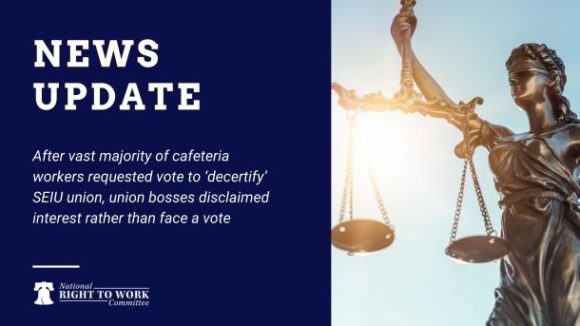
After vast majority of cafeteria workers requested vote to ‘decertify’ SEIU union, union bosses disclaimed interest rather than face a vote