Big Labor’s Multi-Billion-Dollar Power Grab
Union bosses are rallying behind Democrat Texas U.S. Senate candidate James Talarico because he opposes Right to Work protections for employees.
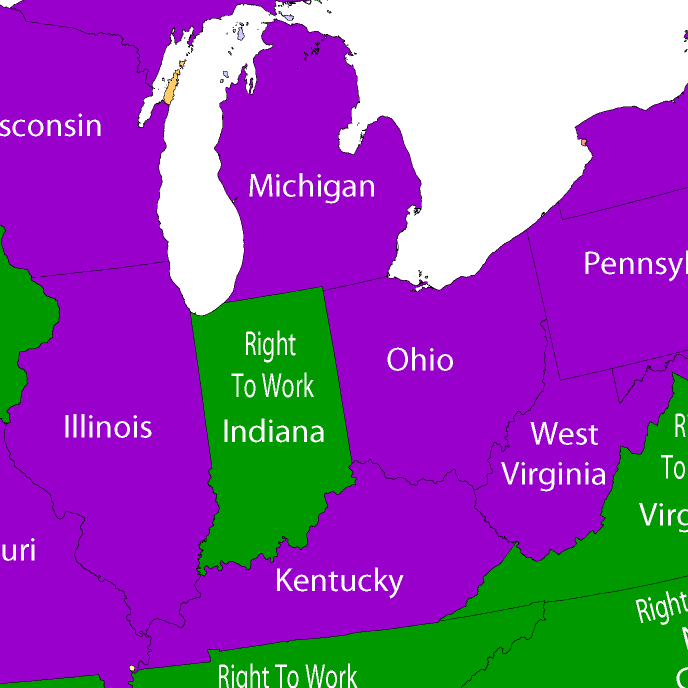 A hypothetical average Ohio family of four would be making $12,000 more a year today if Ohio had adopted a right-to-work law in 1977, concludes a report released by the Buckeye Institute. The Buckeye Institute’s study by Ohio University economics professor Richard Vedder says, “Arguably the single biggest impediment to an improved labor environment is the lack of a right-to-work law which guarantees workers the freedom to join, or not join, labor unions as they so choose.”
Here are some startling statistics from the report:
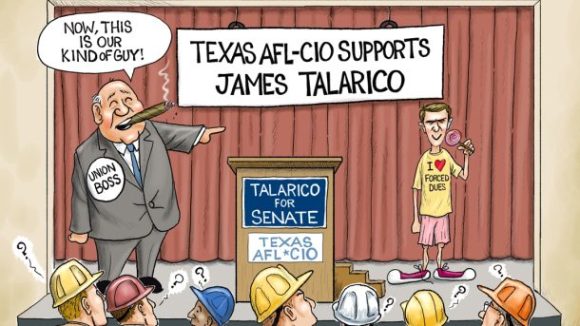
Union bosses are rallying behind Democrat Texas U.S. Senate candidate James Talarico because he opposes Right to Work protections for employees.
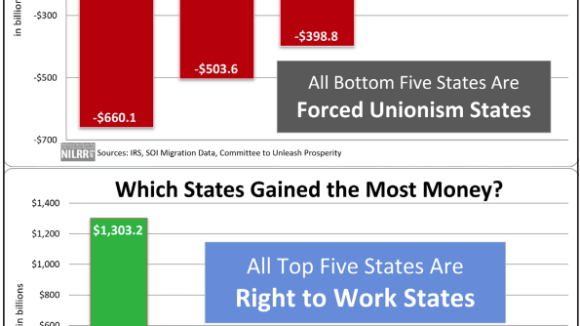
... States that continuously lacked Right to Work protections for employees from 2012-23 lost a net total of $2.05 trillion in cumulative AGI solely as a consequence of domestic out-migration of taxpayers during that 11-year period.

"Vullo makes it clear that using the threat of federal prosecution to force any employer to put employees’ Right to Work on the bargaining table violates the First Amendment.”