Paying Good Teachers More Is ‘Unfair’??!!
In response to a staffing crisis, the elected Lee County School Board (LCSB) approved an incentive plan to attract and retain teachers for high-need schools and hard-to-fill subject areas.
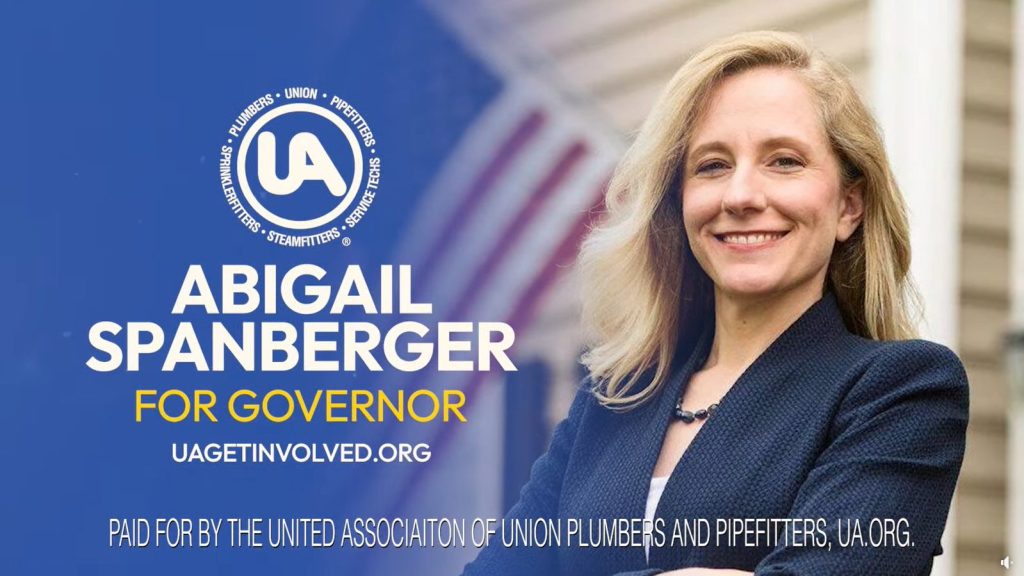
Last fall, Big Labor Democrat gubernatorial candidates Abigail Spanberger (Va.) and Mikie Sherrill (N.J.) successfully sold themselves to voters as “moderates,” while winning New York City Democrat mayoral nominee Zohran Mamdani more accurately pitched himself as a socialist.
But in two key regards, the electoral strategies of Ms. Spanberger, Ms. Sherrill, and Mr. Mamdani were perfectly aligned:
All three campaigned on their ability to make their jurisdictions more affordable for ordinary citizens, especially with regard to housing.
And, at the same time, they pledged their fealty to monopolistic unionism and doing whatever they feasibly could to expand its scope.
National Right to Work Committee President Mark Mix commented:
“The reality is that it is state laws prohibiting compulsory unionism that have long been strongly correlated with lower housing, energy, and other major costs for families, as well as with lower overall tax burdens.
“Moreover, for many years the National Institute for Labor Relations Research has documented the close association between compulsory unionism and higher costs for workers and their families.”
Just last year, an Institute analysis drawing on data from the Jefferson City-based Missouri Economic Research and Information Center (MERIC), a state government agency, found that, as a group, the 23 states lacking Right to Work protections in 2024 were 22.8% more expensive to live in than Right to Work states as a group.
The correlation between forced-unionism status and a higher cost of living is robust. Not one of the top 10 highest-cost states in 2024 had a Right to Work law. But 16 of the 20 lowest cost-of-living states protected employees’ Right to Work in 2024.
“A growing body of research,” noted Mr. Mix, “shows that forced unionism fosters a higher cost of living.
“Decades of academic studies by economists such as Thomas M. Carroll and Richard J. Cebula have demonstrated that one side benefit of Right to Work laws is that they help reduce the cost of living in jurisdictions where they are in effect.”
In addition to helping make the necessities and amenities of life more affordable, Right to Work laws help keep individual and family aggregate state-local tax burdens from spiraling out of control.
A 2023 Institute analysis drew on the nonpartisan, Washington, D.C.-based Tax Foundation’s most recent assessments of the overall average state-local tax burdens in the 50 states.
The analysis concluded that the combined average state-local tax burden as a share of personal income in forced-unionism states was 12.6%, or 3.1 percentage points greater than the average in the 27 states that had Right to Work laws on the books at that time.
In other words, residents of forced-unionism states have to work an extra week-and-a-half each year just to pay off their state-local taxes, compared to residents of Right to Work states.
“Thanks to Right to Work states’ generally lower living costs and lighter tax burdens,” said Mr. Mix, “their average cost of living-adjusted disposable income per capita in 2024 was $62,954, or nearly $2,900 higher than the average in forced-dues states.”
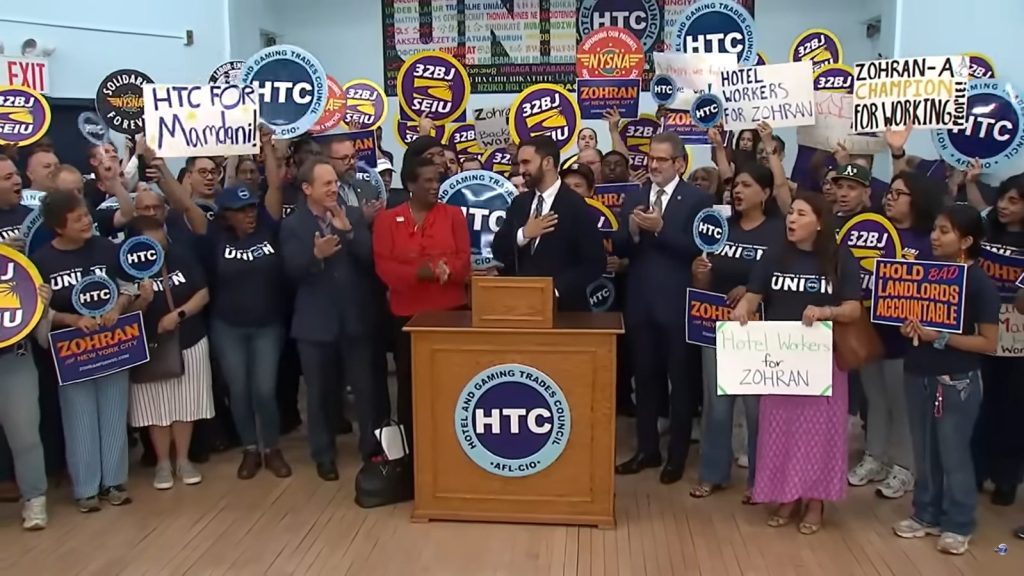
Mr. Mix acknowledged that the particular way a Big Labor politician goes about enriching union officials at ordinary citizens’ expense can vary substantially depending on the political climate in which he or she is operating.
He specified:
“In Virginia, state Right to Work protections that have been in place for nearly eight decades are so popular that Gov. Spanberger may opt to avoid a battle to destroy them, even though she repeatedly voted for Right to Work destruction as a U.S. House member from 2019 to 2025.
“Even in that case, she will still make Virginia less affordable for ordinary taxpayers if she follows through on her public vow last year to push for union-only ‘project labor agreements’ for taxpayer-funded construction.
“This scheme would effectively exclude union-free hardhats from public-works projects even as it bilks taxpayers.
“In forced-unionism New Jersey, on the other hand, union bosses’ monopoly privileges are already so entrenched and extensive that there’s not much Mikie Sherrill can feasibly give to Big Labor with regard to workplace policies that it doesn’t already have.
“However, Ms. Sherrill can and almost surely will pay off radical teacher and autoworker union bosses who backed her by perpetuating and even intensifying the Garden State’s so-called ‘net zero’ energy policies.
“Such policies cost hard-pressed families ‘an arm and a leg’ when they get their energy bills, as Ms. Sherrill herself admits, but radical union bosses love them.
“For her part, Ms. Sherrill loves the waves of financial support, primarily siphoned off from the dues money of workers subject to union monopoly bargaining, that she got from far-left union bosses last year.
“New York City, like New Jersey, is already a bastion of union special legal privileges.
“As much as he loves forced unionism, Zohran Mamdani can hardly add to them.
“But his schemes to expand dramatically the share of Big Apple employees who work for the government rather than for the private sector are likely to prove extremely lucrative for Big Labor.”
“In the Empire State,” continued Mr. Mix, “government employees are 5.5 times as likely to be subject to union monopoly control as private-sector employees. “A mind-boggling 68.5% of them are unionized!
“Experience spanning many decades and countries shows government-owned enterprises such as the taxpayer-funded grocery stores Mr. Mamdani is proposing, are far less efficient and innovative than their private-sector counterparts.
“The only way government-owned grocery stores can possibly be competitive is if they are heavily subsidized through perks such as being exempt from rent and property taxes.
“And regardless of whether it fails because of inherent inefficiencies, or it ‘succeeds’ by wiping out private competitors who have to pay rent and property taxes, Mr. Mamdani’s dramatic expansion of the ‘services’ government provides can’t possibly make New York City more ‘affordable.’”
This article was originally published in our monthly newsletter. Go here to access previous newsletter posts.
To support our cause and help end forced unionism, go here to donate.
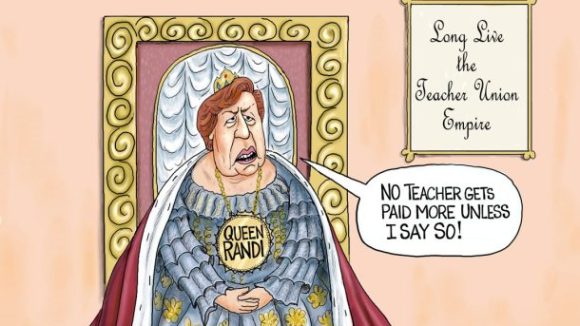
In response to a staffing crisis, the elected Lee County School Board (LCSB) approved an incentive plan to attract and retain teachers for high-need schools and hard-to-fill subject areas.

In the wake of Big Labor’s capture of the governorship and tightening of its grip over the Virginia General Assembly in last fall’s elections, union strategists are eager for passage of a law mandating union monopoly bargaining over the compensation and work rules of state and local civil servants.
Recently updated federal data on the American workforce and employment show that employer demand for college-educated employees rose at a surprisingly rapid clip from 2014 to 2024.