Union Bosses Going All Out to Capture Congress
During the months leading up to Election Day 2026, Big Labor bosses’ focus on politics has never been more explicit.
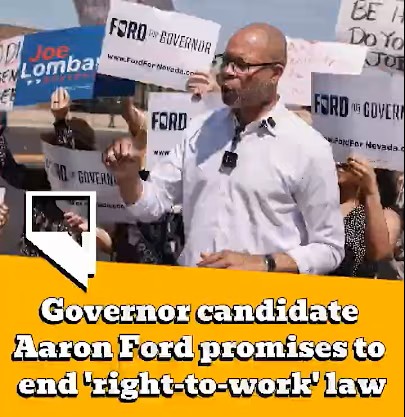
To counter the grave threats to Right to Work in Nevada and Wisconsin, the National Right to Work Committee has helped launch grassroots campaigns to pressure politicians Aaron Ford and David Crowley to repudiate their support for forced unionism, as well as to lobby state legislative candidates on this important issue.
In Nevada, for roughly three-quarters of a century, the state Right to Work law has prohibited union bosses from wielding their federal government-granted monopoly privileges to get employees fired for refusal to pay union dues or fees.
Unfortunately, this important protection for the freedom of the individual employee could be eliminated in Nevada as soon as next year if Mr. Ford, the Democrat gubernatorial nominee, is elected on November 3.
During a podcast interview this April, Mr. Ford made no bones about the fact that “getting rid of” Right to Work would be high on his 2027 agenda.
Committee Vice President John Kalb commented: “There’s no doubt why Aaron Ford is promising to bring back forced dues to the Silver State, even though voters in Nevada, like voters everywhere in the U.S., overwhelmingly support Right to Work.
“Winning the backing of Big Labor bosses is clearly more important to him than doing what’s best for his state’s employees and businesses.”
Mr. Kalb continued: “Meanwhile, 1,500 miles away in the Midwest, Wisconsin Democrat gubernatorial nominee David Crowley has clearly made the same calculation in promising to destroy the Badger State’s 11-year-old Right to Work law if he gets a chance.
“By openly vowing to rubber-stamp Right to Work repeal and an array of other Big Labor special-interest legislation if he is elected, Mr. Crowley knows he is enticing national as well as state union bosses to lavish his campaign with support financed mostly by dues money extracted from workers’ paychecks.”
The fact is, while a majority of the 50 states now have Right to Work laws on the books, Michigan is the only state over the course of the last seven decades to repeal a Right to Work law that was in effect at the time it happened.
And Michigan’s experience since Right to Work was definitively wiped out in mid-February 2024 is hardly one other states would want to emulate.
From March 2024 — the first full month post-Right to Work — through July 2026 — the most recent month for which data are available as this Newsletter edition goes to press — Michigan employment as measured by the U.S. Labor Department’s household survey fell by nearly 198,000, or 4.1%.
This happened even as employment in the vast majority of states and in the U.S. as a whole was increasing. And it happened even though, prior to Right to Work repeal, employment in Michigan had been rising.
“Michigan’s employment plunge since early 2024 ought to be a warning signal to politicians in Nevada and Wisconsin not to eliminate or gut Right to Work protections,” said Mr. Kalb.
“Unfortunately, neither Aaron Ford nor David Crowley seems to be getting the message.”
Acting in partnership with regional Right to Work activists, the Committee has already succeeded in swaying Gov. Joe Lombardo, the GOP nominee facing off against Mr. Ford, to make a campaign pledge of opposition to all forced union dues and fees.
“Over the weeks leading up to Election Day,” said Mr. Kalb, “the Committee will repeatedly mail identified Right to Work supporters in Nevada and Wisconsin.
“They will be mobilized to contact their candidates regarding their advocacy of forced unionism and/or their refusal to answer their candidate surveys.
“Thanks to this program, candidates who are either overtly or covertly backing the union hierarchy’s schemes to destroy state Right to Work laws will have a clear choice this fall. They can pledge to reverse course and support Right to Work in the future, or face the potential political fallout.”
This article was originally published in our monthly newsletter. Go here to access previous newsletter posts.
To support our cause and help end forced unionism, go here to donate.
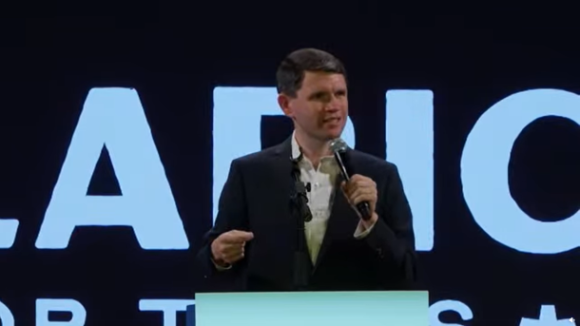
During the months leading up to Election Day 2026, Big Labor bosses’ focus on politics has never been more explicit.
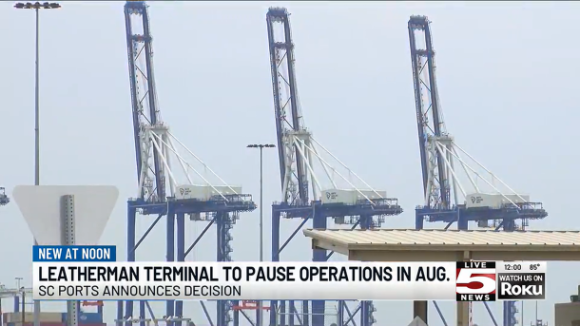
Committee President Mark Mix: “If I were a Leatherman dockworker, I certainly wouldn’t count on Longshore Union bosses to show any flexibility” to get the terminal reopened and “save my job.”

According to AFSCME Local 1632 President Will Harmon, Columbus Water & Power committed a grievous offense by subcontracting out the job of clearing away invasive weeds and brush spread out across two acres of its property to a tribe of roughly 40 goats without first “negotiating” with Big Labor.