New Data Shows Businesses Leaving Forced-Unionism States for Right to Work
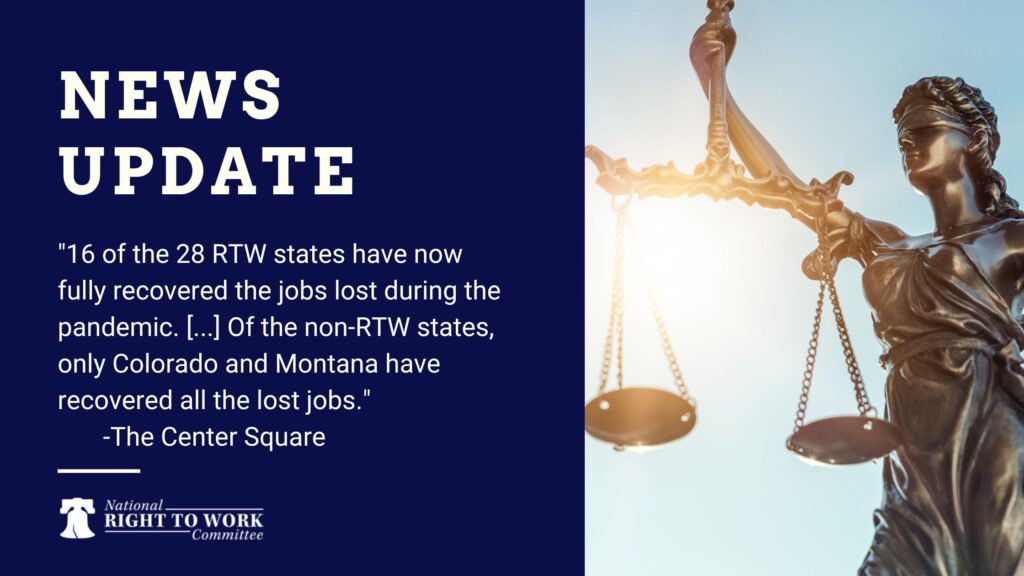
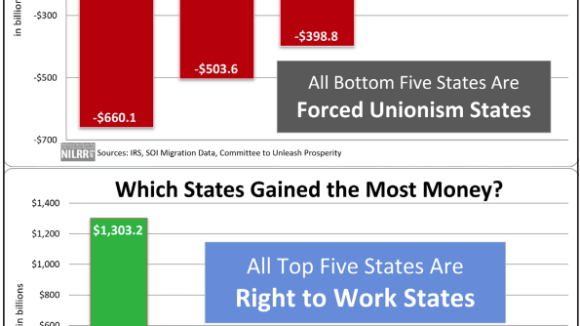
It’s well-known that Right to Work states hold more benefits for businesses than Forced-Unionism states. But now, data is making the difference between the two unmistakable. Since the pandemic in 2020, Right to Work state jobs have increased by a total of 1.3 million. Meanwhile, Forced-Unionism states have suffered a loss of 1.1 million jobs. And it’s all because companies are choosing to move to Right to Work states.
“During the pandemic, there was a huge out-migration from states like Illinois, New York, New Jersey and California into the southern states like Texas, Florida, North Carolina an others, and all of those states happen to be right-to-work,” said Lee Schalk, vice president of policy at the American Legislative Exchange Council. […]
“Janus says that no government employee can be forced to pay dues but here we are still litigating cases where unions are still doing it, and we are litigating all across the country on that issue,” said Mark Mix, president of the National Right to Work Foundation.
If you have questions about whether union officials are violating your rights, contact the Foundation for free help. To take action by supporting The National Right to Work Committee and fueling the fight against Forced Unionism, click here to donate now.
NRTW
Home » News » New Data Shows Businesses Leaving Forced-Unionism States for Right to Work