Big Labor’s Multi-Billion-Dollar Power Grab
Union bosses are rallying behind Democrat Texas U.S. Senate candidate James Talarico because he opposes Right to Work protections for employees.
 abor union support:
 Election endorsements do a lot more than reflect the principles of the candidates who get them. They are statements about the organizations that hand them out.
Unions endorse politicians who are sympathetic to those demands and opposed to reforms that would level the playing the field for the taxpayers burdened by public-sector largess.
Of course, this isn’t always clear to voters. After all, politicians brag about the endorsements of teachers, police and firefighters because people generally adore teachers and public safety workers. Voters don’t get to see what considerations go into a union’s endorsement.
Generally, unions base their election endorsements on the voting records of incumbents, questionnaires distributed to candidates and personal interviews with union brass. I’ve obtained a few of those union questionnaires, and after reading them, it’s apparent that groups are worried their gravy train is coming off the tracks.
The unions refuse to recognize reality: The more they work to pump up salaries and pensions that dwarf private-sector livelihoods, the more they squeeze public services. It’s already happening across California, where local governments are pouring so much money into employee salaries, pensions and benefits they can’t maintain parks and keep libraries open.
So the next time you see a candidate listing a union endorsement – especially one from a public employee union – you’ve got a sense of what it took to get it. The question is, considering the country’s growing weariness of public-sector windfalls, will those endorsements help or hurt candidates during the fall campaign?
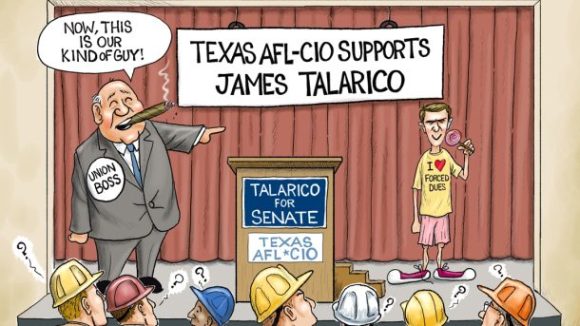
Union bosses are rallying behind Democrat Texas U.S. Senate candidate James Talarico because he opposes Right to Work protections for employees.

On June 5, a federal jury in Kansas convicted former Boilermakers President Newton Jones, who had headed the union from 2003 until 2023, his wife, Kateryna, and two other IBB bosses of embezzling millions of dollars in union dues extracted from workers as a condition of employment.
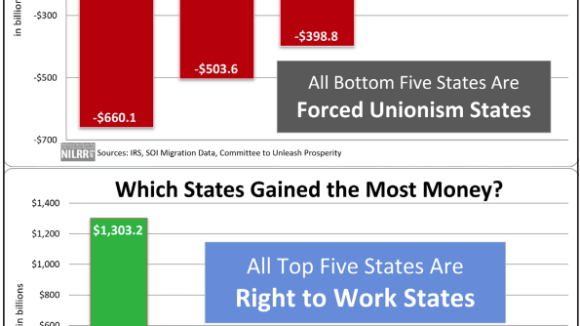
... States that continuously lacked Right to Work protections for employees from 2012-23 lost a net total of $2.05 trillion in cumulative AGI solely as a consequence of domestic out-migration of taxpayers during that 11-year period.